Frequently Asked Questions About PXI
Is PXI vendor-specific or is it an open industry standard?
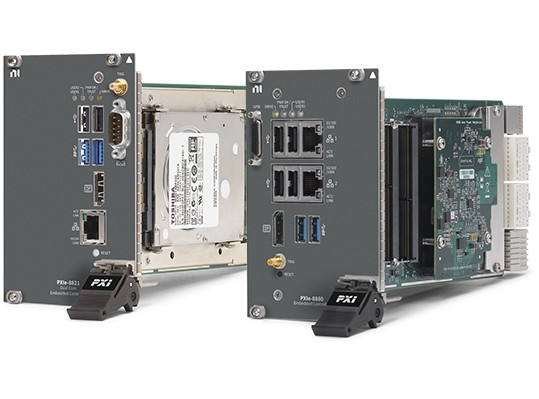
PXI is an open industry standard maintained by the PXI Systems Alliance (PXISA). While multiple vendors participate in the PXI ecosystem, NI pioneered the standard and remains its market leader. With more than 500 modular instruments spanning DC to mmWave, together with NI software, system management tools, and application expertise, NI helps engineers build scalable automated test systems that reduce development time and accelerate test throughput. Because PXI is an open standard, engineers can combine NI PXI hardware with PXI-compliant chassis, controllers, and instrument modules from other manufacturers in the same system.
How difficult is it to migrate an existing test system to PXI?
Migrating an existing test system to PXI is often easier than many engineers expect. Because PXI uses an open architecture, legacy instruments can often be replaced with equivalent PXI modules, and existing GPIB, USB, LXI, or VXI equipment can frequently remain in use during the transition. The level of effort depends on factors such as hardware compatibility, cabling, switching systems, test adapters, and software changes. Many organizations migrate gradually rather than replacing everything at once, which helps reduce risk while preserving previous investments and gaining the performance and scalability benefits of PXI.
Which programming languages and tools are used in PXI systems?
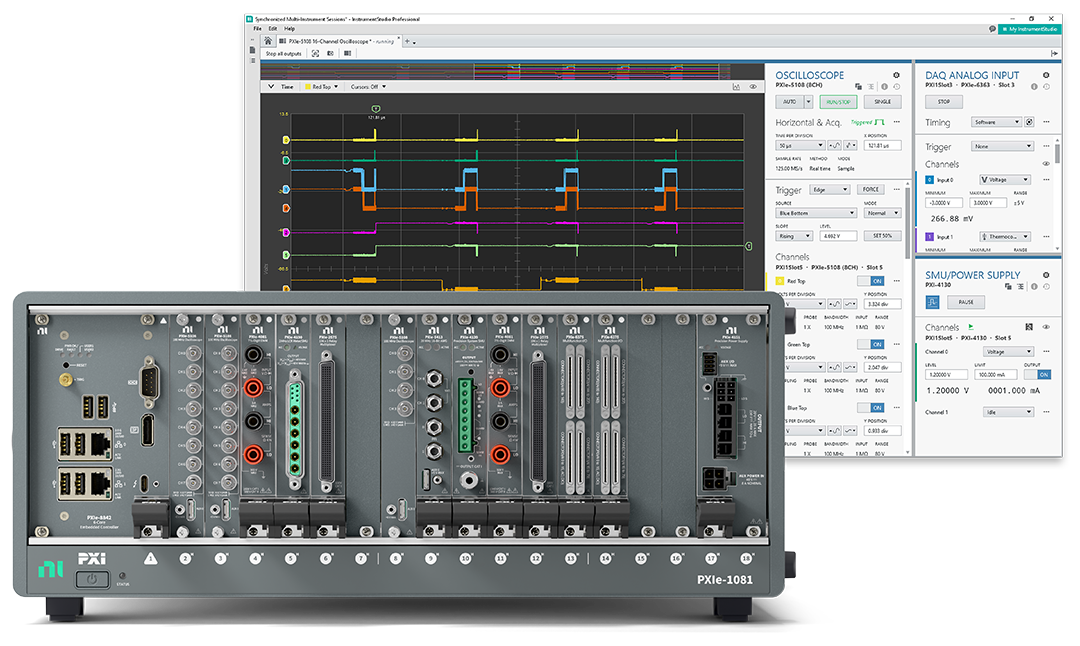
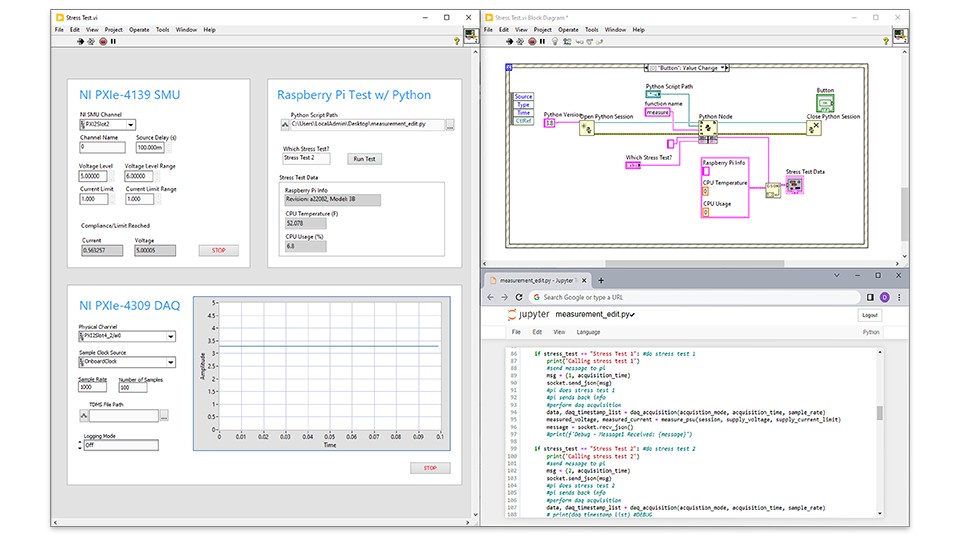
PXI systems can be programmed using a variety of languages and software tools, allowing engineers to choose the environment that best fits their application and team’s expertise. Common programming languages include Python, C/C++, C#/.NET, and Visual Basic, while graphical environments such as NI LabVIEW are also widely used. Other stages of the test process are supported by solutions like NI InstrumentStudio for interactive instrument control and debugging, as well as NI TestStand for automated test execution and management.