collage of a tractor, car, train, bus, and race car

Transportation Case Studies

Learn how test engineers use NI products to accelerate productivity in design, development, and production of automotive, rail, agriculture, mining, and off-highway vehicles.

Research, Desing, and Prototyping

NI Compact DAQ measurement system on a benchtop testing a motor.

Learn how transportation researchers used NI hardware and software to facilitate rapid prototyping, research, and development.

Simulation and Prototyping

Mazda Motor Corporation built and automated a HILS system to both verify the logic and evaluate the robustness of electronic components operating cooperatively.

Arcale worked with Renault to improve reliability of driving condition simulation to study systems that target road safety using NI LabVIEW RT and LabVIEW FPGA.

Researchers prototyped a controller to validate the algorithms with the physical assembly of the ISG while the actual controller was designed and developed. 

George Mason University built a test bed for Open RAN (O-RAN) architecture with NI SDR and standard interfaces provided by the Open AI Cellular (OAIC) platform.

Alma Automotive created a rapid control prototyping platform for performing combustion analysis and engine control prototyping while reducing development time.

Students used NI LabVIEW and CompactRIO to create a complete vehicle controls system to pretest the components and systems of a Formula Student racing car before it reaches the circuit.

Researchers prototyped a controller to validate the algorithms with the physical assembly of the ISG while the actual controller was designed and developed. 

Alma Automotive developed a system to implement a real-time control system for an internal combustion engine to perform tasks commonly managed by ECUs.

Forze Hydrogen Racing Team Delft systematically connected, tested, and monitored all parts from a fuel cell system for a Formula Zero hydrogen-powered race car.

UTokyo created a system to simulate and evaluate how differences in fuel gas components affect the conditions necessary to run an engine that uses biomass fuel.

Physical Testing

ENSTA ParisTech developed a tool for real-time visualization of unsteady pressure data measured during wind tunnel test campaigns.

Researchers implemented the driving system of a mobile climatic chassis dynamometer (V-Road) by leveraging the modularity and reconfigurability of NI hardware.

Researchers created an automated test station to acquire and process data and communicate with other components to verify AdBlue pump modules in hydraulic test.

Researchers used NI PXI an LabVIEW to build an integrated engine test bench submodules for test bench control, digital DAQ, and online lookup table calibration on the ECU.

Track Testing

Computer Controlled Solutions created the Mobile Daquire device for resolution acquisition and analysis of vibrations in key engine and drive train components.

CVUT created a scaled vehicle equipped with the necessary sensors and a control unit to perform repeatable tests of different algorithms for autonomous vehicle drive.

UFSC developed a portable and affordable acoustic beamformer for noise source identification in pass-by noise measurements and other applications.

Validation

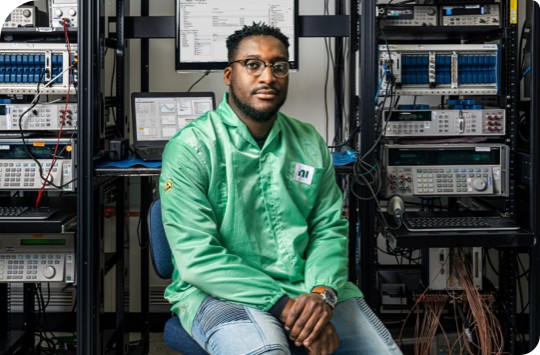
engineer sitting in a validation lab next to test systems

Discover how validation engineers accelerate their productivity by using NI products to meet validation requirements and increase test coverage.

ADAS/Body Control Hardware in the Loop

Valeo developed a system to design and test automated parking systems that can adapt to changing requirements within shrinking timelines.

Through HIL standardization, engineers reduced system development time from six months to one month for body control ECU validation.

Danfoss Power Solutions GmbH & Co. OHG designed a test system for embedded application software that allows users to program test cases in a textual language.

Alma Automotive developed a modular HIL test system for real-time engine and vehicle simulation to reduce the amount of required physical testing.

Researchers developed a hardware-in-the-loop (HIL) simulation platform to accelerate the development of the Electronic Stability Program (ESP) control algorithm. 

Engineers developed a HIL test system capable of testing multiple computerized functions for an in-vehicle indicator electronic control unit (ECU).

Frazer-Nash Consultancy created the Train Zero facility for integration and validation testing of Bombardier train systems and models. 

Powertrain Hardware in the Loop

Tata Motors built a test system to test and validate the integration of multiple electronic control units (ECUs) for a parallel hybrid vehicle in just two months.

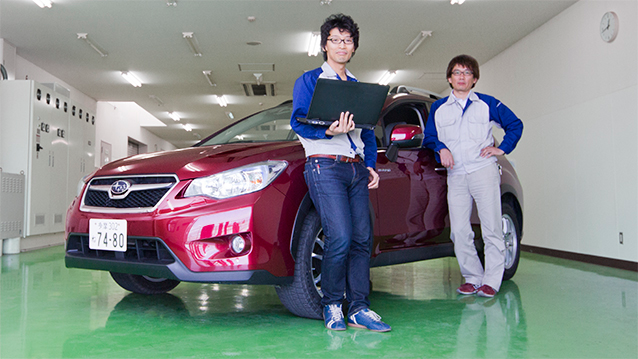
FUJI Heavy Industries, Ltd. built a verification system for Subaru to perform automatic test pattern execution and severe testing environment replication.

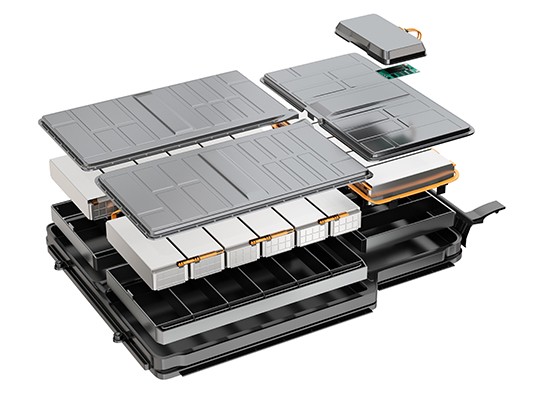
Jaguar Land Rover created a system to perform safety tests and validate battery management system (BMS) firmware algorithms on prototype hardware for vehicles.

ControlWorks created an HIL simulation environment for a battery management system (BMS) to shorten development time and reliability and to simplify test automation.

Engineers designed a high-efficiency, low-emission adaptable engine control unit for on-the-fly control of engines running on gasoline, or hydrogen, syngas, and fuel mixtures.

Tata Motors created a system for HIL and in-vehicle testing that can effectively carry out simulation, data logging, and implement complex control algorithms. 

MicroNova AG developed a compact, high-accuracy board that can simulate data from engines of up to 12 cylinders for hardware-in-the-loop test.

MicroNova AG designed a complete hardware-in-the-loop testing environment for engine simulation of the BMW Hydrogen 7 hybrid vehicle.

System Integration Testing

Austin Consultants developed an automatable and easily maintainable platform for open- and closed-loop testing on multiple linked ECMs and ECUs.

Researchers built a digital twin of a whole train, including a functional simulation of all the wiring, to test high-speed and commuter trains while saving costs.

WMG researchers used NI PXI and LabVIEW with scenario-generation tools to emulate GNSS position data and other RF signals to accurately emulate driving environments across the globe.

Volvo Cars extended the functionality of the Dynamic Driving Simulator to encompass active vehicle components and control systems, reducing costs and field-test time.

ITI and TraceTronic built a hardware-in-the-loop test bench through a holistic validation strategy for the embedded systems in an armored multipurpose vehicle. 

Functional Testing

Engineers developed a reliable bench control system for evaluating possible damage inside an automotive engine body during fatigue testing. 

Researchers created a hardware-in-the-loop (HIL) test system to simulate, control, and monitor passenger vehicle fuel cells developed by Ford Motor Company.

ITK Engineering AG (ITK) delivered a highly dynamic steering test bench, featuring full automation for realistic testing, to an automobile manufacturer.

Loccioni Group designed an automotive control program for data acquisition, management, processing, and reporting of the flow rate of diesel engine nozzles.

United Automotive Electronic Systems Co., Ltd. created a real-time oil pump bracket assembly test system for instrument control, motion control, and data acquisition.

Tools for Smart Minds developed a system for performing brake tests on discs produced by an R&D department with dynamometric benches inside test chambers.

Honda R&D Co., Ltd. built a fuel cell impedance measuring system capable of high-speed sampling and performing high-precision measurements of multiple channels.

Loccioni Group designed an automotive control program for data acquisition, management, processing, and reporting of the flow rate of diesel engine nozzles.

Engineers built an automatic calibration system for an ECU on a test bench to support fuel-film dynamics in a port fuel injection (PFI) internal combustion engine.

Researchers created a portable, handheld sound camera to visualize and identify transient buzz, squeak, and rattle (BSR) noise sources in Hyundai automobiles.

Computer Controlled Solutions Limited created a data acquisition and control system to safely handle and test a 30-ton drivetrain with high accuracy.

Radius Teknologies, LLC developed data acquisition, analysis, and presentation software for durability testing on up to four automotive starter motors in parallel.

Researchers designed an experimental full-scale test rig to monitor train traction equipment and implement efficient condition-based maintenance (CBM) techniques.

Engineers developed a reliable fatigue test rig that determines loading force and frequency according to engine and connecting rod parameters.

Communication and Signaling Testing

Thales UK tested a new automated signaling system with several virtual test trains (VTTs) to mimic an actual passenger train while improving time and reducing cost. 

Dongfeng Motor Corporation designed a method to filter SAE J1939 protocol IDs and to construct a CAN communication platform for a vehicle test environment.

Continental Automotive France Wireless Tests built a generic and configurable RF communication card for the ISM band at a lower cost compared to existing systems.

Researchers leveraged DIAdem and FPGA performance to develop telemetry and control systems for an electric race car to measure sensor values, perform motor control, and communicate with the inverters.

Van Technologies LLC created a universal automated test system to test radio components of different types and sizes in a very short time.

Researchers created an automatic system for data acquisition with distributed CAN measurement signals on up to six sensor boxes in a controlled temperature chamber.

Data Management and Analysis

Jaguar Land Rover implemented a solution and created a workflow to index metadata and search, inspect, analyze, and report on data 20 times faster.

Toyota Motors used an analysis environment for model-based development that helped the team reuse test data and reduce man-hours by about 50 percent.

Autoliv North America streamlined and automated crash test data analysis and reporting for automotive safety tests, improving data management and turnaround time.

Engineers developed a supervisory control and data acquisition (SCADA) system to simultaneously test multiple traction test objects using AC drives for locomotives.

Production

Technician in a cleanroom suite operating semiconductor test.

Learn how production test teams save time and cost through standardization on the NI platform.

Electronics Testing

Hyundai Kefico built a standard architecture to meet manufacturing test deadlines for increasingly complex powertrain ECUs with more than 200 pins and 20,000 test steps.

Loccioni created a test bench to standardize testing of Magneti Marelli inverters and engine control units (ECUs) for the new LaFerrari car hybrid application.

Noffz developed an efficient multidevice tester with run-in screening and functionality testing for eCall products in accordance with automotive specifications.

Bosch built an automated test system to perform optical, electrical, and acoustical measurements for elements of vehicle and driver assistance functions.

WKS Informatik GmbH built an automated system for electrical tests of the LV124 automotive standard while reducing test time and providing insight into ECU behavior.

Physical Testing

Signal.X created a custom end-of-line functional and performance test system for a powertrain component with two independent test cells responsible for all systems.

Researchers developed a machine vision system for automated inspection of brake drum assemblies that can account for variations and for differences in assembly.

Raeburn Technology developed a low-cost, real-time engine knock analyzer that utilizes a visual display for intuitive and accurate knock determination.

SIMPRO developed a cost-effective system to measure the phase angle of a camshaft in automotive combustion engines in real time.

Engineers created an end-of-line test system to provide a traceable quality standard of clutch drive plates for supplying OE parts to the automotive industry.

Omiga Technology Limited automated the manufacturing process of automotive body parts within a multi-axis control system to significantly lower operational cost.

Maintenance and Monitoring

Person performing in-vehicle monitoring of a passenger car

Learn how engineers created systems for diagnostics and reporting during road test, production, fleet monitoring, and more.

The Institute of Sound and Vibration Research developed a cost-effective, real-time, active engine and noise control system with CompactRIO to monitor the car cabin environment and reduce low-frequency noise.

Vehicle Projects LLC developed a system to control and monitor the safety and operation of a 250 kW fuel-cell hybrid locomotive using a programmed touch panel.

Researchers developed a moving source beamforming application for visualizing the noise sources on the KTX-Sancheon high-speed train to reduce environmental noise. 

London Underground Limited designed a cost-effective, large-scale distributed system to simultaneously monitor 385 deep tube track circuit assets in real time.

Cambridge University Eco Racing used CAN, remote data analysis, and telemetry to reliably monitor and control the electrical systems of a solar-powered car.

Dublin Institute of Technology quickly developed a lightweight, fully customizable data acquisition system to analyze the performance of a Formula Student race car.

Researchers developed a system to monitor rail conditions of a segment of the Paris RER and to help the RATP automatically alter its maintenance schedule as necessary.

Lightning Hybrids created a retrofit system to hydraulically store wasted braking energy as hydraulic pressure that can be reused to accelerate the vehicle.

Researchers created a system to monitor the vibration generated by traction systems in diesel vehicles to achieve early detection of abnormalities.

Researchers designed a rugged monitoring system to predicting parts failure in the bevel planetary gearbox of a bucket-wheel excavator power transmission system.

Researchers developed a rugged data logger with field-configurable plug-and-play I/O modules for monitoring railroad track condition and performance of rail vehicles.