SVX Buffer Waterfall Graph VI
- Updated2024-06-18
- 8 minute(s) read
SVX Buffer Waterfall Graph VI
Owning Palette: Transient Spectra VIs
Requires: Sound and Vibration Toolkit
Buffers signals and returns the buffered signals up to a maximum count. If you use this VI with the Waterfall Graph, the display mimics the behavior of a chart. Wire data to the waterfall graph data input to determine the polymorphic instance to use or manually select the instance.
SVX Buffer Waterfall Graph (Waterfall Data)

 |
reset on change to dx specifies whether the buffering VI checks for consistency in dx between the input data and the buffered data. If reset on change to dx (F) is TRUE and the dx of the input data is not equal to the dx of the buffered data, the buffer resets. The default is FALSE. | ||||||||||||
|
reset? clears the buffer. The default is FALSE. | ||||||||||||
 |
waterfall graph data specifies an array of 2D waveform signals in three dimensions.
| ||||||||||||
 |
error in describes error conditions that occur before this node runs. This input provides standard error in functionality. | ||||||||||||
 |
number of spectra specifies the maximum number of spectra to buffer for display. number of spectra is similar to the chart history of a chart. The default is 40 spectra. | ||||||||||||
 |
waterfall graph data out returns an array of 2D waveform signals in three dimensions. You can display this information with the Waterfall Graph.
| ||||||||||||
 |
error out contains error information. This output provides standard error out functionality. |


SVX Buffer Waterfall Graph (N Traces)
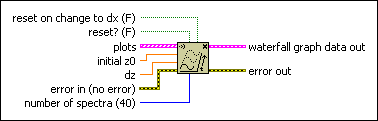
|
reset on change to dx specifies whether the buffering VI checks for consistency in dx between the input data and the buffered data. If reset on change to dx (F) is TRUE and the dx of the input data is not equal to the dx of the buffered data, the buffer resets. The default is FALSE. | ||||||||||||
|
reset? clears the buffer. The default is FALSE. | ||||||||||||
 |
plots specifies the data on the waterfall graph.
| ||||||||||||
 |
initial z0 specifies the initial value of the first plot on the z-axis. initial z0 is ignored after the first plot unless reset? (F) is TRUE. | ||||||||||||
|
dz specifies the interval between plots on the z-axis. | ||||||||||||
|
error in describes error conditions that occur before this node runs. This input provides standard error in functionality. | ||||||||||||
|
number of spectra specifies the maximum number of spectra to buffer for display. number of spectra is similar to the chart history of a chart. The default is 40 spectra. | ||||||||||||
|
waterfall graph data out returns an array of 2D waveform signals in three dimensions. You can display this information with the Waterfall Graph.
| ||||||||||||
|
error out contains error information. This output provides standard error out functionality. |
SVX Buffer Waterfall Graph (1 Trace)
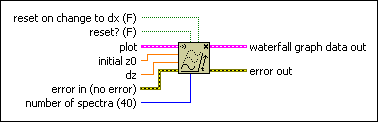
|
reset on change to dx specifies whether the buffering VI checks for consistency in dx between the input data and the buffered data. If reset on change to dx (F) is TRUE and the dx of the input data is not equal to the dx of the buffered data, the buffer resets. The default is FALSE. | ||||||||||||
|
reset? clears the buffer. The default is FALSE. | ||||||||||||
|
plot specifies the data of a single plot on the waterfall graph.
| ||||||||||||
|
initial z0 specifies the initial value of the first plot on the z-axis. initial z0 is ignored after the first plot unless reset? (F) is TRUE. | ||||||||||||
|
dz specifies the interval between plots on the z-axis. | ||||||||||||
|
error in describes error conditions that occur before this node runs. This input provides standard error in functionality. | ||||||||||||
|
number of spectra specifies the maximum number of spectra to buffer for display. number of spectra is similar to the chart history of a chart. The default is 40 spectra. | ||||||||||||
|
waterfall graph data out returns an array of 2D waveform signals in three dimensions. You can display this information with the Waterfall Graph.
| ||||||||||||
|
error out contains error information. This output provides standard error out functionality. |