PCIe-6353 and USB-6353 Specifications
- Updated2025-06-26
- 13 minute(s) read
Definitions
Warranted specifications describe the performance of a model under stated operating conditions and are covered by the model warranty.
Characteristics describe values that are relevant to the use of the model under stated operating conditions but are not covered by the model warranty.
- Typical specifications describe the performance met by a majority of models.
- Nominal specifications describe an attribute that is based on design, conformance testing, or supplemental testing.
Specifications are Typical unless otherwise noted.
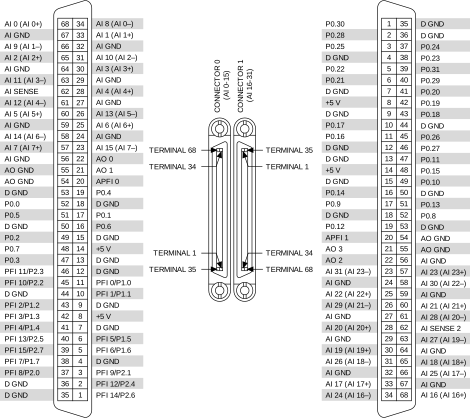
PCIe-6353 Pinout
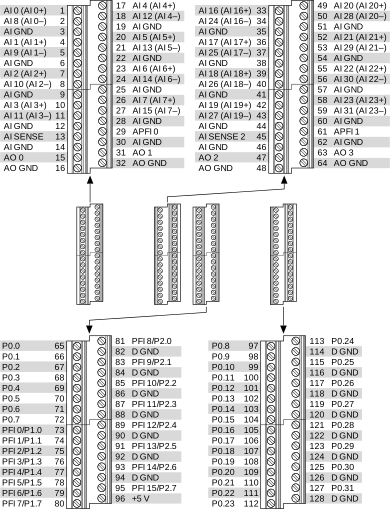
USB-6353 Pinout
Analog Input
Number of channels | 16 differential or 32 single ended | ||||||||||||||||||
ADC resolution | 16 bits | ||||||||||||||||||
DNL | No missing codes guaranteed | ||||||||||||||||||
INL | Refer to the AI Absolute Accuracy section. | ||||||||||||||||||
| |||||||||||||||||||
Timing resolution | 10 ns | ||||||||||||||||||
Timing accuracy | 50 ppm of sample rate | ||||||||||||||||||
Input coupling | DC | ||||||||||||||||||
Input range | ±0.1 V, ±0.2 V, ±0.5 V, ±1 V, ±2 V, ±5 V, ±10 V | ||||||||||||||||||
Maximum working voltage for analog inputs (signal + common mode) | ±11 V of AI GND | ||||||||||||||||||
CMRR (DC to 60 Hz) | 100 dB | ||||||||||||||||||
| |||||||||||||||||||
Input bias current | ±100 pA | ||||||||||||||||||
| |||||||||||||||||||
Small signal bandwidth (-3 dB) | 1.7 MHz | ||||||||||||||||||
Input FIFO size | 4,095 samples | ||||||||||||||||||
Scan list memory | 4,095 entries | ||||||||||||||||||
| |||||||||||||||||||
| |||||||||||||||||||
Input current during overvoltage condition | ±20 mA max/AI pin | ||||||||||||||||||
Settling Time for Multichannel Measurements
| Range | ±60 ppm of Step (±4 LSB for Full-Scale Step) | ±15 ppm of Step (±1 LSB for Full-Scale Step) |
|---|---|---|
| ±10 V, ±5 V, ±2 V, ±1 V | 1 μs | 1.5 μs |
| ±0.5 V | 1.5 μs | 2 μs |
| ±0.2 V, ±0.1 V | 2 μs | 8 μs |
Typical Performance Graphs

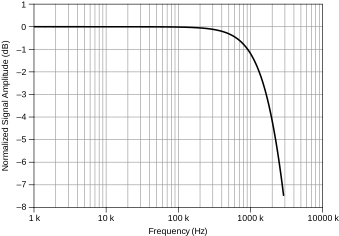
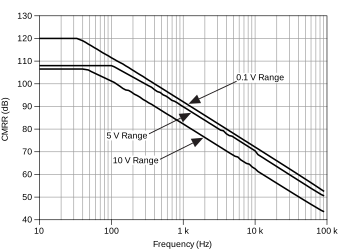
AI Absolute Accuracy
| Nominal Range Positive Full Scale | Nominal Range Negative Full Scale | Residual Gain Error (ppm of Reading) | Residual Offset Error (ppm of Range) | Offset Tempco (ppm of Range/°C) | Random Noise, σ (μVrms) | Absolute Accuracy at Full Scale (μV) |
|---|---|---|---|---|---|---|
| 10 | -10 | 48 | 13 | 21 | 281 | 1,520 |
| 5 | -5 | 55 | 13 | 21 | 137 | 800 |
| 2 | -2 | 55 | 13 | 24 | 56 | 320 |
| 1 | -1 | 65 | 17 | 27 | 35 | 180 |
| 0.5 | -0.5 | 68 | 17 | 34 | 26 | 95 |
| 0.2 | -0.2 | 95 | 27 | 55 | 21 | 50 |
| 0.1 | -0.1 | 108 | 45 | 90 | 16 | 32 |
For more information about absolute accuracy at full scale, refer to the AI Absolute Accuracy Example section.
Gain tempco | 13 ppm/°C |
Reference tempco | 1 ppm/°C |
INL error | 46 ppm of range |
AI Absolute Accuracy Equation
AbsoluteAccuracy = Reading · (GainError) + Range · (OffsetError) + NoiseUncertainity
- GainError = ResidualGainError + GainTempco · (TempChangeFromLastInternalCal) + ReferenceTempco · (TempChangeFromLastExternalCal)
- OffsetError = ResidualOffsetError + OffsetTempco · (TempChangeFromLastInternalCal) + INLError
- NoiseUncertainty = for a coverage factor of 3 σ and averaging 10,000 points.
AI Absolute Accuracy Example
Absolute accuracy at full scale on the analog input channels is determined using the following assumptions:
- TempChangeFromLastExternalCal = 10 °C
- TempChangeFromLastInternalCal = 1 °C
- number_of_readings = 10,000
- CoverageFactor = 3 σ
For example, on the 10 V range, the absolute accuracy at full scale is as follows:
- GainError = 48 ppm + 13 ppm · 1 + 1 ppm · 10 = 71 ppm
- OffsetError = 13 ppm + 21 ppm · 1 + 46 ppm = 80 ppm
- NoiseUncertainty = = 8.4 µV
- AbsoluteAccuracy = 10 V · (GainError) + 10 V · (OffsetError) + NoiseUncertainty = 1,520 µV
Analog Triggers
| Number of triggers | 1 |
| Source | AI <0..31>, APFI <0..1> |
| Functions | Start Trigger, Reference Trigger, Pause Trigger, Sample Clock, Convert Clock, Sample Clock Timebase |
| Resolution | 16 bits |
| Modes | Analog edge triggering, analog edge triggering with hysteresis, and analog window triggering |
| Accuracy | ±1% of range |
| AI <0..31> | ±Full scale |
| APFI <0..1> | ±10 V |
| AI <0..31> | 3.4 MHz |
| APFI <0..1> | 3.9 MHz |
| Input impedance | 10 kΩ |
| Coupling | DC |
| Protection, power on | ±30 V |
| Protection, power off | ±15 V |
Analog Output
Number of channels | 4 | ||||||||||
DAC resolution | 16 bits | ||||||||||
DNL | ±1 LSB | ||||||||||
Monotonicity | 16 bit guaranteed | ||||||||||
Accuracy | Refer to the AO Absolute Accuracy table. | ||||||||||
| |||||||||||
Timing accuracy | 50 ppm of sample rate | ||||||||||
Timing resolution | 10 ns | ||||||||||
Output range | ±10 V, ±5 V, ±external reference on APFI <0..1> | ||||||||||
Output coupling | DC | ||||||||||
Output impedance | 0.2 Ω | ||||||||||
Output current drive | ±5 mA | ||||||||||
Overdrive protection | ±25 V | ||||||||||
Overrdrive current | 26 mA | ||||||||||
Power-on state | ±5 mV | ||||||||||
| |||||||||||
Output FIFO size | 8,191 samples shared among channels used | ||||||||||
| |||||||||||
AO waveform modes | Non-periodic waveform, periodic waveform regeneration mode from onboard FIFO, periodic waveform regeneration from host buffer including dynamic update | ||||||||||
Settling time, full-scale step, 15 ppm (1 LSB) | 2 μs | ||||||||||
Slew rate | 20 V/μs | ||||||||||
Glitch energy at midscale transition, ±10 V range | 10 nV · s | ||||||||||
External Reference
| Specification | Value |
|---|---|
| Input impedance | 10 kΩ |
| Coupling | DC |
| Protection, device on | ±30 V |
| Protection, device off | ±15 V |
| Range | ±11 V |
| Slew rate | 20 V/μs |

AO Absolute Accuracy
Absolute accuracy at full-scale numbers is valid immediately following self calibration and assumes the device is operating within 10 °C of the last external calibration.
| Nominal Range Positive Full Scale | Nominal Range Negative Full Scale | Residual Gain Error (ppm of Reading) | Gain Tempco (ppm/°C) | Reference Tempco (ppm/°C) | Residual Offset Error (ppm of Range) | Offset Tempco (ppm of Range/°C) | INL Error (ppm of Range) | Absolute Accuracy at Full Scale (μV) |
|---|---|---|---|---|---|---|---|---|
| 10 | -10 | 63 | 17 | 1 | 33 | 2 | 64 | 1,890 |
| 5 | -5 | 70 | 8 | 1 | 33 | 2 | 64 | 935 |
AO Absolute Accuracy Equation
AbsoluteAccuracy = OutputValue · (GainError) + Range · (OffsetError)
- GainError = ResidualGainError + GainTempco · (TempChangeFromLastInternalCal) + ReferenceTempco · (TempChangeFromLastExternalCal)
- OffsetError = ResidualOffsetError + OffsetTempco · (TempChangeFromLastInternalCal) + INLError
Digital I/O/PFI
Static Characteristics
Number of channels | 48 total, 32 (P0.<0..31>), 16 (PFI <0..7>/P1, PFI <8..15>/P2) |
Ground reference | D GND |
Direction control | Each terminal individually programmable as input or output |
Pull-down resistor | 50 kΩ typical, 20 kΩ minimum |
Input voltage protection | ±20 V on up to two pins |
Waveform Characteristics (Port 0 Only)
Terminals used | Port 0 (P0.<0..31>) | ||||||||||||||||||
Port/sample size | Up to 32 bits | ||||||||||||||||||
Waveform generation (DO) FIFO | 2,047 samples | ||||||||||||||||||
Waveform acquisition (DI) FIFO | 255 samples | ||||||||||||||||||
| |||||||||||||||||||
| |||||||||||||||||||
| |||||||||||||||||||
Digital line filter settings | 160 ns, 10.24 μs, 5.12 ms, disable | ||||||||||||||||||
PFI/Port 1/Port 2 Functionality
Functionality | Static digital input, static digital output, timing input, timing output |
Timing output sources | Many AI, AO, counter, DI, DO timing signals |
Debounce filter settings | 90 ns, 5.12 μs, 2.56 ms, custom interval, disable; programmable high and low transitions; selectable per input |
Recommended Operating Conditions
| |||||||
| |||||||
| |||||||
| |||||||
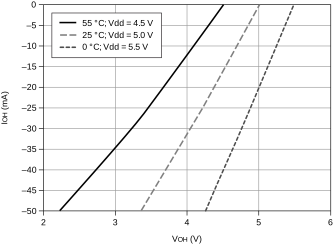
Digital I/O Characteristics
Positive-going threshold (VT+) | 2.2 V maximum |
Negative-going threshold (VT-) | 0.8 V minimum |
Delta VT hysteresis (VT+ - VT-) | 0.2 V minimum |
IIL input low current (VIN = 0 V) | -10 μA maximum |
IIH input high current (VIN = 5 V) | 250 μA maximum |


General-Purpose Counters
Number of counter/timers | 4 | ||||||
Resolution | 32 bits | ||||||
Counter measurements | Edge counting, pulse, pulse width, semi-period, period, two-edge separation | ||||||
Position measurements | X1, X2, X4 quadrature encoding with Channel Z reloading; two-pulse encoding | ||||||
Output applications | Pulse, pulse train with dynamic updates, frequency division, equivalent time sampling | ||||||
Internal base clocks | 100 MHz, 20 MHz, 100 kHz | ||||||
External base clock frequency | 0 MHz to 25 MHz | ||||||
Base clock accuracy | 50 ppm | ||||||
Inputs | Gate, Source, HW_Arm, Aux, A, B, Z, Up_Down, Sample Clock | ||||||
| |||||||
FIFO | 127 samples per counter | ||||||
| |||||||
Frequency Generator
Number of channels | 1 |
Base clocks | 20 MHz, 10 MHz, 100 kHz |
Divisors | 1 to 16 |
Base clock accuracy | 50 ppm |
Output can be available on any PFI or RTSI terminal.
Phase-Locked Loop
Number of PLLs | 1 |
| Reference Signal | PCIe Locking Input Frequency (MHz) | USB Locking Input Frequency (MHz) |
|---|---|---|
| RTSI <0..7> | 10, 20 | — |
| PFI <0..15> | 10, 20 | 10 |
Output of PLL | 100 MHz Timebase; other signals derived from 100 MHz Timebase including 20 MHz and 100 kHz Timebases |
External Digital Triggers
| |||||||
Polarity | Software-selectable for most signals | ||||||
Analog input function | Start Trigger, Reference Trigger, Pause Trigger, Sample Clock, Convert Clock, Sample Clock Timebase | ||||||
Analog output function | Start Trigger, Pause Trigger, Sample Clock, Sample Clock Timebase | ||||||
Counter/timer functions | Gate, Source, HW_Arm, Aux, A, B, Z, Up_Down, Sample Clock | ||||||
Digital waveform generation (DO) function | Start Trigger, Pause Trigger, Sample Clock, Sample Clock Timebase | ||||||
Digital waveform acquisition (DI) function | Start Trigger, Reference Trigger, Pause Trigger, Sample Clock, Sample Clock Timebase | ||||||
Device-to-Device Trigger Bus
| |||||||
| |||||||
Output selections | 10 MHz Clock, frequency generator output, many internal signals | ||||||
Debounce filter settings | 90 ns, 5.12 μs, 2.56 ms, custom interval, disable; programmable high and low transitions; selectable per input | ||||||
Bus Interface
| |||||||||
| |||||||||
Power Requirements
| |||||||||||||||||||||
| |||||||||||||||||||||
Current Limits
| |||||||||||||||||||
| |||||||||||||||||||
Physical Characteristics
| |||||||
| |||||||
| |||||||
| |||||||
| Manufacturer, Part Number | Description |
|---|---|
| MOLEX 71430-0011 | 68-Pos Right Angle Single Stack PCB-Mount VHDCI (Receptacle) |
| MOLEX 74337-0016 | 68-Pos Right Angle Dual Stack PCB-Mount VHDCI (Receptacle) |
| MOLEX 71425-3001 | 68-Pos Offset IDC Cable Connector (Plug) (SHC68-*) |
PCIe disk drive power connector | Standard ATX peripheral connector (not serial ATA) |
USB screw terminal wiring | 16-24 AWG |
Calibration
Recommended warm-up time | 15 minutes |
Calibration interval | 2 years |
Maximum Working Voltage
Channel to earth | 11 V, Measurement Category I |
Environmental
| Operating temperature | 0 to 50 °C |
| Storage temperature | -40 to 70 ºC |
| Operating humidity | 10 to 90% RH, noncondensing |
| Storage humidity | 5 to 95% RH, noncondensing |
| Pollution Degree | 2 |
| Maximum altitude | 2,000 m |
Indoor use only.
Safety Compliance Standards
This product is designed to meet the requirements of the following electrical equipment safety standards for measurement, control, and laboratory use:
- IEC 61010-1, EN 61010-1
- UL 61010-1, CSA C22.2 No. 61010-1
Electromagnetic Compatibility
This product meets the requirements of the following EMC standards for electrical equipment for measurement, control, and laboratory use:
- EN 61326-1 (IEC 61326-1): Class A emissions; Basic immunity
- EN 55011 (CISPR 11): Group 1, Class A emissions
- AS/NZS CISPR 11: Group 1, Class A emissions
- FCC 47 CFR Part 15B: Class A emissions
- ICES-001: Class A emissions
CE Compliance

This product meets the essential requirements of applicable European Directives, as follows:
- 2014/35/EU; Low-Voltage Directive (safety)
- 2014/30/EU; Electromagnetic Compatibility Directive (EMC)
- 2011/65/EU; Restriction of Hazardous Substances (RoHS)
- 2014/53/EU; Radio Equipment Directive (RED)
- 2014/34/EU; Potentially Explosive Atmospheres (ATEX)
Product Certifications and Declarations
Refer to the product Declaration of Conformity (DoC) for additional regulatory compliance information. To obtain product certifications and the DoC for NI products, visit ni.com/product-certifications, search by model number, and click the appropriate link.
Environmental Management
NI is committed to designing and manufacturing products in an environmentally responsible manner. NI recognizes that eliminating certain hazardous substances from our products is beneficial to the environment and to NI customers.
For additional environmental information, refer to the Engineering a Healthy Planet web page at ni.com/environment. This page contains the environmental regulations and directives with which NI complies, as well as other environmental information not included in this document.
EU and UK Customers
 Waste
Electrical and Electronic Equipment (WEEE)—At the end of the product life cycle, all NI products must be disposed of according to
local laws and regulations. For more information about how to recycle NI products in
your region, visit ni.com/environment/weee.
Waste
Electrical and Electronic Equipment (WEEE)—At the end of the product life cycle, all NI products must be disposed of according to
local laws and regulations. For more information about how to recycle NI products in
your region, visit ni.com/environment/weee. 电子信息产品污染控制管理办法(中国RoHS)
 中国RoHS—
NI符合中国电子信息产品中限制使用某些有害物质指令(RoHS)。关于NI中国RoHS合规性信息,请登录
ni.com/environment/rohs_china。(For
information about China RoHS compliance, go to
ni.com/environment/rohs_china.)
中国RoHS—
NI符合中国电子信息产品中限制使用某些有害物质指令(RoHS)。关于NI中国RoHS合规性信息,请登录
ni.com/environment/rohs_china。(For
information about China RoHS compliance, go to
ni.com/environment/rohs_china.)
1 Typical behavior. Time period may be longer due to host system USB performance. Time period will be longer during firmware updates.
2 Some motherboards reserve the x16 slot for graphics use. For PCI Express guidelines, refer to ni.com/pciexpress.
3 Operating on a full-speed bus results in lower performance, and you might not be able to achieve maximum sampling/update rates.
4 Has a self-resetting fuse that opens when current exceeds this specification.