Eye Pattern Limit Test VI
- Updated2023-02-21
- 10 minute(s) read
Eye Pattern Limit Test VI
Owning Palette: Eye Diagram Measurements VIs
Requires: Jitter Analysis Toolkit
Applies a mask to an eye diagram to perform limit testing on unit intervals in the diagram. Wire data to the waveform input to determine the polymorphic instance to use or manually select the instance.
Use the Eye Data Generation VI to generate the eye diagram data to which you want to apply the mask. Use the Eye Pattern Mask Definition VI to define the mask you want to apply to the eye diagram. Refer to the Details section of this topic for more information about using this VI with the rest of the Eye Diagram Measurements VIs.
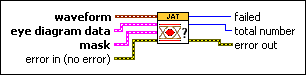
Eye Pattern Limit Test (DBL)
This instance operates on the waveform data type when the Y data values are double-precision, floating-point numeric values. Use the I8 instance of this VI with integer data to reduce the size of the data and the memory usage.
 |
waveform is the waveform to measure.
| ||||||||||||||||||||||||||||||||||||||
 |
eye diagram data is a cluster of data that defines the eye diagram you want to plot.
| ||||||||||||||||||||||||||||||||||||||
|
mask defines a region in the eye diagram you want to compare with waveform segments. Use the Eye Pattern Mask Definition VI to generate this cluster.
| ||||||||||||||||||||||||||||||||||||||
 |
error in describes error conditions that occur before this node runs. This input provides standard error in functionality. | ||||||||||||||||||||||||||||||||||||||
 |
failed returns the number of samples in the waveform that fall inside the mask region or that violate the upper limit or lower limit you specify. | ||||||||||||||||||||||||||||||||||||||
|
total number returns the total number of samples in the waveform. | ||||||||||||||||||||||||||||||||||||||
 |
error out contains error information. This output provides standard error out functionality. |


Eye Pattern Limit Test (I8)
This instance operates on the waveform data type when the Y data values are 8-bit signed integers.
|
waveform is the waveform to measure.
| ||||||||||||||||||||||||||||||||||||||
|
eye diagram data is a cluster of data that defines the eye diagram you want to plot.
| ||||||||||||||||||||||||||||||||||||||
|
mask defines a region in the eye diagram you want to compare with waveform segments. Use the Eye Pattern Mask Definition VI to generate this cluster.
| ||||||||||||||||||||||||||||||||||||||
|
error in describes error conditions that occur before this node runs. This input provides standard error in functionality. | ||||||||||||||||||||||||||||||||||||||
|
failed returns the number of samples in the waveform that fall inside the mask region or that violate the upper limit or lower limit you specify. | ||||||||||||||||||||||||||||||||||||||
|
total number returns the total number of samples in the waveform. | ||||||||||||||||||||||||||||||||||||||
|
error out contains error information. This output provides standard error out functionality. |

Eye Pattern Limit Test Details
The following block diagram illustrates a common workflow for using this VI to perform limit testing.

Example
Refer to the Mask and Limit Test VI in the labview\examples\Jitter Analysis\Eye Diagram Measurements directory for an example of using the Eye Pattern Limit Test VI.