CD Root Locus VI
- Updated2023-03-14
- 9 minute(s) read
CD Root Locus VI
Owning Palette: Dynamic Characteristics VIs
Requires: Control Design and Simulation Module
Plots the Evans plot or trajectory of closed-loop poles of a single-input single-output (SISO) system as the feedback gain varies from zero to infinity. You can display this data in a root locus graph indicator. Wire data to the State-Space Model input to determine the polymorphic instance to use or manually select the instance.
CD Root Locus (State-Space)

 |
Root Locus Graph Reference specifies a reference to the Root Locus Graph. | ||||||||
 |
State-Space Model contains a mathematical representation of and information about the system for which this VI generates the root locus, or Evans, plot. | ||||||||
 |
Gain Info specifies the initial and final gain values.
| ||||||||
 |
Gain specifies the feedback gain to apply to each open-loop model pole. Use this parameter to determine the feedback gain necessary to place an open-loop pole in a particular location. Each element of the Gain parameter corresponds to a different open-loop pole. | ||||||||
 |
error in describes error conditions that occur before this node runs. This input provides standard error in functionality. | ||||||||
 |
Feedback specifies the type of feedback, positive or negative.
|
||||||||
 |
Minimum Number of Points specifies the minimum number of points this VI uses for the root locus plot. The default is 300 points. | ||||||||
 |
Root Locus Graph displays the Evans plot of a SISO feedback system on an XY graph. Right-click this terminal on the block diagram and select Create»Indicator from the shortcut menu to display this data in a root locus graph indicator. | ||||||||
|
Root Locus Data returns information about the root locus calculation.
| ||||||||
|
Root Locus Information returns information about the root locus plot, such as the bifurcation points and open-loop poles and zeros.
| ||||||||
 |
error out contains error information. This output provides standard error out functionality. |


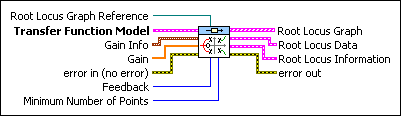
CD Root Locus (Transfer Function)
|
Root Locus Graph Reference specifies a reference to the Root Locus Graph. | ||||||||
|
Transfer Function Model contains a mathematical representation of and information about the system for which this VI generates the root locus, or Evans, plot. | ||||||||
|
Gain Info specifies the initial and final gain values.
| ||||||||
|
Gain specifies the feedback gain to apply to each open-loop model pole. Use this parameter to determine the feedback gain necessary to place an open-loop pole in a particular location. Each element of the Gain parameter corresponds to a different open-loop pole. | ||||||||
|
error in describes error conditions that occur before this node runs. This input provides standard error in functionality. | ||||||||
|
Feedback specifies the type of feedback, positive or negative.
|
||||||||
|
Minimum Number of Points specifies the minimum number of points this VI uses for the root locus plot. The default is 300 points. | ||||||||
|
Root Locus Graph displays the Evans plot of a SISO feedback system on an XY graph. Right-click this terminal on the block diagram and select Create»Indicator from the shortcut menu to display this data in a root locus graph indicator. | ||||||||
|
Root Locus Data returns information about the root locus calculation.
| ||||||||
|
Root Locus Information returns information about the root locus plot, such as the bifurcation points and open-loop poles and zeros.
| ||||||||
|
error out contains error information. This output provides standard error out functionality. |
CD Root Locus (Zero-Pole-Gain)

|
Root Locus Graph Reference specifies a reference to the Root Locus Graph. | ||||||||
|
Zero-Pole-Gain Model contains a mathematical representation of and information about the system for which this VI generates the root locus, or Evans, plot. | ||||||||
|
Gain Info specifies the initial and final gain values.
| ||||||||
|
Gain specifies the feedback gain to apply to each open-loop model pole. Use this parameter to determine the feedback gain necessary to place an open-loop pole in a particular location. Each element of the Gain parameter corresponds to a different open-loop pole. | ||||||||
|
error in describes error conditions that occur before this node runs. This input provides standard error in functionality. | ||||||||
|
Feedback specifies the type of feedback, positive or negative.
|
||||||||
|
Minimum Number of Points specifies the minimum number of points this VI uses for the root locus plot. The default is 300 points. | ||||||||
|
Root Locus Graph displays the Evans plot of a SISO feedback system on an XY graph. Right-click this terminal on the block diagram and select Create»Indicator from the shortcut menu to display this data in a root locus graph indicator. | ||||||||
|
Root Locus Data returns information about the root locus calculation.
| ||||||||
|
Root Locus Information returns information about the root locus plot, such as the bifurcation points and open-loop poles and zeros.
| ||||||||
|
error out contains error information. This output provides standard error out functionality. |
CD Root Locus Details
This VI does not support delays unless the delays are part of the mathematical model that represents the dynamic system. To account for the delays when calculating the dynamics of a system, you must incorporate the delays into the mathematical model of the dynamic system using the CD Convert Delay with Pade Approximation VI (continuous models) or the CD Convert Delay to Poles at Origin VI (discrete models). Refer to the LabVIEW Control Design User Manual for more information about delays and the limitations of Pade Approximation.