Acquiring and Generating PCM Signals of Different Serial Audio Interface Types
- Updated2023-10-12
- 4 minute(s) read
Acquiring and Generating PCM Signals of Different Serial Audio Interface Types
You must complete specific API configurations to acquire and generate PCM signals of each serial audio interface type that has unique timing logic. You can use the following example API configurations or modify API controls based on your test needs.
Introduced in Digital Audio Acquisition and Generation Toolkit 2023 Q3
I2S
| API Control | Value | |
|---|---|---|
| PCM Data Configuration | Frame Sync Edge for Channel 0 | Falling |
| Channel Count Per Frame | 2 | |
| Channel Length | 32 | |
| Bit Depth | 24 | |
| Channel 0 Offset | 1 | |
| Endianness | MSB First | |
| Data Justification | Left Justified | |
| Frame Sync Clock Control | Frame Length | 64 |
| Frame Sync Pulse Width | 32 | |
| Bit Clock Edge Sync | Falling | |
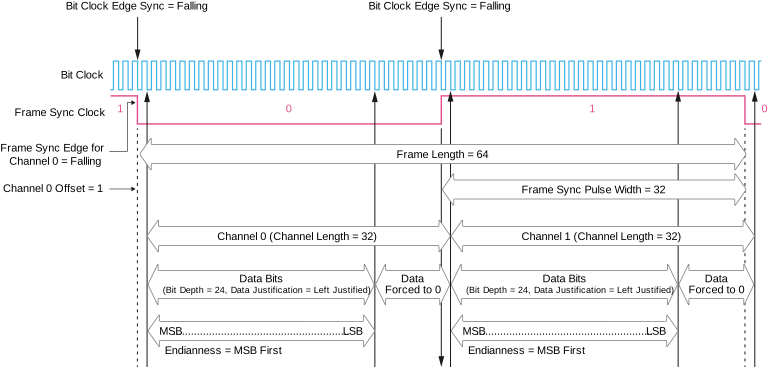
The following figure demonstrates the timing logic of I2S when you configure API controls as the previous table shows.
Left-Justified
| API Control | Value | |
|---|---|---|
| PCM Data Configuration | Frame Sync Edge for Channel 0 | Rising |
| Channel Count Per Frame | 2 | |
| Channel Length | 32 | |
| Bit Depth | 24 | |
| Channel 0 Offset | 0 | |
| Endianness | MSB First | |
| Data Justification | Left Justified | |
| Frame Sync Clock Control | Frame Length | 64 |
| Frame Sync Pulse Width | 32 | |
| Bit Clock Edge Sync | Falling | |
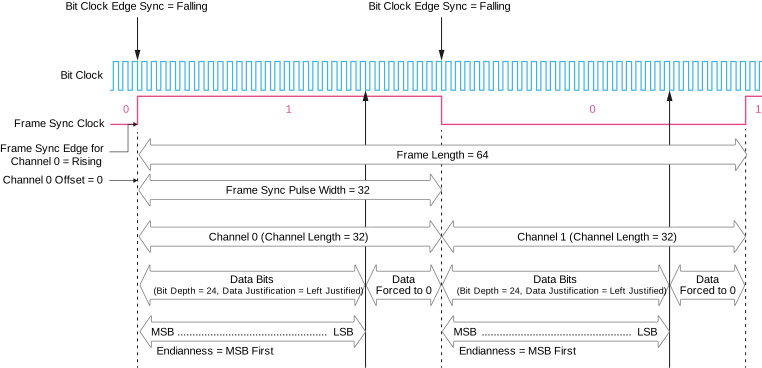
The following figure demonstrates the timing logic of left-justified when you configure API controls as the previous table shows.
Right-Justified
| API Control | Value | |
|---|---|---|
| PCM Data Configuration | Frame Sync Edge for Channel 0 | Rising |
| Channel Count Per Frame | 2 | |
| Channel Length | 32 | |
| Bit Depth | 24 | |
| Channel 0 Offset | 0 | |
| Endianness | MSB First | |
| Data Justification | Right Justified | |
| Frame Sync Clock Control | Frame Length | 64 |
| Frame Sync Pulse Width | 32 | |
| Bit Clock Edge Sync | Falling | |
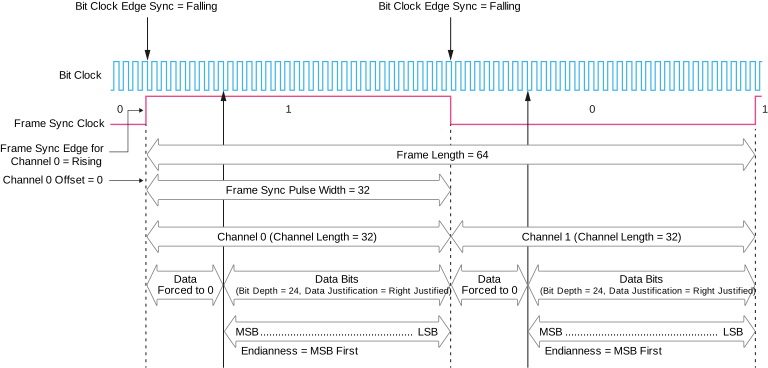
The following figure demonstrates the timing logic of right-justified when you configure API controls as the previous table shows.
4-Channel TDM
| API Control | Value | |
|---|---|---|
| PCM Data Configuration | Frame Sync Edge for Channel 0 | Rising |
| Channel Count Per Frame | 4 | |
| Channel Length | 32 | |
| Bit Depth | 24 | |
| Channel 0 Offset | 0 | |
| Endianness | MSB First | |
| Data Justification | Left Justified | |
| Frame Sync Clock Control | Frame Length | 128 |
| Frame Sync Pulse Width | 64 | |
| Bit Clock Edge Sync | Falling | |
The following figure demonstrates the timing logic of 4-Channel TDM when you configure API controls as the previous table shows.

6-Channel TDM
| API Control | Value | |
|---|---|---|
| PCM Data Configuration | Frame Sync Edge for Channel 0 | Falling |
| Channel Count Per Frame | 6 | |
| Channel Length | 32 | |
| Bit Depth | 32 | |
| Channel 0 Offset | 0 | |
| Endianness | MSB First | |
| Data Justification | Left Justified | |
| Frame Sync Clock Control | Frame Length | 192 |
| Frame Sync Pulse Width | 96 | |
| Bit Clock Edge Sync | Falling | |
8-Channel TDM
| API Control | Value | |
|---|---|---|
| PCM Data Configuration | Frame Sync Edge for Channel 0 | Falling |
| Channel Count Per Frame | 8 | |
| Channel Length | 32 | |
| Bit Depth | 24 | |
| Channel 0 Offset | 0 | |
| Endianness | MSB First | |
| Data Justification | Left Justified | |
| Frame Sync Clock Control | Frame Length | 256 |
| Frame Sync Pulse Width | 128 | |
| Bit Clock Edge Sync | Falling | |
S/PDIF
| API Control | Value | |
|---|---|---|
| PCM Data Configuration | Frame Sync Edge for Channel 0 | Depending on test needs |
| Channel Count Per Frame | Depending on test needs | |
| Channel Length | Depending on test needs | |
| Bit Depth | 16 | |
| Channel 0 Offset | 4 | |
| Endianness | MSB First | |
| Data Justification | Left Justified | |
| Frame Sync Clock Control | Frame Length | Depending on test needs |
| Frame Sync Pulse Width | Depending on test needs | |
| Bit Clock Edge Sync | Depending on test needs | |
The following figure demonstrates the timing logic of S/PDIF when you configure API controls as the previous table shows.

If you set Channel 0 Offset to 0 and Bit Depth to 24, the timing logic of S/PDIF changes as the following figure shows.
