IMAQ FPGA Edge Detection VI
- Updated2023-02-21
- 130 minute(s) read
Requires: NI Vision Development Module FPGA
Extracts the contours (detects edges) in gray-level values. Refer to the NI Vision Concepts Help for more information about edge-detection filters.
 |
Note
This VI has variable latency, which is dependent on the image size. Plug the Minimum Latency value from the Estimated Performance section into the following formula to determine the total latency. All instances of this VI use a 3 x 3 kernel size. For the x1 VI instances, use this forumla to calculate the total latency:
For the x8 VI instances, use this forumla to calculate the total latency:
|
IMAQ FPGA Differentiation U8 x1
Extracts the contours (detects edges) in gray-level values using a Differentiation filter.
Supported Image Types


 |
Pixel Bus In when Input Valid is TRUE, contains one of the following: valid pixel data, an end of line signal, or an end of image signal.
|
||||||||||
|
Mask Pixel Bus In is an image that specifies the region of the image that will be copied. Only pixels in Pixel Bus In that correspond to a non-zero pixel in the mask image are copied. All other pixels are set to 0.
|
||||||||||
 |
Threshold Value is the minimum pixel value to appear in the resulting image. It is rare to use a value greater than 0 for this type of processing because the results from this processing are usually very dark and are not very dynamic. The default is 0. |
||||||||||
 |
Input Valid specifies whether the next data point has arrived for processing. Wire the Output Valid output of an upstream node to this input to transfer data from the upstream node to this node. |
||||||||||
|
Ready For Output specifies whether downstream nodes are ready for this node to return a new value. The default is TRUE. Use a Feedback Node to wire the Ready for Input output of a downstream node to this input of the current node.
|
||||||||||
 |
Pixel Bus Out when Input Valid is TRUE, contains one of the following: valid pixel data, an end of line signal, or an end of image signal.
|
||||||||||
 |
Output Valid returns TRUE if this node has computed a result that downstream nodes can use. Wire this output to the Input Valid input of a downstream node to transfer data from the node to the downstream node. |
||||||||||
|
Ready for Input returns TRUE if this node is ready to accept new input data. Use a Feedback Node to wire this output to the Ready for Output input of an upstream node.
|


IMAQ FPGA Differentiation U8 x1 Details
|
Note Resource estimates are based on a 40 MHz clock. |
Virtex-5
Estimated Device Utilization
- Slice Registers: 1266
- Slice LUTs: 1515
- DSP48s: 0
- Block RAMs: 4
Estimated Performance
- Minimum Latency: 19
- Initiation Interval: 1
Spartan-6
Estimated Device Utilization
- Slice Registers: 1265
- Slice LUTs: 1393
- DSP48s: 0
- Block RAMs: 8
Estimated Performance
- Minimum Latency: 19
- Initiation Interval: 1
Zynq
Estimated Device Utilization
- Slice Registers: 1478
- Slice LUTs: 1239
- DSP48s: 0
- Block RAMs: 5
Estimated Performance
- Minimum Latency: 17
- Initiation Interval: 1
Kintex-7
Estimated Device Utilization
- Slice Registers: 1456
- Slice LUTs: 1168
- DSP48s: 0
- Block RAMs: 5
Estimated Performance
- Minimum Latency: 17
- Initiation Interval: 1
IMAQ FPGA Differentiation U16 x1
Extracts the contours (detects edges) in gray-level values using a Differentiation filter.
Supported Image Types


|
Pixel Bus In when Input Valid is TRUE, contains one of the following: valid pixel data, an end of line signal, or an end of image signal.
|
||||||||||
|
Mask Pixel Bus In is an image that specifies the region of the image that will be copied. Only pixels in Pixel Bus In that correspond to a non-zero pixel in the mask image are copied. All other pixels are set to 0.
|
||||||||||
|
Threshold Value is the minimum pixel value to appear in the resulting image. It is rare to use a value greater than 0 for this type of processing because the results from this processing are usually very dark and are not very dynamic. The default is 0. |
||||||||||
|
Input Valid specifies whether the next data point has arrived for processing. Wire the Output Valid output of an upstream node to this input to transfer data from the upstream node to this node. |
||||||||||
|
Ready For Output specifies whether downstream nodes are ready for this node to return a new value. The default is TRUE. Use a Feedback Node to wire the Ready for Input output of a downstream node to this input of the current node.
|
||||||||||
|
Pixel Bus Out when Input Valid is TRUE, contains one of the following: valid pixel data, an end of line signal, or an end of image signal.
|
||||||||||
|
Output Valid returns TRUE if this node has computed a result that downstream nodes can use. Wire this output to the Input Valid input of a downstream node to transfer data from the node to the downstream node. |
||||||||||
|
Ready for Input returns TRUE if this node is ready to accept new input data. Use a Feedback Node to wire this output to the Ready for Output input of an upstream node.
|


IMAQ FPGA Differentiation U16 x1 Details
|
Note Resource estimates are based on a 40 MHz clock. |
Virtex-5
Estimated Device Utilization
- Slice Registers: 1760
- Slice LUTs: 2093
- DSP48s: 0
- Block RAMs: 6
Estimated Performance
- Minimum Latency: 19
- Initiation Interval: 1
Spartan-6
Estimated Device Utilization
- Slice Registers: 1760
- Slice LUTs: 1951
- DSP48s: 0
- Block RAMs: 14
Estimated Performance
- Minimum Latency: 19
- Initiation Interval: 1
Zynq
Estimated Device Utilization
- Slice Registers: 2068
- Slice LUTs: 1570
- DSP48s: 0
- Block RAMs: 8
Estimated Performance
- Minimum Latency: 17
- Initiation Interval: 1
Kintex-7
Estimated Device Utilization
- Slice Registers: 2046
- Slice LUTs: 1545
- DSP48s: 0
- Block RAMs: 8
Estimated Performance
- Minimum Latency: 17
- Initiation Interval: 1
IMAQ FPGA Gradient U8 x1
Extracts the contours (detects edges) in gray-level values using a Gradient filter.
Supported Image Types

|
Pixel Bus In when Input Valid is TRUE, contains one of the following: valid pixel data, an end of line signal, or an end of image signal.
|
||||||||||
|
Mask Pixel Bus In is an image that specifies the region of the image that will be copied. Only pixels in Pixel Bus In that correspond to a non-zero pixel in the mask image are copied. All other pixels are set to 0.
|
||||||||||
|
Threshold Value is the minimum pixel value to appear in the resulting image. It is rare to use a value greater than 0 for this type of processing because the results from this processing are usually very dark and are not very dynamic. The default is 0. |
||||||||||
|
Input Valid specifies whether the next data point has arrived for processing. Wire the Output Valid output of an upstream node to this input to transfer data from the upstream node to this node. |
||||||||||
|
Ready For Output specifies whether downstream nodes are ready for this node to return a new value. The default is TRUE. Use a Feedback Node to wire the Ready for Input output of a downstream node to this input of the current node.
|
||||||||||
|
Pixel Bus Out when Input Valid is TRUE, contains one of the following: valid pixel data, an end of line signal, or an end of image signal.
|
||||||||||
|
Output Valid returns TRUE if this node has computed a result that downstream nodes can use. Wire this output to the Input Valid input of a downstream node to transfer data from the node to the downstream node. |
||||||||||
|
Ready for Input returns TRUE if this node is ready to accept new input data. Use a Feedback Node to wire this output to the Ready for Output input of an upstream node.
|
IMAQ FPGA Gradient U8 x1 Details
|
Note Resource estimates are based on a 40 MHz clock. |
Virtex-5
Estimated Device Utilization
- Slice Registers: 1257
- Slice LUTs: 1482
- DSP48s: 0
- Block RAMs: 4
Estimated Performance
- Minimum Latency: 18
- Initiation Interval: 1
Spartan-6
Estimated Device Utilization
- Slice Registers: 1256
- Slice LUTs: 1368
- DSP48s: 0
- Block RAMs: 8
Estimated Performance
- Minimum Latency: 18
- Initiation Interval: 1
Zynq
Estimated Device Utilization
- Slice Registers: 1468
- Slice LUTs: 1210
- DSP48s: 0
- Block RAMs: 5
Estimated Performance
- Minimum Latency: 17
- Initiation Interval: 1
Kintex-7
Estimated Device Utilization
- Slice Registers: 1446
- Slice LUTs: 1144
- DSP48s: 0
- Block RAMs: 5
Estimated Performance
- Minimum Latency: 17
- Initiation Interval: 1
IMAQ FPGA Gradient U16 x1
Extracts the contours (detects edges) in gray-level values using a Gradient filter.
Supported Image Types

|
Pixel Bus In when Input Valid is TRUE, contains one of the following: valid pixel data, an end of line signal, or an end of image signal.
|
||||||||||
|
Mask Pixel Bus In is an image that specifies the region of the image that will be copied. Only pixels in Pixel Bus In that correspond to a non-zero pixel in the mask image are copied. All other pixels are set to 0.
|
||||||||||
|
Threshold Value is the minimum pixel value to appear in the resulting image. It is rare to use a value greater than 0 for this type of processing because the results from this processing are usually very dark and are not very dynamic. The default is 0. |
||||||||||
|
Input Valid specifies whether the next data point has arrived for processing. Wire the Output Valid output of an upstream node to this input to transfer data from the upstream node to this node. |
||||||||||
|
Ready For Output specifies whether downstream nodes are ready for this node to return a new value. The default is TRUE. Use a Feedback Node to wire the Ready for Input output of a downstream node to this input of the current node.
|
||||||||||
|
Pixel Bus Out when Input Valid is TRUE, contains one of the following: valid pixel data, an end of line signal, or an end of image signal.
|
||||||||||
|
Output Valid returns TRUE if this node has computed a result that downstream nodes can use. Wire this output to the Input Valid input of a downstream node to transfer data from the node to the downstream node. |
||||||||||
|
Ready for Input returns TRUE if this node is ready to accept new input data. Use a Feedback Node to wire this output to the Ready for Output input of an upstream node.
|
IMAQ FPGA Gradient U16 x1 Details
|
Note Resource estimates are based on a 40 MHz clock. |
Virtex-5
Estimated Device Utilization
- Slice Registers: 1743
- Slice LUTs: 2011
- DSP48s: 0
- Block RAMs: 6
Estimated Performance
- Minimum Latency: 19
- Initiation Interval: 1
Spartan-6
Estimated Device Utilization
- Slice Registers: 1743
- Slice LUTs: 1869
- DSP48s: 0
- Block RAMs: 14
Estimated Performance
- Minimum Latency: 19
- Initiation Interval: 1
Zynq
Estimated Device Utilization
- Slice Registers: 2051
- Slice LUTs: 1506
- DSP48s: 0
- Block RAMs: 8
Estimated Performance
- Minimum Latency: 17
- Initiation Interval: 1
Kintex-7
Estimated Device Utilization
- Slice Registers: 2029
- Slice LUTs: 1478
- DSP48s: 0
- Block RAMs: 8
Estimated Performance
- Minimum Latency: 17
- Initiation Interval: 1
IMAQ FPGA Prewitt U8 x1
Extracts the contours (detects edges) in gray-level values using a Prewitt filter.
Supported Image Types

|
Pixel Bus In when Input Valid is TRUE, contains one of the following: valid pixel data, an end of line signal, or an end of image signal.
|
||||||||||
|
Mask Pixel Bus In is an image that specifies the region of the image that will be copied. Only pixels in Pixel Bus In that correspond to a non-zero pixel in the mask image are copied. All other pixels are set to 0.
|
||||||||||
|
Threshold Value is the minimum pixel value to appear in the resulting image. It is rare to use a value greater than 0 for this type of processing because the results from this processing are usually very dark and are not very dynamic. The default is 0. |
||||||||||
|
Input Valid specifies whether the next data point has arrived for processing. Wire the Output Valid output of an upstream node to this input to transfer data from the upstream node to this node. |
||||||||||
|
Ready For Output specifies whether downstream nodes are ready for this node to return a new value. The default is TRUE. Use a Feedback Node to wire the Ready for Input output of a downstream node to this input of the current node.
|
||||||||||
|
Pixel Bus Out when Input Valid is TRUE, contains one of the following: valid pixel data, an end of line signal, or an end of image signal.
|
||||||||||
|
Output Valid returns TRUE if this node has computed a result that downstream nodes can use. Wire this output to the Input Valid input of a downstream node to transfer data from the node to the downstream node. |
||||||||||
|
Ready for Input returns TRUE if this node is ready to accept new input data. Use a Feedback Node to wire this output to the Ready for Output input of an upstream node.
|
IMAQ FPGA Prewitt U8 x1 Details
|
Note Resource estimates are based on a 40 MHz clock. |
Virtex-5
Estimated Device Utilization
- Slice Registers: 1562
- Slice LUTs: 1783
- DSP48s: 1
- Block RAMs: 4
Estimated Performance
- Minimum Latency: 21
- Initiation Interval: 1
Spartan-6
Estimated Device Utilization
- Slice Registers: 1558
- Slice LUTs: 1624
- DSP48s: 1
- Block RAMs: 8
Estimated Performance
- Minimum Latency: 21
- Initiation Interval: 1
Zynq
Estimated Device Utilization
- Slice Registers: 1772
- Slice LUTs: 1355
- DSP48s: 1
- Block RAMs: 5
Estimated Performance
- Minimum Latency: 19
- Initiation Interval: 1
Kintex-7
Estimated Device Utilization
- Slice Registers: 1750
- Slice LUTs: 1333
- DSP48s: 1
- Block RAMs: 5
Estimated Performance
- Minimum Latency: 19
- Initiation Interval: 1
IMAQ FPGA Prewitt U16 x1
Extracts the contours (detects edges) in gray-level values using a Prewitt filter.
Supported Image Types

|
Pixel Bus In when Input Valid is TRUE, contains one of the following: valid pixel data, an end of line signal, or an end of image signal.
|
||||||||||
|
Mask Pixel Bus In is an image that specifies the region of the image that will be copied. Only pixels in Pixel Bus In that correspond to a non-zero pixel in the mask image are copied. All other pixels are set to 0.
|
||||||||||
|
Threshold Value is the minimum pixel value to appear in the resulting image. It is rare to use a value greater than 0 for this type of processing because the results from this processing are usually very dark and are not very dynamic. The default is 0. |
||||||||||
|
Input Valid specifies whether the next data point has arrived for processing. Wire the Output Valid output of an upstream node to this input to transfer data from the upstream node to this node. |
||||||||||
|
Ready For Output specifies whether downstream nodes are ready for this node to return a new value. The default is TRUE. Use a Feedback Node to wire the Ready for Input output of a downstream node to this input of the current node.
|
||||||||||
|
Pixel Bus Out when Input Valid is TRUE, contains one of the following: valid pixel data, an end of line signal, or an end of image signal.
|
||||||||||
|
Output Valid returns TRUE if this node has computed a result that downstream nodes can use. Wire this output to the Input Valid input of a downstream node to transfer data from the node to the downstream node. |
||||||||||
|
Ready for Input returns TRUE if this node is ready to accept new input data. Use a Feedback Node to wire this output to the Ready for Output input of an upstream node.
|
IMAQ FPGA Prewitt U16 x1 Details
|
Note Resource estimates are based on a 40 MHz clock. |
Virtex-5
Estimated Device Utilization
- Slice Registers: 2367
- Slice LUTs: 2709
- DSP48s: 2
- Block RAMs: 7
Estimated Performance
- Minimum Latency: 22
- Initiation Interval: 1
Spartan-6
Estimated Device Utilization
- Slice Registers: 2499
- Slice LUTs: 2474
- DSP48s: 2
- Block RAMs: 14
Estimated Performance
- Minimum Latency: 22
- Initiation Interval: 1
Zynq
Estimated Device Utilization
- Slice Registers: 4522
- Slice LUTs: 4095
- DSP48s: 2
- Block RAMs: 12
Estimated Performance
- Minimum Latency: 19
- Initiation Interval: 1
Kintex-7
Estimated Device Utilization
- Slice Registers: 2694
- Slice LUTs: 2105
- DSP48s: 2
- Block RAMs: 8
Estimated Performance
- Minimum Latency: 19
- Initiation Interval: 1
IMAQ FPGA Roberts U8 x1
Extracts the contours (detects edges) in gray-level values using a Roberts filter.
Supported Image Types

|
Pixel Bus In when Input Valid is TRUE, contains one of the following: valid pixel data, an end of line signal, or an end of image signal.
|
||||||||||
|
Mask Pixel Bus In is an image that specifies the region of the image that will be copied. Only pixels in Pixel Bus In that correspond to a non-zero pixel in the mask image are copied. All other pixels are set to 0.
|
||||||||||
|
Threshold Value is the minimum pixel value to appear in the resulting image. It is rare to use a value greater than 0 for this type of processing because the results from this processing are usually very dark and are not very dynamic. The default is 0. |
||||||||||
|
Input Valid specifies whether the next data point has arrived for processing. Wire the Output Valid output of an upstream node to this input to transfer data from the upstream node to this node. |
||||||||||
|
Ready For Output specifies whether downstream nodes are ready for this node to return a new value. The default is TRUE. Use a Feedback Node to wire the Ready for Input output of a downstream node to this input of the current node.
|
||||||||||
|
Pixel Bus Out when Input Valid is TRUE, contains one of the following: valid pixel data, an end of line signal, or an end of image signal.
|
||||||||||
|
Output Valid returns TRUE if this node has computed a result that downstream nodes can use. Wire this output to the Input Valid input of a downstream node to transfer data from the node to the downstream node. |
||||||||||
|
Ready for Input returns TRUE if this node is ready to accept new input data. Use a Feedback Node to wire this output to the Ready for Output input of an upstream node.
|
IMAQ FPGA Roberts U8 x1 Details
|
Note Resource estimates are based on a 40 MHz clock. |
Virtex-5
Estimated Device Utilization
- Slice Registers: 1258
- Slice LUTs: 1423
- DSP48s: 0
- Block RAMs: 4
Estimated Performance
- Minimum Latency: 18
- Initiation Interval: 1
Spartan-6
Estimated Device Utilization
- Slice Registers: 1257
- Slice LUTs: 1316
- DSP48s: 0
- Block RAMs: 8
Estimated Performance
- Minimum Latency: 18
- Initiation Interval: 1
Zynq
Estimated Device Utilization
- Slice Registers: 1469
- Slice LUTs: 1180
- DSP48s: 0
- Block RAMs: 5
Estimated Performance
- Minimum Latency: 17
- Initiation Interval: 1
Kintex-7
Estimated Device Utilization
- Slice Registers: 1447
- Slice LUTs: 1160
- DSP48s: 0
- Block RAMs: 5
Estimated Performance
- Minimum Latency: 17
- Initiation Interval: 1
IMAQ FPGA Roberts U16 x1
Extracts the contours (detects edges) in gray-level values using a Roberts filter.
Supported Image Types

|
Pixel Bus In when Input Valid is TRUE, contains one of the following: valid pixel data, an end of line signal, or an end of image signal.
|
||||||||||
|
Mask Pixel Bus In is an image that specifies the region of the image that will be copied. Only pixels in Pixel Bus In that correspond to a non-zero pixel in the mask image are copied. All other pixels are set to 0.
|
||||||||||
|
Threshold Value is the minimum pixel value to appear in the resulting image. It is rare to use a value greater than 0 for this type of processing because the results from this processing are usually very dark and are not very dynamic. The default is 0. |
||||||||||
|
Input Valid specifies whether the next data point has arrived for processing. Wire the Output Valid output of an upstream node to this input to transfer data from the upstream node to this node. |
||||||||||
|
Ready For Output specifies whether downstream nodes are ready for this node to return a new value. The default is TRUE. Use a Feedback Node to wire the Ready for Input output of a downstream node to this input of the current node.
|
||||||||||
|
Pixel Bus Out when Input Valid is TRUE, contains one of the following: valid pixel data, an end of line signal, or an end of image signal.
|
||||||||||
|
Output Valid returns TRUE if this node has computed a result that downstream nodes can use. Wire this output to the Input Valid input of a downstream node to transfer data from the node to the downstream node. |
||||||||||
|
Ready for Input returns TRUE if this node is ready to accept new input data. Use a Feedback Node to wire this output to the Ready for Output input of an upstream node.
|
IMAQ FPGA Roberts U16 x1 Details
|
Note Resource estimates are based on a 40 MHz clock. |
Virtex-5
Estimated Device Utilization
- Slice Registers: 1744
- Slice LUTs: 1892
- DSP48s: 0
- Block RAMs: 6
Estimated Performance
- Minimum Latency: 19
- Initiation Interval: 1
Spartan-6
Estimated Device Utilization
- Slice Registers: 1744
- Slice LUTs: 1735
- DSP48s: 0
- Block RAMs: 14
Estimated Performance
- Minimum Latency: 19
- Initiation Interval: 1
Zynq
Estimated Device Utilization
- Slice Registers: 2052
- Slice LUTs: 1507
- DSP48s: 0
- Block RAMs: 8
Estimated Performance
- Minimum Latency: 17
- Initiation Interval: 1
Kintex-7
Estimated Device Utilization
- Slice Registers: 2030
- Slice LUTs: 1473
- DSP48s: 0
- Block RAMs: 8
Estimated Performance
- Minimum Latency: 17
- Initiation Interval: 1
IMAQ FPGA Sigma U8 x1
Extracts the contours (detects edges) in gray-level values using a Sigma filter.
Supported Image Types
|
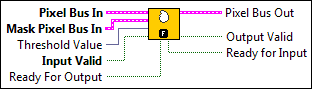
Pixel Bus In when Input Valid is TRUE, contains one of the following: valid pixel data, an end of line signal, or an end of image signal.
|
||||||||||
|
Mask Pixel Bus In is an image that specifies the region of the image that will be copied. Only pixels in Pixel Bus In that correspond to a non-zero pixel in the mask image are copied. All other pixels are set to 0.
|
||||||||||
|
Threshold Value is the minimum pixel value to appear in the resulting image. It is rare to use a value greater than 0 for this type of processing because the results from this processing are usually very dark and are not very dynamic. The default is 0. |
||||||||||
|
Input Valid specifies whether the next data point has arrived for processing. Wire the Output Valid output of an upstream node to this input to transfer data from the upstream node to this node. |
||||||||||
|
Ready For Output specifies whether downstream nodes are ready for this node to return a new value. The default is TRUE. Use a Feedback Node to wire the Ready for Input output of a downstream node to this input of the current node.
|
||||||||||
|
Pixel Bus Out when Input Valid is TRUE, contains one of the following: valid pixel data, an end of line signal, or an end of image signal.
|
||||||||||
|
Output Valid returns TRUE if this node has computed a result that downstream nodes can use. Wire this output to the Input Valid input of a downstream node to transfer data from the node to the downstream node. |
||||||||||
|
Ready for Input returns TRUE if this node is ready to accept new input data. Use a Feedback Node to wire this output to the Ready for Output input of an upstream node.
|
IMAQ FPGA Sigma U8 x1 Details
|
Note Resource estimates are based on a 40 MHz clock. |
Virtex-5
Estimated Device Utilization
- Slice Registers: 1503
- Slice LUTs: 1749
- DSP48s: 0
- Block RAMs: 4
Estimated Performance
- Minimum Latency: 18
- Initiation Interval: 1
Spartan-6
Estimated Device Utilization
- Slice Registers: 1507
- Slice LUTs: 1659
- DSP48s: 0
- Block RAMs: 8
Estimated Performance
- Minimum Latency: 18
- Initiation Interval: 1
Zynq
Estimated Device Utilization
- Slice Registers: 1737
- Slice LUTs: 1356
- DSP48s: 0
- Block RAMs: 5
Estimated Performance
- Minimum Latency: 16
- Initiation Interval: 1
Kintex-7
Estimated Device Utilization
- Slice Registers: 1715
- Slice LUTs: 1337
- DSP48s: 0
- Block RAMs: 5
Estimated Performance
- Minimum Latency: 16
- Initiation Interval: 1
IMAQ FPGA Sigma U16 x1
Extracts the contours (detects edges) in gray-level values using a Sigma filter.
Supported Image Types

|
Pixel Bus In when Input Valid is TRUE, contains one of the following: valid pixel data, an end of line signal, or an end of image signal.
|
||||||||||
|
Mask Pixel Bus In is an image that specifies the region of the image that will be copied. Only pixels in Pixel Bus In that correspond to a non-zero pixel in the mask image are copied. All other pixels are set to 0.
|
||||||||||
|
Threshold Value is the minimum pixel value to appear in the resulting image. It is rare to use a value greater than 0 for this type of processing because the results from this processing are usually very dark and are not very dynamic. The default is 0. |
||||||||||
|
Input Valid specifies whether the next data point has arrived for processing. Wire the Output Valid output of an upstream node to this input to transfer data from the upstream node to this node. |
||||||||||
|
Ready For Output specifies whether downstream nodes are ready for this node to return a new value. The default is TRUE. Use a Feedback Node to wire the Ready for Input output of a downstream node to this input of the current node.
|
||||||||||
|
Pixel Bus Out when Input Valid is TRUE, contains one of the following: valid pixel data, an end of line signal, or an end of image signal.
|
||||||||||
|
Output Valid returns TRUE if this node has computed a result that downstream nodes can use. Wire this output to the Input Valid input of a downstream node to transfer data from the node to the downstream node. |
||||||||||
|
Ready for Input returns TRUE if this node is ready to accept new input data. Use a Feedback Node to wire this output to the Ready for Output input of an upstream node.
|
IMAQ FPGA Sigma U16 x1 Details
|
Note Resource estimates are based on a 40 MHz clock. |
Virtex-5
Estimated Device Utilization
- Slice Registers: 2213
- Slice LUTs: 2704
- DSP48s: 0
- Block RAMs: 6
Estimated Performance
- Minimum Latency: 18
- Initiation Interval: 1
Spartan-6
Estimated Device Utilization
- Slice Registers: 2229
- Slice LUTs: 2567
- DSP48s: 0
- Block RAMs: 14
Estimated Performance
- Minimum Latency: 18
- Initiation Interval: 1
Zynq
Estimated Device Utilization
- Slice Registers: 2644
- Slice LUTs: 2048
- DSP48s: 0
- Block RAMs: 8
Estimated Performance
- Minimum Latency: 16
- Initiation Interval: 1
Kintex-7
Estimated Device Utilization
- Slice Registers: 2622
- Slice LUTs: 2024
- DSP48s: 0
- Block RAMs: 8
Estimated Performance
- Minimum Latency: 16
- Initiation Interval: 1
IMAQ FPGA Sobel U8 x1
Extracts the contours (detects edges) in gray-level values using a Sobel filter.
Supported Image Types
|
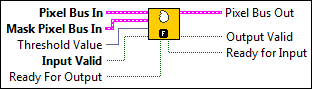
Pixel Bus In when Input Valid is TRUE, contains one of the following: valid pixel data, an end of line signal, or an end of image signal.
|
||||||||||
|
Mask Pixel Bus In is an image that specifies the region of the image that will be copied. Only pixels in Pixel Bus In that correspond to a non-zero pixel in the mask image are copied. All other pixels are set to 0.
|
||||||||||
|
Threshold Value is the minimum pixel value to appear in the resulting image. It is rare to use a value greater than 0 for this type of processing because the results from this processing are usually very dark and are not very dynamic. The default is 0. |
||||||||||
|
Input Valid specifies whether the next data point has arrived for processing. Wire the Output Valid output of an upstream node to this input to transfer data from the upstream node to this node. |
||||||||||
|
Ready For Output specifies whether downstream nodes are ready for this node to return a new value. The default is TRUE. Use a Feedback Node to wire the Ready for Input output of a downstream node to this input of the current node.
|
||||||||||
|
Pixel Bus Out when Input Valid is TRUE, contains one of the following: valid pixel data, an end of line signal, or an end of image signal.
|
||||||||||
|
Output Valid returns TRUE if this node has computed a result that downstream nodes can use. Wire this output to the Input Valid input of a downstream node to transfer data from the node to the downstream node. |
||||||||||
|
Ready for Input returns TRUE if this node is ready to accept new input data. Use a Feedback Node to wire this output to the Ready for Output input of an upstream node.
|
IMAQ FPGA Sobel U8 x1 Details
|
Note Resource estimates are based on a 40 MHz clock. |
Virtex-5
Estimated Device Utilization
- Slice Registers: 1522
- Slice LUTs: 1713
- DSP48s: 0
- Block RAMs: 4
Estimated Performance
- Minimum Latency: 19
- Initiation Interval: 1
Spartan-6
Estimated Device Utilization
- Slice Registers: 1533
- Slice LUTs: 1591
- DSP48s: 0
- Block RAMs: 8
Estimated Performance
- Minimum Latency: 19
- Initiation Interval: 1
Zynq
Estimated Device Utilization
- Slice Registers: 1745
- Slice LUTs: 1325
- DSP48s: 0
- Block RAMs: 5
Estimated Performance
- Minimum Latency: 17
- Initiation Interval: 1
Kintex-7
Estimated Device Utilization
- Slice Registers: 8612
- Slice LUTs: 6507
- DSP48s: 0
- Block RAMs: 23
Estimated Performance
- Minimum Latency: 17
- Initiation Interval: 1
IMAQ FPGA Sobel U16 x1
Extracts the contours (detects edges) in gray-level values using a Sobel filter.
Supported Image Types

|
Pixel Bus In when Input Valid is TRUE, contains one of the following: valid pixel data, an end of line signal, or an end of image signal.
|
||||||||||
|
Mask Pixel Bus In is an image that specifies the region of the image that will be copied. Only pixels in Pixel Bus In that correspond to a non-zero pixel in the mask image are copied. All other pixels are set to 0.
|
||||||||||
|
Threshold Value is the minimum pixel value to appear in the resulting image. It is rare to use a value greater than 0 for this type of processing because the results from this processing are usually very dark and are not very dynamic. The default is 0. |
||||||||||
|
Input Valid specifies whether the next data point has arrived for processing. Wire the Output Valid output of an upstream node to this input to transfer data from the upstream node to this node. |
||||||||||
|
Ready For Output specifies whether downstream nodes are ready for this node to return a new value. The default is TRUE. Use a Feedback Node to wire the Ready for Input output of a downstream node to this input of the current node.
|
||||||||||
|
Pixel Bus Out when Input Valid is TRUE, contains one of the following: valid pixel data, an end of line signal, or an end of image signal.
|
||||||||||
|
Output Valid returns TRUE if this node has computed a result that downstream nodes can use. Wire this output to the Input Valid input of a downstream node to transfer data from the node to the downstream node. |
||||||||||
|
Ready for Input returns TRUE if this node is ready to accept new input data. Use a Feedback Node to wire this output to the Ready for Output input of an upstream node.
|
IMAQ FPGA Sobel U16 x1 Details
|
Note Resource estimates are based on a 40 MHz clock. |
Virtex-5
Estimated Device Utilization
- Slice Registers: 2370
- Slice LUTs: 2593
- DSP48s: 0
- Block RAMs: 6
Estimated Performance
- Minimum Latency: 20
- Initiation Interval: 1
Spartan-6
Estimated Device Utilization
- Slice Registers: 2400
- Slice LUTs: 2423
- DSP48s: 0
- Block RAMs: 14
Estimated Performance
- Minimum Latency: 20
- Initiation Interval: 1
Zynq
Estimated Device Utilization
- Slice Registers: 2625
- Slice LUTs: 2104
- DSP48s: 0
- Block RAMs: 8
Estimated Performance
- Minimum Latency: 18
- Initiation Interval: 1
Kintex-7
Estimated Device Utilization
- Slice Registers: 2603
- Slice LUTs: 2171
- DSP48s: 0
- Block RAMs: 8
Estimated Performance
- Minimum Latency: 18
- Initiation Interval: 1
IMAQ FPGA Differentiation NoMask U8 x1
Extracts the contours (detects edges) in gray-level values using a Differentiation filter.
Supported Image Types

|
Pixel Bus In when Input Valid is TRUE, contains one of the following: valid pixel data, an end of line signal, or an end of image signal.
|
||||||||||
|
Threshold Value is the minimum pixel value to appear in the resulting image. It is rare to use a value greater than 0 for this type of processing because the results from this processing are usually very dark and are not very dynamic. The default is 0. |
||||||||||
|
Input Valid specifies whether the next data point has arrived for processing. Wire the Output Valid output of an upstream node to this input to transfer data from the upstream node to this node. |
||||||||||
|
Ready For Output specifies whether downstream nodes are ready for this node to return a new value. The default is TRUE. Use a Feedback Node to wire the Ready for Input output of a downstream node to this input of the current node.
|
||||||||||
|
Pixel Bus Out when Input Valid is TRUE, contains one of the following: valid pixel data, an end of line signal, or an end of image signal.
|
||||||||||
|
Output Valid returns TRUE if this node has computed a result that downstream nodes can use. Wire this output to the Input Valid input of a downstream node to transfer data from the node to the downstream node. |
||||||||||
|
Ready for Input returns TRUE if this node is ready to accept new input data. Use a Feedback Node to wire this output to the Ready for Output input of an upstream node.
|
IMAQ FPGA Differentiation NoMask U8 x1 Details
|
Note Resource estimates are based on a 40 MHz clock. |
Virtex-5
Estimated Device Utilization
- Slice Registers: 1053
- Slice LUTs: 1230
- DSP48s: 0
- Block RAMs: 3
Estimated Performance
- Minimum Latency: 11
- Initiation Interval: 1
Spartan-6
Estimated Device Utilization
- Slice Registers: 1053
- Slice LUTs: 1123
- DSP48s: 0
- Block RAMs: 6
Estimated Performance
- Minimum Latency: 11
- Initiation Interval: 1
Zynq
Estimated Device Utilization
- Slice Registers: 1228
- Slice LUTs: 1075
- DSP48s: 0
- Block RAMs: 3
Estimated Performance
- Minimum Latency: 9
- Initiation Interval: 1
Kintex-7
Estimated Device Utilization
- Slice Registers: 1206
- Slice LUTs: 1036
- DSP48s: 0
- Block RAMs: 3
Estimated Performance
- Minimum Latency: 9
- Initiation Interval: 1
IMAQ FPGA Differentiation NoMask U8 x8
Extracts the contours (detects edges) in gray-level values using a Differentiation filter.
Supported Image Types

|
Pixel Bus In when Input Valid is TRUE, contains one of the following: valid pixel data, an end of line signal, or an end of image signal.
|
||||||||||
|
Threshold Value is the minimum pixel value to appear in the resulting image. It is rare to use a value greater than 0 for this type of processing because the results from this processing are usually very dark and are not very dynamic. The default is 0. |
||||||||||
|
Input Valid specifies whether the next data point has arrived for processing. Wire the Output Valid output of an upstream node to this input to transfer data from the upstream node to this node. |
||||||||||
|
Ready For Output specifies whether downstream nodes are ready for this node to return a new value. The default is TRUE. Use a Feedback Node to wire the Ready for Input output of a downstream node to this input of the current node.
|
||||||||||
|
Pixel Bus Out when Input Valid is TRUE, contains one of the following: valid pixel data, an end of line signal, or an end of image signal.
|
||||||||||
|
Output Valid returns TRUE if this node has computed a result that downstream nodes can use. Wire this output to the Input Valid input of a downstream node to transfer data from the node to the downstream node. |
||||||||||
|
Ready for Input returns TRUE if this node is ready to accept new input data. Use a Feedback Node to wire this output to the Ready for Output input of an upstream node.
|
IMAQ FPGA Differentiation NoMask U8 x8 Details
|
Note Resource estimates are based on a 40 MHz clock. |
Kintex-7
Estimated Device Utilization
- Slice Registers: 2913
- Slice LUTs: 2685
- DSP48s: 0
- Block RAMs: 3
Estimated Performance
- Minimum Latency: 12
- Initiation Interval: 1
IMAQ FPGA Differentiation NoMask U16 x1
Extracts the contours (detects edges) in gray-level values using a Differentiation filter.
Supported Image Types

|
Pixel Bus In when Input Valid is TRUE, contains one of the following: valid pixel data, an end of line signal, or an end of image signal.
|
||||||||||
|
Threshold Value is the minimum pixel value to appear in the resulting image. It is rare to use a value greater than 0 for this type of processing because the results from this processing are usually very dark and are not very dynamic. The default is 0. |
||||||||||
|
Input Valid specifies whether the next data point has arrived for processing. Wire the Output Valid output of an upstream node to this input to transfer data from the upstream node to this node. |
||||||||||
|
Ready For Output specifies whether downstream nodes are ready for this node to return a new value. The default is TRUE. Use a Feedback Node to wire the Ready for Input output of a downstream node to this input of the current node.
|
||||||||||
|
Pixel Bus Out when Input Valid is TRUE, contains one of the following: valid pixel data, an end of line signal, or an end of image signal.
|
||||||||||
|
Output Valid returns TRUE if this node has computed a result that downstream nodes can use. Wire this output to the Input Valid input of a downstream node to transfer data from the node to the downstream node. |
||||||||||
|
Ready for Input returns TRUE if this node is ready to accept new input data. Use a Feedback Node to wire this output to the Ready for Output input of an upstream node.
|
IMAQ FPGA Differentiation NoMask U16 x1 Details
|
Note Resource estimates are based on a 40 MHz clock. |
Virtex-5
Estimated Device Utilization
- Slice Registers: 1116
- Slice LUTs: 1398
- DSP48s: 0
- Block RAMs: 3
Estimated Performance
- Minimum Latency: 11
- Initiation Interval: 1
Spartan-6
Estimated Device Utilization
- Slice Registers: 1108
- Slice LUTs: 1308
- DSP48s: 0
- Block RAMs: 6
Estimated Performance
- Minimum Latency: 11
- Initiation Interval: 1
Zynq
Estimated Device Utilization
- Slice Registers: 1364
- Slice LUTs: 1253
- DSP48s: 0
- Block RAMs: 3
Estimated Performance
- Minimum Latency: 9
- Initiation Interval: 1
Kintex-7
Estimated Device Utilization
- Slice Registers: 1789
- Slice LUTs: 1413
- DSP48s: 0
- Block RAMs: 6
Estimated Performance
- Minimum Latency: 9
- Initiation Interval: 1
IMAQ FPGA Differentiation NoMask U16 x8
Extracts the contours (detects edges) in gray-level values using a Differentiation filter.
Supported Image Types

|
Pixel Bus In when Input Valid is TRUE, contains one of the following: valid pixel data, an end of line signal, or an end of image signal.
|
||||||||||
|
Threshold Value is the minimum pixel value to appear in the resulting image. It is rare to use a value greater than 0 for this type of processing because the results from this processing are usually very dark and are not very dynamic. The default is 0. |
||||||||||
|
Input Valid specifies whether the next data point has arrived for processing. Wire the Output Valid output of an upstream node to this input to transfer data from the upstream node to this node. |
||||||||||
|
Ready For Output specifies whether downstream nodes are ready for this node to return a new value. The default is TRUE. Use a Feedback Node to wire the Ready for Input output of a downstream node to this input of the current node.
|
||||||||||
|
Pixel Bus Out when Input Valid is TRUE, contains one of the following: valid pixel data, an end of line signal, or an end of image signal.
|
||||||||||
|
Output Valid returns TRUE if this node has computed a result that downstream nodes can use. Wire this output to the Input Valid input of a downstream node to transfer data from the node to the downstream node. |
||||||||||
|
Ready for Input returns TRUE if this node is ready to accept new input data. Use a Feedback Node to wire this output to the Ready for Output input of an upstream node.
|
IMAQ FPGA Differentiation NoMask U16 x8 Details
|
Note Resource estimates are based on a 40 MHz clock. |
Kintex-7
Estimated Device Utilization
- Slice Registers: 4820
- Slice LUTs: 4887
- DSP48s: 0
- Block RAMs: 6
Estimated Performance
- Minimum Latency: 12
- Initiation Interval: 1
IMAQ FPGA Gradient NoMask U8 x1
Extracts the contours (detects edges) in gray-level values using a Gradient filter.
Supported Image Types

|
Pixel Bus In when Input Valid is TRUE, contains one of the following: valid pixel data, an end of line signal, or an end of image signal.
|
||||||||||
|
Threshold Value is the minimum pixel value to appear in the resulting image. It is rare to use a value greater than 0 for this type of processing because the results from this processing are usually very dark and are not very dynamic. The default is 0. |
||||||||||
|
Input Valid specifies whether the next data point has arrived for processing. Wire the Output Valid output of an upstream node to this input to transfer data from the upstream node to this node. |
||||||||||
|
Ready For Output specifies whether downstream nodes are ready for this node to return a new value. The default is TRUE. Use a Feedback Node to wire the Ready for Input output of a downstream node to this input of the current node.
|
||||||||||
|
Pixel Bus Out when Input Valid is TRUE, contains one of the following: valid pixel data, an end of line signal, or an end of image signal.
|
||||||||||
|
Output Valid returns TRUE if this node has computed a result that downstream nodes can use. Wire this output to the Input Valid input of a downstream node to transfer data from the node to the downstream node. |
||||||||||
|
Ready for Input returns TRUE if this node is ready to accept new input data. Use a Feedback Node to wire this output to the Ready for Output input of an upstream node.
|
IMAQ FPGA Gradient NoMask U8 x1 Details
|
Note Resource estimates are based on a 40 MHz clock. |
Virtex-5
Estimated Device Utilization
- Slice Registers: 1018
- Slice LUTs: 1213
- DSP48s: 0
- Block RAMs: 3
Estimated Performance
- Minimum Latency: 10
- Initiation Interval: 1
Spartan-6
Estimated Device Utilization
- Slice Registers: 1018
- Slice LUTs: 1085
- DSP48s: 0
- Block RAMs: 6
Estimated Performance
- Minimum Latency: 10
- Initiation Interval: 1
Zynq
Estimated Device Utilization
- Slice Registers: 1228
- Slice LUTs: 996
- DSP48s: 0
- Block RAMs: 3
Estimated Performance
- Minimum Latency: 9
- Initiation Interval: 1
Kintex-7
Estimated Device Utilization
- Slice Registers: 1206
- Slice LUTs: 969
- DSP48s: 0
- Block RAMs: 3
Estimated Performance
- Minimum Latency: 9
- Initiation Interval: 1
IMAQ FPGA Gradient NoMask U8 x8
Extracts the contours (detects edges) in gray-level values using a Gradient filter.
Supported Image Types

|
Pixel Bus In when Input Valid is TRUE, contains one of the following: valid pixel data, an end of line signal, or an end of image signal.
|
||||||||||
|
Threshold Value is the minimum pixel value to appear in the resulting image. It is rare to use a value greater than 0 for this type of processing because the results from this processing are usually very dark and are not very dynamic. The default is 0. |
||||||||||
|
Input Valid specifies whether the next data point has arrived for processing. Wire the Output Valid output of an upstream node to this input to transfer data from the upstream node to this node. |
||||||||||
|
Ready For Output specifies whether downstream nodes are ready for this node to return a new value. The default is TRUE. Use a Feedback Node to wire the Ready for Input output of a downstream node to this input of the current node.
|
||||||||||
|
Pixel Bus Out when Input Valid is TRUE, contains one of the following: valid pixel data, an end of line signal, or an end of image signal.
|
||||||||||
|
Output Valid returns TRUE if this node has computed a result that downstream nodes can use. Wire this output to the Input Valid input of a downstream node to transfer data from the node to the downstream node. |
||||||||||
|
Ready for Input returns TRUE if this node is ready to accept new input data. Use a Feedback Node to wire this output to the Ready for Output input of an upstream node.
|
IMAQ FPGA Gradient NoMask U8 x8 Details
|
Note Resource estimates are based on a 40 MHz clock. |
Kintex-7
Estimated Device Utilization
- Slice Registers: 2474
- Slice LUTs: 2137
- DSP48s: 0
- Block RAMs: 3
Estimated Performance
- Minimum Latency: 11
- Initiation Interval: 1
IMAQ FPGA Gradient NoMask U16 x1
Extracts the contours (detects edges) in gray-level values using a Gradient filter.
Supported Image Types

|
Pixel Bus In when Input Valid is TRUE, contains one of the following: valid pixel data, an end of line signal, or an end of image signal.
|
||||||||||
|
Threshold Value is the minimum pixel value to appear in the resulting image. It is rare to use a value greater than 0 for this type of processing because the results from this processing are usually very dark and are not very dynamic. The default is 0. |
||||||||||
|
Input Valid specifies whether the next data point has arrived for processing. Wire the Output Valid output of an upstream node to this input to transfer data from the upstream node to this node. |
||||||||||
|
Ready For Output specifies whether downstream nodes are ready for this node to return a new value. The default is TRUE. Use a Feedback Node to wire the Ready for Input output of a downstream node to this input of the current node.
|
||||||||||
|
Pixel Bus Out when Input Valid is TRUE, contains one of the following: valid pixel data, an end of line signal, or an end of image signal.
|
||||||||||
|
Output Valid returns TRUE if this node has computed a result that downstream nodes can use. Wire this output to the Input Valid input of a downstream node to transfer data from the node to the downstream node. |
||||||||||
|
Ready for Input returns TRUE if this node is ready to accept new input data. Use a Feedback Node to wire this output to the Ready for Output input of an upstream node.
|
IMAQ FPGA Gradient NoMask U16 x1 Details
|
Note Resource estimates are based on a 40 MHz clock. |
Virtex-5
Estimated Device Utilization
- Slice Registers: 1107
- Slice LUTs: 1311
- DSP48s: 0
- Block RAMs: 3
Estimated Performance
- Minimum Latency: 11
- Initiation Interval: 1
Spartan-6
Estimated Device Utilization
- Slice Registers: 1099
- Slice LUTs: 1174
- DSP48s: 0
- Block RAMs: 6
Estimated Performance
- Minimum Latency: 11
- Initiation Interval: 1
Zynq
Estimated Device Utilization
- Slice Registers: 1330
- Slice LUTs: 1221
- DSP48s: 0
- Block RAMs: 3
Estimated Performance
- Minimum Latency: 9
- Initiation Interval: 1
Kintex-7
Estimated Device Utilization
- Slice Registers: 1756
- Slice LUTs: 1485
- DSP48s: 0
- Block RAMs: 6
Estimated Performance
- Minimum Latency: 9
- Initiation Interval: 1
IMAQ FPGA Gradient NoMask U16 x8
Extracts the contours (detects edges) in gray-level values using a Gradient filter.
Supported Image Types

|
Pixel Bus In when Input Valid is TRUE, contains one of the following: valid pixel data, an end of line signal, or an end of image signal.
|
||||||||||
|
Threshold Value is the minimum pixel value to appear in the resulting image. It is rare to use a value greater than 0 for this type of processing because the results from this processing are usually very dark and are not very dynamic. The default is 0. |
||||||||||
|
Input Valid specifies whether the next data point has arrived for processing. Wire the Output Valid output of an upstream node to this input to transfer data from the upstream node to this node. |
||||||||||
|
Ready For Output specifies whether downstream nodes are ready for this node to return a new value. The default is TRUE. Use a Feedback Node to wire the Ready for Input output of a downstream node to this input of the current node.
|
||||||||||
|
Pixel Bus Out when Input Valid is TRUE, contains one of the following: valid pixel data, an end of line signal, or an end of image signal.
|
||||||||||
|
Output Valid returns TRUE if this node has computed a result that downstream nodes can use. Wire this output to the Input Valid input of a downstream node to transfer data from the node to the downstream node. |
||||||||||
|
Ready for Input returns TRUE if this node is ready to accept new input data. Use a Feedback Node to wire this output to the Ready for Output input of an upstream node.
|
IMAQ FPGA Gradient NoMask U16 x8 Details
|
Note Resource estimates are based on a 40 MHz clock. |
Kintex-7
Estimated Device Utilization
- Slice Registers: 4557
- Slice LUTs: 3973
- DSP48s: 0
- Block RAMs: 6
Estimated Performance
- Minimum Latency: 12
- Initiation Interval: 1
IMAQ FPGA Prewitt NoMask U8 x1
Extracts the contours (detects edges) in gray-level values using a Prewitt filter.
Supported Image Types

|
Pixel Bus In when Input Valid is TRUE, contains one of the following: valid pixel data, an end of line signal, or an end of image signal.
|
||||||||||
|
Threshold Value is the minimum pixel value to appear in the resulting image. It is rare to use a value greater than 0 for this type of processing because the results from this processing are usually very dark and are not very dynamic. The default is 0. |
||||||||||
|
Input Valid specifies whether the next data point has arrived for processing. Wire the Output Valid output of an upstream node to this input to transfer data from the upstream node to this node. |
||||||||||
|
Ready For Output specifies whether downstream nodes are ready for this node to return a new value. The default is TRUE. Use a Feedback Node to wire the Ready for Input output of a downstream node to this input of the current node.
|
||||||||||
|
Pixel Bus Out when Input Valid is TRUE, contains one of the following: valid pixel data, an end of line signal, or an end of image signal.
|
||||||||||
|
Output Valid returns TRUE if this node has computed a result that downstream nodes can use. Wire this output to the Input Valid input of a downstream node to transfer data from the node to the downstream node. |
||||||||||
|
Ready for Input returns TRUE if this node is ready to accept new input data. Use a Feedback Node to wire this output to the Ready for Output input of an upstream node.
|
IMAQ FPGA Prewitt NoMask U8 x1 Details
|
Note Resource estimates are based on a 40 MHz clock. |
Virtex-5
Estimated Device Utilization
- Slice Registers: 1312
- Slice LUTs: 1503
- DSP48s: 1
- Block RAMs: 3
Estimated Performance
- Minimum Latency: 13
- Initiation Interval: 1
Spartan-6
Estimated Device Utilization
- Slice Registers: 1306
- Slice LUTs: 1447
- DSP48s: 1
- Block RAMs: 6
Estimated Performance
- Minimum Latency: 13
- Initiation Interval: 1
Zynq
Estimated Device Utilization
- Slice Registers: 1554
- Slice LUTs: 1357
- DSP48s: 1
- Block RAMs: 3
Estimated Performance
- Minimum Latency: 11
- Initiation Interval: 1
Kintex-7
Estimated Device Utilization
- Slice Registers: 1532
- Slice LUTs: 1334
- DSP48s: 1
- Block RAMs: 3
Estimated Performance
- Minimum Latency: 11
- Initiation Interval: 1
IMAQ FPGA Prewitt NoMask U8 x8
Extracts the contours (detects edges) in gray-level values using a Prewitt filter.
Supported Image Types

|
Pixel Bus In when Input Valid is TRUE, contains one of the following: valid pixel data, an end of line signal, or an end of image signal.
|
||||||||||
|
Threshold Value is the minimum pixel value to appear in the resulting image. It is rare to use a value greater than 0 for this type of processing because the results from this processing are usually very dark and are not very dynamic. The default is 0. |
||||||||||
|
Input Valid specifies whether the next data point has arrived for processing. Wire the Output Valid output of an upstream node to this input to transfer data from the upstream node to this node. |
||||||||||
|
Ready For Output specifies whether downstream nodes are ready for this node to return a new value. The default is TRUE. Use a Feedback Node to wire the Ready for Input output of a downstream node to this input of the current node.
|
||||||||||
|
Pixel Bus Out when Input Valid is TRUE, contains one of the following: valid pixel data, an end of line signal, or an end of image signal.
|
||||||||||
|
Output Valid returns TRUE if this node has computed a result that downstream nodes can use. Wire this output to the Input Valid input of a downstream node to transfer data from the node to the downstream node. |
||||||||||
|
Ready for Input returns TRUE if this node is ready to accept new input data. Use a Feedback Node to wire this output to the Ready for Output input of an upstream node.
|
IMAQ FPGA Prewitt NoMask U8 x8 Details
|
Note Resource estimates are based on a 40 MHz clock. |
Kintex-7
Estimated Device Utilization
- Slice Registers: 3307
- Slice LUTs: 3131
- DSP48s: 8
- Block RAMs: 5
Estimated Performance
- Minimum Latency: 13
- Initiation Interval: 1
IMAQ FPGA Prewitt NoMask U16 x1
Extracts the contours (detects edges) in gray-level values using a Prewitt filter.
Supported Image Types

|
Pixel Bus In when Input Valid is TRUE, contains one of the following: valid pixel data, an end of line signal, or an end of image signal.
|
||||||||||
|
Threshold Value is the minimum pixel value to appear in the resulting image. It is rare to use a value greater than 0 for this type of processing because the results from this processing are usually very dark and are not very dynamic. The default is 0. |
||||||||||
|
Input Valid specifies whether the next data point has arrived for processing. Wire the Output Valid output of an upstream node to this input to transfer data from the upstream node to this node. |
||||||||||
|
Ready For Output specifies whether downstream nodes are ready for this node to return a new value. The default is TRUE. Use a Feedback Node to wire the Ready for Input output of a downstream node to this input of the current node.
|
||||||||||
|
Pixel Bus Out when Input Valid is TRUE, contains one of the following: valid pixel data, an end of line signal, or an end of image signal.
|
||||||||||
|
Output Valid returns TRUE if this node has computed a result that downstream nodes can use. Wire this output to the Input Valid input of a downstream node to transfer data from the node to the downstream node. |
||||||||||
|
Ready for Input returns TRUE if this node is ready to accept new input data. Use a Feedback Node to wire this output to the Ready for Output input of an upstream node.
|
IMAQ FPGA Prewitt NoMask U16 x1 Details
|
Note Resource estimates are based on a 40 MHz clock. |
Virtex-5
Estimated Device Utilization
- Slice Registers: 2078
- Slice LUTs: 2276
- DSP48s: 2
- Block RAMs: 5
Estimated Performance
- Minimum Latency: 14
- Initiation Interval: 1
Spartan-6
Estimated Device Utilization
- Slice Registers: 2208
- Slice LUTs: 2068
- DSP48s: 2
- Block RAMs: 12
Estimated Performance
- Minimum Latency: 14
- Initiation Interval: 1
Zynq
Estimated Device Utilization
- Slice Registers: 4230
- Slice LUTs: 3996
- DSP48s: 2
- Block RAMs: 10
Estimated Performance
- Minimum Latency: 11
- Initiation Interval: 1
Kintex-7
Estimated Device Utilization
- Slice Registers: 2403
- Slice LUTs: 2004
- DSP48s: 2
- Block RAMs: 6
Estimated Performance
- Minimum Latency: 11
- Initiation Interval: 1
IMAQ FPGA Prewitt NoMask U16 x8
Extracts the contours (detects edges) in gray-level values using a Prewitt filter.
Supported Image Types
|
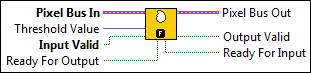
Pixel Bus In when Input Valid is TRUE, contains one of the following: valid pixel data, an end of line signal, or an end of image signal.
|
||||||||||
|
Threshold Value is the minimum pixel value to appear in the resulting image. It is rare to use a value greater than 0 for this type of processing because the results from this processing are usually very dark and are not very dynamic. The default is 0. |
||||||||||
|
Input Valid specifies whether the next data point has arrived for processing. Wire the Output Valid output of an upstream node to this input to transfer data from the upstream node to this node. |
||||||||||
|
Ready For Output specifies whether downstream nodes are ready for this node to return a new value. The default is TRUE. Use a Feedback Node to wire the Ready for Input output of a downstream node to this input of the current node.
|
||||||||||
|
Pixel Bus Out when Input Valid is TRUE, contains one of the following: valid pixel data, an end of line signal, or an end of image signal.
|
||||||||||
|
Output Valid returns TRUE if this node has computed a result that downstream nodes can use. Wire this output to the Input Valid input of a downstream node to transfer data from the node to the downstream node. |
||||||||||
|
Ready for Input returns TRUE if this node is ready to accept new input data. Use a Feedback Node to wire this output to the Ready for Output input of an upstream node.
|
IMAQ FPGA Prewitt NoMask U16 x8 Details
|
Note Resource estimates are based on a 40 MHz clock. |
Kintex-7
Estimated Device Utilization
- Slice Registers: 6200
- Slice LUTs: 5407
- DSP48s: 16
- Block RAMs: 8
Estimated Performance
- Minimum Latency: 15
- Initiation Interval: 1
IMAQ FPGA Roberts NoMask U8 x1
Extracts the contours (detects edges) in gray-level values using a Roberts filter.
Supported Image Types

|
Pixel Bus In when Input Valid is TRUE, contains one of the following: valid pixel data, an end of line signal, or an end of image signal.
|
||||||||||
|
Threshold Value is the minimum pixel value to appear in the resulting image. It is rare to use a value greater than 0 for this type of processing because the results from this processing are usually very dark and are not very dynamic. The default is 0. |
||||||||||
|
Input Valid specifies whether the next data point has arrived for processing. Wire the Output Valid output of an upstream node to this input to transfer data from the upstream node to this node. |
||||||||||
|
Ready For Output specifies whether downstream nodes are ready for this node to return a new value. The default is TRUE. Use a Feedback Node to wire the Ready for Input output of a downstream node to this input of the current node.
|
||||||||||
|
Pixel Bus Out when Input Valid is TRUE, contains one of the following: valid pixel data, an end of line signal, or an end of image signal.
|
||||||||||
|
Output Valid returns TRUE if this node has computed a result that downstream nodes can use. Wire this output to the Input Valid input of a downstream node to transfer data from the node to the downstream node. |
||||||||||
|
Ready for Input returns TRUE if this node is ready to accept new input data. Use a Feedback Node to wire this output to the Ready for Output input of an upstream node.
|
IMAQ FPGA Roberts NoMask U8 x1 Details
|
Note Resource estimates are based on a 40 MHz clock. |
Virtex-5
Estimated Device Utilization
- Slice Registers: 1018
- Slice LUTs: 1213
- DSP48s: 0
- Block RAMs: 3
Estimated Performance
- Minimum Latency: 10
- Initiation Interval: 1
Spartan-6
Estimated Device Utilization
- Slice Registers: 1018
- Slice LUTs: 1088
- DSP48s: 0
- Block RAMs: 6
Estimated Performance
- Minimum Latency: 10
- Initiation Interval: 1
Zynq
Estimated Device Utilization
- Slice Registers: 1228
- Slice LUTs: 996
- DSP48s: 0
- Block RAMs: 3
Estimated Performance
- Minimum Latency: 9
- Initiation Interval: 1
Kintex-7
Estimated Device Utilization
- Slice Registers: 1206
- Slice LUTs: 970
- DSP48s: 0
- Block RAMs: 3
Estimated Performance
- Minimum Latency: 9
- Initiation Interval: 1
IMAQ FPGA Roberts NoMask U8 x8
Extracts the contours (detects edges) in gray-level values using a Roberts filter.
Supported Image Types

|
Pixel Bus In when Input Valid is TRUE, contains one of the following: valid pixel data, an end of line signal, or an end of image signal.
|
||||||||||
|
Threshold Value is the minimum pixel value to appear in the resulting image. It is rare to use a value greater than 0 for this type of processing because the results from this processing are usually very dark and are not very dynamic. The default is 0. |
||||||||||
|
Input Valid specifies whether the next data point has arrived for processing. Wire the Output Valid output of an upstream node to this input to transfer data from the upstream node to this node. |
||||||||||
|
Ready For Output specifies whether downstream nodes are ready for this node to return a new value. The default is TRUE. Use a Feedback Node to wire the Ready for Input output of a downstream node to this input of the current node.
|
||||||||||
|
Pixel Bus Out when Input Valid is TRUE, contains one of the following: valid pixel data, an end of line signal, or an end of image signal.
|
||||||||||
|
Output Valid returns TRUE if this node has computed a result that downstream nodes can use. Wire this output to the Input Valid input of a downstream node to transfer data from the node to the downstream node. |
||||||||||
|
Ready for Input returns TRUE if this node is ready to accept new input data. Use a Feedback Node to wire this output to the Ready for Output input of an upstream node.
|
IMAQ FPGA Roberts NoMask U8 x8 Details
|
Note Resource estimates are based on a 40 MHz clock. |
Kintex-7
Estimated Device Utilization
- Slice Registers: 2537
- Slice LUTs: 2339
- DSP48s: 0
- Block RAMs: 3
Estimated Performance
- Minimum Latency: 11
- Initiation Interval: 1
IMAQ FPGA Roberts NoMask U16 x1
Extracts the contours (detects edges) in gray-level values using a Roberts filter.
Supported Image Types
|
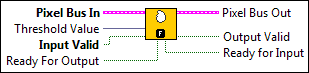
Pixel Bus In when Input Valid is TRUE, contains one of the following: valid pixel data, an end of line signal, or an end of image signal.
|
||||||||||
|
Threshold Value is the minimum pixel value to appear in the resulting image. It is rare to use a value greater than 0 for this type of processing because the results from this processing are usually very dark and are not very dynamic. The default is 0. |
||||||||||
|
Input Valid specifies whether the next data point has arrived for processing. Wire the Output Valid output of an upstream node to this input to transfer data from the upstream node to this node. |
||||||||||
|
Ready For Output specifies whether downstream nodes are ready for this node to return a new value. The default is TRUE. Use a Feedback Node to wire the Ready for Input output of a downstream node to this input of the current node.
|
||||||||||
|
Pixel Bus Out when Input Valid is TRUE, contains one of the following: valid pixel data, an end of line signal, or an end of image signal.
|
||||||||||
|
Output Valid returns TRUE if this node has computed a result that downstream nodes can use. Wire this output to the Input Valid input of a downstream node to transfer data from the node to the downstream node. |
||||||||||
|
Ready for Input returns TRUE if this node is ready to accept new input data. Use a Feedback Node to wire this output to the Ready for Output input of an upstream node.
|
IMAQ FPGA Roberts NoMask U16 x1 Details
|
Note Resource estimates are based on a 40 MHz clock. |
Virtex-5
Estimated Device Utilization
- Slice Registers: 1107
- Slice LUTs: 1311
- DSP48s: 0
- Block RAMs: 3
Estimated Performance
- Minimum Latency: 11
- Initiation Interval: 1
Spartan-6
Estimated Device Utilization
- Slice Registers: 1099
- Slice LUTs: 1180
- DSP48s: 0
- Block RAMs: 6
Estimated Performance
- Minimum Latency: 11
- Initiation Interval: 1
Zynq
Estimated Device Utilization
- Slice Registers: 1330
- Slice LUTs: 1224
- DSP48s: 0
- Block RAMs: 3
Estimated Performance
- Minimum Latency: 9
- Initiation Interval: 1
Kintex-7
Estimated Device Utilization
- Slice Registers: 1756
- Slice LUTs: 1483
- DSP48s: 0
- Block RAMs: 6
Estimated Performance
- Minimum Latency: 9
- Initiation Interval: 1
IMAQ FPGA Roberts NoMask U16 x8
Extracts the contours (detects edges) in gray-level values using a Roberts filter.
Supported Image Types

|
Pixel Bus In when Input Valid is TRUE, contains one of the following: valid pixel data, an end of line signal, or an end of image signal.
|
||||||||||
|
Threshold Value is the minimum pixel value to appear in the resulting image. It is rare to use a value greater than 0 for this type of processing because the results from this processing are usually very dark and are not very dynamic. The default is 0. |
||||||||||
|
Input Valid specifies whether the next data point has arrived for processing. Wire the Output Valid output of an upstream node to this input to transfer data from the upstream node to this node. |
||||||||||
|
Ready For Output specifies whether downstream nodes are ready for this node to return a new value. The default is TRUE. Use a Feedback Node to wire the Ready for Input output of a downstream node to this input of the current node.
|
||||||||||
|
Pixel Bus Out when Input Valid is TRUE, contains one of the following: valid pixel data, an end of line signal, or an end of image signal.
|
||||||||||
|
Output Valid returns TRUE if this node has computed a result that downstream nodes can use. Wire this output to the Input Valid input of a downstream node to transfer data from the node to the downstream node. |
||||||||||
|
Ready for Input returns TRUE if this node is ready to accept new input data. Use a Feedback Node to wire this output to the Ready for Output input of an upstream node.
|
IMAQ FPGA Roberts NoMask U16 x8 Details
|
Note Resource estimates are based on a 40 MHz clock. |
Kintex-7
Estimated Device Utilization
- Slice Registers: 4676
- Slice LUTs: 4301
- DSP48s: 0
- Block RAMs: 6
Estimated Performance
- Minimum Latency: 12
- Initiation Interval: 1
IMAQ FPGA Sigma NoMask U8 x1
Extracts the contours (detects edges) in gray-level values using a Sigma filter.
Supported Image Types

|
Pixel Bus In when Input Valid is TRUE, contains one of the following: valid pixel data, an end of line signal, or an end of image signal.
|
||||||||||
|
Threshold Value is the minimum pixel value to appear in the resulting image. It is rare to use a value greater than 0 for this type of processing because the results from this processing are usually very dark and are not very dynamic. The default is 0. |
||||||||||
|
Input Valid specifies whether the next data point has arrived for processing. Wire the Output Valid output of an upstream node to this input to transfer data from the upstream node to this node. |
||||||||||
|
Ready For Output specifies whether downstream nodes are ready for this node to return a new value. The default is TRUE. Use a Feedback Node to wire the Ready for Input output of a downstream node to this input of the current node.
|
||||||||||
|
Pixel Bus Out when Input Valid is TRUE, contains one of the following: valid pixel data, an end of line signal, or an end of image signal.
|
||||||||||
|
Output Valid returns TRUE if this node has computed a result that downstream nodes can use. Wire this output to the Input Valid input of a downstream node to transfer data from the node to the downstream node. |
||||||||||
|
Ready for Input returns TRUE if this node is ready to accept new input data. Use a Feedback Node to wire this output to the Ready for Output input of an upstream node.
|
IMAQ FPGA Sigma NoMask U8 x1 Details
|
Note Resource estimates are based on a 40 MHz clock. |
Virtex-5
Estimated Device Utilization
- Slice Registers: 1273
- Slice LUTs: 1489
- DSP48s: 0
- Block RAMs: 3
Estimated Performance
- Minimum Latency: 10
- Initiation Interval: 1
Spartan-6
Estimated Device Utilization
- Slice Registers: 1278
- Slice LUTs: 1398
- DSP48s: 0
- Block RAMs: 6
Estimated Performance
- Minimum Latency: 10
- Initiation Interval: 1
Zynq
Estimated Device Utilization
- Slice Registers: 1483
- Slice LUTs: 1283
- DSP48s: 0
- Block RAMs: 3
Estimated Performance
- Minimum Latency: 8
- Initiation Interval: 1
Kintex-7
Estimated Device Utilization
- Slice Registers: 1461
- Slice LUTs: 1252
- DSP48s: 0
- Block RAMs: 3
Estimated Performance
- Minimum Latency: 8
- Initiation Interval: 1
IMAQ FPGA Sigma NoMask U8 x8
Extracts the contours (detects edges) in gray-level values using a Sigma filter.
Supported Image Types

|
Pixel Bus In when Input Valid is TRUE, contains one of the following: valid pixel data, an end of line signal, or an end of image signal.
|
||||||||||
|
Threshold Value is the minimum pixel value to appear in the resulting image. It is rare to use a value greater than 0 for this type of processing because the results from this processing are usually very dark and are not very dynamic. The default is 0. |
||||||||||
|
Input Valid specifies whether the next data point has arrived for processing. Wire the Output Valid output of an upstream node to this input to transfer data from the upstream node to this node. |
||||||||||
|
Ready For Output specifies whether downstream nodes are ready for this node to return a new value. The default is TRUE. Use a Feedback Node to wire the Ready for Input output of a downstream node to this input of the current node.
|
||||||||||
|
Pixel Bus Out when Input Valid is TRUE, contains one of the following: valid pixel data, an end of line signal, or an end of image signal.
|
||||||||||
|
Output Valid returns TRUE if this node has computed a result that downstream nodes can use. Wire this output to the Input Valid input of a downstream node to transfer data from the node to the downstream node. |
||||||||||
|
Ready for Input returns TRUE if this node is ready to accept new input data. Use a Feedback Node to wire this output to the Ready for Output input of an upstream node.
|
IMAQ FPGA Sigma NoMask U8 x8 Details
|
Note Resource estimates are based on a 40 MHz clock. |
Kintex-7
Estimated Device Utilization
- Slice Registers: 3148
- Slice LUTs: 3656
- DSP48s: 0
- Block RAMs: 5
Estimated Performance
- Minimum Latency: 11
- Initiation Interval: 1
IMAQ FPGA Sigma NoMask U16 x1
Extracts the contours (detects edges) in gray-level values using a Sigma filter.
Supported Image Types

|
Pixel Bus In when Input Valid is TRUE, contains one of the following: valid pixel data, an end of line signal, or an end of image signal.
|
||||||||||
|
Threshold Value is the minimum pixel value to appear in the resulting image. It is rare to use a value greater than 0 for this type of processing because the results from this processing are usually very dark and are not very dynamic. The default is 0. |
||||||||||
|
Input Valid specifies whether the next data point has arrived for processing. Wire the Output Valid output of an upstream node to this input to transfer data from the upstream node to this node. |
||||||||||
|
Ready For Output specifies whether downstream nodes are ready for this node to return a new value. The default is TRUE. Use a Feedback Node to wire the Ready for Input output of a downstream node to this input of the current node.
|
||||||||||
|
Pixel Bus Out when Input Valid is TRUE, contains one of the following: valid pixel data, an end of line signal, or an end of image signal.
|
||||||||||
|
Output Valid returns TRUE if this node has computed a result that downstream nodes can use. Wire this output to the Input Valid input of a downstream node to transfer data from the node to the downstream node. |
||||||||||
|
Ready for Input returns TRUE if this node is ready to accept new input data. Use a Feedback Node to wire this output to the Ready for Output input of an upstream node.
|
IMAQ FPGA Sigma NoMask U16 x1 Details
|
Note Resource estimates are based on a 40 MHz clock. |
Virtex-5
Estimated Device Utilization
- Slice Registers: 1335
- Slice LUTs: 1685
- DSP48s: 0
- Block RAMs: 3
Estimated Performance
- Minimum Latency: 10
- Initiation Interval: 1
Spartan-6
Estimated Device Utilization
- Slice Registers: 1349
- Slice LUTs: 1597
- DSP48s: 0
- Block RAMs: 6
Estimated Performance
- Minimum Latency: 10
- Initiation Interval: 1
Zynq
Estimated Device Utilization
- Slice Registers: 1592
- Slice LUTs: 1673
- DSP48s: 0
- Block RAMs: 3
Estimated Performance
- Minimum Latency: 8
- Initiation Interval: 1
Kintex-7
Estimated Device Utilization
- Slice Registers: 2266
- Slice LUTs: 2241
- DSP48s: 0
- Block RAMs: 6
Estimated Performance
- Minimum Latency: 8
- Initiation Interval: 1
IMAQ FPGA Sigma NoMask U16 x8
Extracts the contours (detects edges) in gray-level values using a Sigma filter.
Supported Image Types
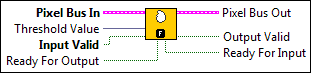
|
Pixel Bus In when Input Valid is TRUE, contains one of the following: valid pixel data, an end of line signal, or an end of image signal.
|
||||||||||
|
Threshold Value is the minimum pixel value to appear in the resulting image. It is rare to use a value greater than 0 for this type of processing because the results from this processing are usually very dark and are not very dynamic. The default is 0. |
||||||||||
|
Input Valid specifies whether the next data point has arrived for processing. Wire the Output Valid output of an upstream node to this input to transfer data from the upstream node to this node. |
||||||||||
|
Ready For Output specifies whether downstream nodes are ready for this node to return a new value. The default is TRUE. Use a Feedback Node to wire the Ready for Input output of a downstream node to this input of the current node.
|
||||||||||
|
Pixel Bus Out when Input Valid is TRUE, contains one of the following: valid pixel data, an end of line signal, or an end of image signal.
|
||||||||||
|
Output Valid returns TRUE if this node has computed a result that downstream nodes can use. Wire this output to the Input Valid input of a downstream node to transfer data from the node to the downstream node. |
||||||||||
|
Ready for Input returns TRUE if this node is ready to accept new input data. Use a Feedback Node to wire this output to the Ready for Output input of an upstream node.
|
IMAQ FPGA Sigma NoMask U16 x8 Details
|
Note Resource estimates are based on a 40 MHz clock. |
Kintex-7
Estimated Device Utilization
- Slice Registers: 5571
- Slice LUTs: 7345
- DSP48s: 0
- Block RAMs: 8
Estimated Performance
- Minimum Latency: 11
- Initiation Interval: 1
IMAQ FPGA Sobel NoMask U8 x1
Extracts the contours (detects edges) in gray-level values using a Sobel filter.
Supported Image Types

|
Pixel Bus In when Input Valid is TRUE, contains one of the following: valid pixel data, an end of line signal, or an end of image signal.
|
||||||||||
|
Threshold Value is the minimum pixel value to appear in the resulting image. It is rare to use a value greater than 0 for this type of processing because the results from this processing are usually very dark and are not very dynamic. The default is 0. |
||||||||||
|
Input Valid specifies whether the next data point has arrived for processing. Wire the Output Valid output of an upstream node to this input to transfer data from the upstream node to this node. |
||||||||||
|
Ready For Output specifies whether downstream nodes are ready for this node to return a new value. The default is TRUE. Use a Feedback Node to wire the Ready for Input output of a downstream node to this input of the current node.
|
||||||||||
|
Pixel Bus Out when Input Valid is TRUE, contains one of the following: valid pixel data, an end of line signal, or an end of image signal.
|
||||||||||
|
Output Valid returns TRUE if this node has computed a result that downstream nodes can use. Wire this output to the Input Valid input of a downstream node to transfer data from the node to the downstream node. |
||||||||||
|
Ready for Input returns TRUE if this node is ready to accept new input data. Use a Feedback Node to wire this output to the Ready for Output input of an upstream node.
|
IMAQ FPGA Sobel NoMask U8 x1 Details
|
Note Resource estimates are based on a 40 MHz clock. |
Virtex-5
Estimated Device Utilization
- Slice Registers: 1284
- Slice LUTs: 1451
- DSP48s: 0
- Block RAMs: 3
Estimated Performance
- Minimum Latency: 11
- Initiation Interval: 1
Spartan-6
Estimated Device Utilization
- Slice Registers: 1296
- Slice LUTs: 1423
- DSP48s: 0
- Block RAMs: 6
Estimated Performance
- Minimum Latency: 11
- Initiation Interval: 1
Zynq
Estimated Device Utilization
- Slice Registers: 1480
- Slice LUTs: 1301
- DSP48s: 0
- Block RAMs: 3
Estimated Performance
- Minimum Latency: 9
- Initiation Interval: 1
Kintex-7
Estimated Device Utilization
- Slice Registers: 1458
- Slice LUTs: 1399
- DSP48s: 0
- Block RAMs: 3
Estimated Performance
- Minimum Latency: 9
- Initiation Interval: 1
IMAQ FPGA Sobel NoMask U8 x8
Extracts the contours (detects edges) in gray-level values using a Sobel filter.
Supported Image Types

|
Pixel Bus In when Input Valid is TRUE, contains one of the following: valid pixel data, an end of line signal, or an end of image signal.
|
||||||||||
|
Threshold Value is the minimum pixel value to appear in the resulting image. It is rare to use a value greater than 0 for this type of processing because the results from this processing are usually very dark and are not very dynamic. The default is 0. |
||||||||||
|
Input Valid specifies whether the next data point has arrived for processing. Wire the Output Valid output of an upstream node to this input to transfer data from the upstream node to this node. |
||||||||||
|
Ready For Output specifies whether downstream nodes are ready for this node to return a new value. The default is TRUE. Use a Feedback Node to wire the Ready for Input output of a downstream node to this input of the current node.
|
||||||||||
|
Pixel Bus Out when Input Valid is TRUE, contains one of the following: valid pixel data, an end of line signal, or an end of image signal.
|
||||||||||
|
Output Valid returns TRUE if this node has computed a result that downstream nodes can use. Wire this output to the Input Valid input of a downstream node to transfer data from the node to the downstream node. |
||||||||||
|
Ready for Input returns TRUE if this node is ready to accept new input data. Use a Feedback Node to wire this output to the Ready for Output input of an upstream node.
|
IMAQ FPGA Sobel NoMask U8 x8 Details
|
Note Resource estimates are based on a 40 MHz clock. |
Kintex-7
Estimated Device Utilization
- Slice Registers: 3197
- Slice LUTs: 3106
- DSP48s: 0
- Block RAMs: 5
Estimated Performance
- Minimum Latency: 12
- Initiation Interval: 1
IMAQ FPGA Sobel NoMask U16 x1
Extracts the contours (detects edges) in gray-level values using a Sobel filter.
Supported Image Types

|
Pixel Bus In when Input Valid is TRUE, contains one of the following: valid pixel data, an end of line signal, or an end of image signal.
|
||||||||||
|
Threshold Value is the minimum pixel value to appear in the resulting image. It is rare to use a value greater than 0 for this type of processing because the results from this processing are usually very dark and are not very dynamic. The default is 0. |
||||||||||
|
Input Valid specifies whether the next data point has arrived for processing. Wire the Output Valid output of an upstream node to this input to transfer data from the upstream node to this node. |
||||||||||
|
Ready For Output specifies whether downstream nodes are ready for this node to return a new value. The default is TRUE. Use a Feedback Node to wire the Ready for Input output of a downstream node to this input of the current node.
|
||||||||||
|
Pixel Bus Out when Input Valid is TRUE, contains one of the following: valid pixel data, an end of line signal, or an end of image signal.
|
||||||||||
|
Output Valid returns TRUE if this node has computed a result that downstream nodes can use. Wire this output to the Input Valid input of a downstream node to transfer data from the node to the downstream node. |
||||||||||
|
Ready for Input returns TRUE if this node is ready to accept new input data. Use a Feedback Node to wire this output to the Ready for Output input of an upstream node.
|
IMAQ FPGA Sobel NoMask U16 x1 Details
|
Note Resource estimates are based on a 40 MHz clock. |
Virtex-5
Estimated Device Utilization
- Slice Registers: 1375
- Slice LUTs: 1597
- DSP48s: 0
- Block RAMs: 3
Estimated Performance
- Minimum Latency: 12
- Initiation Interval: 1
Spartan-6
Estimated Device Utilization
- Slice Registers: 1381
- Slice LUTs: 1454
- DSP48s: 0
- Block RAMs: 6
Estimated Performance
- Minimum Latency: 12
- Initiation Interval: 1
Zynq
Estimated Device Utilization
- Slice Registers: 1624
- Slice LUTs: 1513
- DSP48s: 0
- Block RAMs: 3
Estimated Performance
- Minimum Latency: 10
- Initiation Interval: 1
Kintex-7
Estimated Device Utilization
- Slice Registers: 2297
- Slice LUTs: 1951
- DSP48s: 0
- Block RAMs: 6
Estimated Performance
- Minimum Latency: 10
- Initiation Interval: 1
IMAQ FPGA Sobel NoMask U16 x8
Extracts the contours (detects edges) in gray-level values using a Sobel filter.
Supported Image Types
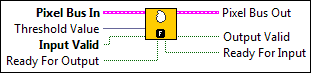
|
Pixel Bus In when Input Valid is TRUE, contains one of the following: valid pixel data, an end of line signal, or an end of image signal.
|
||||||||||
|
Threshold Value is the minimum pixel value to appear in the resulting image. It is rare to use a value greater than 0 for this type of processing because the results from this processing are usually very dark and are not very dynamic. The default is 0. |
||||||||||
|
Input Valid specifies whether the next data point has arrived for processing. Wire the Output Valid output of an upstream node to this input to transfer data from the upstream node to this node. |
||||||||||
|
Ready For Output specifies whether downstream nodes are ready for this node to return a new value. The default is TRUE. Use a Feedback Node to wire the Ready for Input output of a downstream node to this input of the current node.
|
||||||||||
|
Pixel Bus Out when Input Valid is TRUE, contains one of the following: valid pixel data, an end of line signal, or an end of image signal.
|
||||||||||
|
Output Valid returns TRUE if this node has computed a result that downstream nodes can use. Wire this output to the Input Valid input of a downstream node to transfer data from the node to the downstream node. |
||||||||||
|
Ready for Input returns TRUE if this node is ready to accept new input data. Use a Feedback Node to wire this output to the Ready for Output input of an upstream node.
|
IMAQ FPGA Sobel NoMask U16 x8 Details
|
Note Resource estimates are based on a 40 MHz clock. |
Kintex-7
Estimated Device Utilization
- Slice Registers: 5804
- Slice LUTs: 5240
- DSP48s: 0
- Block RAMs: 8
Estimated Performance
- Minimum Latency: 12
- Initiation Interval: 1