Cross Correlation VI
- Updated2023-02-21
- 9 minute(s) read
Cross Correlation VI
Owning Palette: Signal Operation VIs
Requires: Multicore Analysis and Sparse Matrix Toolkit
Computes the cross correlation of the input sequences X and Y.
Wire data to the X input and the Y input to determine the polymorphic instance to use or manually select the instance.
1D Cross Correlation (DBL)

 |
X specifies the first input sequence. | ||||||
|
Y specifies the second input sequence. | ||||||
 |
algorithm specifies the correlation method to use. When algorithm is Direct, this VI computes the cross correlation using the direct method of linear correlation. When algorithm is Frequency Domain, this VI computes the cross correlation using an FFT-based technique. If X and Y are small, the Direct method typically computes faster than the Frequency Domain method. If X and Y are large, the Frequency Domain method typically computes faster than the Direct method. Slight numerical differences can exist between the two methods.
|
||||||
 |
error in describes error conditions that occur before this node runs. This input provides standard error in functionality. | ||||||
|
normalization specifies the normalization method to use to compute the cross correlation of X and Y.
|
||||||
 |
Rxy returns the cross correlation of X and Y. | ||||||
 |
error out contains error information. This output provides standard error out functionality. |
1D Cross Correlation (SGL)

 |
X specifies the first input sequence. | ||||||
|
Y specifies the second input sequence. | ||||||
|
algorithm specifies the correlation method to use. When algorithm is Direct, this VI computes the cross correlation using the direct method of linear correlation. When algorithm is Frequency Domain, this VI computes the cross correlation using an FFT-based technique. If X and Y are small, the Direct method typically computes faster than the Frequency Domain method. If X and Y are large, the Frequency Domain method typically computes faster than the Direct method. Slight numerical differences can exist between the two methods.
|
||||||
|
error in describes error conditions that occur before this node runs. This input provides standard error in functionality. | ||||||
|
normalization specifies the normalization method to use to compute the cross correlation of X and Y.
|
||||||
 |
Rxy returns the cross correlation of X and Y. | ||||||
|
error out contains error information. This output provides standard error out functionality. |
1D Cross Correlation (CDB)

 |
X specifies the first input sequence. | ||||||
|
Y specifies the second input sequence. | ||||||
|
algorithm specifies the correlation method to use. When algorithm is Direct, this VI computes the cross correlation using the direct method of linear correlation. When algorithm is Frequency Domain, this VI computes the cross correlation using an FFT-based technique. If X and Y are small, the Direct method typically computes faster than the Frequency Domain method. If X and Y are large, the Frequency Domain method typically computes faster than the Direct method. Slight numerical differences can exist between the two methods.
|
||||||
|
error in describes error conditions that occur before this node runs. This input provides standard error in functionality. | ||||||
|
normalization specifies the normalization method to use to compute the cross correlation of X and Y.
|
||||||
 |
Rxy returns the cross correlation of X and Y. | ||||||
|
error out contains error information. This output provides standard error out functionality. |
1D Cross Correlation (CSG)
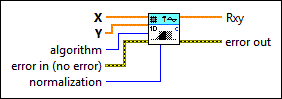
 |
X specifies the first input sequence. | ||||||
|
Y specifies the second input sequence. | ||||||
|
algorithm specifies the correlation method to use. When algorithm is Direct, this VI computes the cross correlation using the direct method of linear correlation. When algorithm is Frequency Domain, this VI computes the cross correlation using an FFT-based technique. If X and Y are small, the Direct method typically computes faster than the Frequency Domain method. If X and Y are large, the Frequency Domain method typically computes faster than the Direct method. Slight numerical differences can exist between the two methods.
|
||||||
|
error in describes error conditions that occur before this node runs. This input provides standard error in functionality. | ||||||
|
normalization specifies the normalization method to use to compute the cross correlation of X and Y.
|
||||||
 |
Rxy returns the cross correlation of X and Y. | ||||||
|
error out contains error information. This output provides standard error out functionality. |
2D Cross Correlation (DBL)

 |
X specifies the first input sequence. | ||||
|
Y specifies the second input sequence. | ||||
|
algorithm specifies the correlation method to use. When algorithm is Direct, this VI computes the cross correlation using the direct method of linear correlation. When algorithm is Frequency Domain, this VI computes the cross correlation using an FFT-based technique. If X and Y are small, the Direct method typically computes faster than the Frequency Domain method. If X and Y are large, the Frequency Domain method typically computes faster than the Direct method. Slight numerical differences can exist between the two methods.
|
||||
|
error in describes error conditions that occur before this node runs. This input provides standard error in functionality. | ||||
 |
Rxy returns the cross correlation of X and Y. | ||||
|
error out contains error information. This output provides standard error out functionality. |
2D Cross Correlation (SGL)

 |
X specifies the first input sequence. | ||||
|
Y specifies the second input sequence. | ||||
|
algorithm specifies the correlation method to use. When algorithm is Direct, this VI computes the cross correlation using the direct method of linear correlation. When algorithm is Frequency Domain, this VI computes the cross correlation using an FFT-based technique. If X and Y are small, the Direct method typically computes faster than the Frequency Domain method. If X and Y are large, the Frequency Domain method typically computes faster than the Direct method. Slight numerical differences can exist between the two methods.
|
||||
|
error in describes error conditions that occur before this node runs. This input provides standard error in functionality. | ||||
 |
Rxy returns the cross correlation of X and Y. | ||||
|
error out contains error information. This output provides standard error out functionality. |
2D Cross Correlation (CDB)

 |
X specifies the first input sequence. | ||||
|
Y specifies the second input sequence. | ||||
|
algorithm specifies the correlation method to use. When algorithm is Direct, this VI computes the cross correlation using the direct method of linear correlation. When algorithm is Frequency Domain, this VI computes the cross correlation using an FFT-based technique. If X and Y are small, the Direct method typically computes faster than the Frequency Domain method. If X and Y are large, the Frequency Domain method typically computes faster than the Direct method. Slight numerical differences can exist between the two methods.
|
||||
|
error in describes error conditions that occur before this node runs. This input provides standard error in functionality. | ||||
 |
Rxy returns the cross correlation of X and Y. | ||||
|
error out contains error information. This output provides standard error out functionality. |
2D Cross Correlation (CSG)
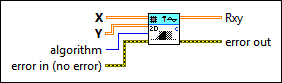
 |
X specifies the first input sequence. | ||||
|
Y specifies the second input sequence. | ||||
|
algorithm specifies the correlation method to use. When algorithm is Direct, this VI computes the cross correlation using the direct method of linear correlation. When algorithm is Frequency Domain, this VI computes the cross correlation using an FFT-based technique. If X and Y are small, the Direct method typically computes faster than the Frequency Domain method. If X and Y are large, the Frequency Domain method typically computes faster than the Direct method. Slight numerical differences can exist between the two methods.
|
||||
|
error in describes error conditions that occur before this node runs. This input provides standard error in functionality. | ||||
 |
Rxy returns the cross correlation of X and Y. | ||||
|
error out contains error information. This output provides standard error out functionality. |
Cross Correlation Details
The following table lists the support characteristics of this VI.
| Supported on RT targets | Yes |
| Suitable for bounded execution times on RT | Yes |
Refer to the Details section in the CrossCorrelation VI for more details about this VI.