CD Draw Transfer Function Equation VI
- Updated2023-03-14
- 8 minute(s) read
CD Draw Transfer Function Equation VI
Owning Palette: Model Construction VIs
Requires: Control Design and Simulation Module
Displays the transfer function equation of the model. Wire data to the State-Space Model input to determine the polymorphic instance to use or manually select the instance.
 | Note Real-time targets do not support this VI. |
CD Draw Transfer Function Equation (State-Space)
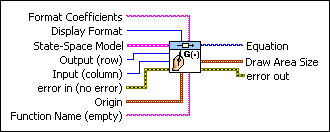
 |
Format Coefficients specifies how to format the resulting equation. You can enter any of the LabVIEW format specifier syntax elements. The default value is %#_g, which removes trailing zeros and specifies that LabVIEW uses fractional or scientific notation depending on the exponent of the number. | ||||||
 |
display format specifies the format in which this VI displays the equation.
|
||||||
 |
State-Space Model contains a mathematical representation of and information about the system for which this VI draws an equation. | ||||||
 |
Output (row) specifies the index number of the output row from which to draw the transfer function matrix. The index is zero-based. The default is –1, which draws all outputs. | ||||||
|
Input (column) specifies the index number of the input column from which to draw the transfer function matrix. The index is zero-based. The default is –1, which draws all inputs. | ||||||
 |
error in describes error conditions that occur before this node runs. This input provides standard error in functionality. | ||||||
 |
Origin specifies the upper-left position of the equation this VI draws.
| ||||||
|
Function Name specifies the function this VI draws. For example, if you enter H, this VI displays H(s)= for continuous equations and H(z)= for discrete equations. | ||||||
 |
Equation draws a picture of the model equation this VI defines. | ||||||
 |
Draw Area Size indicates the size of the area in the picture control this VI uses to draw the model equation.
| ||||||
 |
error out contains error information. This output provides standard error out functionality. |


CD Draw Transfer Function Equation (Transfer Function)

|
Format Coefficients specifies how to format the resulting equation. You can enter any of the LabVIEW format specifier syntax elements. The default value is %#_g, which removes trailing zeros and specifies that LabVIEW uses fractional or scientific notation depending on the exponent of the number. | ||||||
|
display format specifies the format in which this VI displays the equation.
|
||||||
|
Transfer Function Model contains a mathematical representation of and information about the system for which this VI draws an equation. | ||||||
|
Output (row) specifies the index number of the output row from which to draw the transfer function matrix. The index is zero-based. The default is –1, which draws all outputs. | ||||||
|
Input (column) specifies the index number of the input column from which to draw the transfer function matrix. The index is zero-based. The default is –1, which draws all inputs. | ||||||
|
error in describes error conditions that occur before this node runs. This input provides standard error in functionality. | ||||||
|
Origin specifies the upper-left position of the equation this VI draws.
| ||||||
|
Function Name specifies the function this VI draws. For example, if you enter H, this VI displays H(s)= for continuous equations and H(z)= for discrete equations. | ||||||
|
Equation draws a picture of the model equation this VI defines. | ||||||
|
Draw Area Size indicates the size of the area in the picture control this VI uses to draw the model equation.
| ||||||
|
error out contains error information. This output provides standard error out functionality. |
CD Draw Transfer Function Equation (Zero-Pole-Gain)
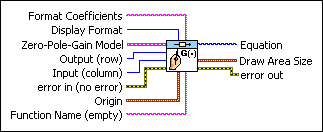
|
Format Coefficients specifies how to format the resulting equation. You can enter any of the LabVIEW format specifier syntax elements. The default value is %#_g, which removes trailing zeros and specifies that LabVIEW uses fractional or scientific notation depending on the exponent of the number. | ||||||
|
display format specifies the format in which this VI displays the equation.
|
||||||
|
Zero-Pole-Gain Model contains a mathematical representation of and information about the system for which this VI draws an equation. | ||||||
|
Output (row) specifies the index number of the output row from which to draw the transfer function matrix. The index is zero-based. The default is –1, which draws all outputs. | ||||||
|
Input (column) specifies the index number of the input column from which to draw the transfer function matrix. The index is zero-based. The default is –1, which draws all inputs. | ||||||
|
error in describes error conditions that occur before this node runs. This input provides standard error in functionality. | ||||||
|
Origin specifies the upper-left position of the equation this VI draws.
| ||||||
|
Function Name specifies the function this VI draws. For example, if you enter H, this VI displays H(s)= for continuous equations and H(z)= for discrete equations. | ||||||
|
Equation draws a picture of the model equation this VI defines. | ||||||
|
Draw Area Size indicates the size of the area in the picture control this VI uses to draw the model equation.
| ||||||
|
error out contains error information. This output provides standard error out functionality. |
CD Draw Transfer Function Equation Details
This VI does not display the delay information in the transfer function equation of the model. Refer to the LabVIEW Control Design User Manual for more information about delays.