CD Convert Continuous to Discrete VI
- Updated2023-03-14
- 7 minute(s) read
CD Convert Continuous to Discrete VI
Owning Palette: Model Conversion VIs
Requires: Control Design and Simulation Module
Converts a continuous-time model to a discrete-time model using the Sampling Time (s) and the Method you specify. The Zero-Order-Hold conversion method supports input and output delays that are not an integer multiple of the Sampling Time (s). Wire data to the Continuous State-Space Model input to determine the polymorphic instance to use or manually select the instance.
CD Convert Continuous to Discrete (State-Space)

 |
Matching Frequency (rad/s) specifies the frequency at which the gains of the continuous and discrete systems match. The value of this parameter must be between zero and the Nyquist frequency. This parameter is valid only if you specify Prewarp or Matched Pole-Zero for the Method parameter. The default value is 0, which matches the discrete system to the DC gain of the continuous system. |
||||||||||||||||
 |
Continuous State-Space Model is the continuous-time system model that this VI converts into a discrete-time equivalent. | ||||||||||||||||
|
Sampling Time (s) is the fixed time period between successive digital samples that a computer produces. Sampling Time (s) cannot be a negative value. The default is 1. | ||||||||||||||||
 |
Method is the algorithm this VI uses to calculate the discrete equivalent of the continuous-time system model.
|
||||||||||||||||
 |
error in describes error conditions that occur before this node runs. This input provides standard error in functionality. | ||||||||||||||||
 |
Discrete State-Space Model is the discrete-time equivalent of the input continuous-time system model. To access and modify the data in the model, use the Model Information VIs. | ||||||||||||||||
 |
Discrete IC Multiplier is the matrix P which this VI uses to convert continuous time initial conditions vector xc0 to discrete-time initial conditions vector xd0 for a state-space system. | ||||||||||||||||
 |
error out contains error information. This output provides standard error out functionality. |

 , where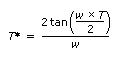


CD Convert Continuous to Discrete (Transfer Function)

|
Matching Frequency (rad/s) specifies the frequency at which the gains of the continuous and discrete systems match. The value of this parameter must be between zero and the Nyquist frequency. This parameter is valid only if you specify Prewarp or Matched Pole-Zero for the Method parameter. The default value is 0, which matches the discrete system to the DC gain of the continuous system. |
||||||||||||||||
|
Continuous Transfer Function Model is the continuous-time system model that this VI converts into a discrete-time equivalent. | ||||||||||||||||
|
Sampling Time (s) is the fixed time period between successive digital samples that a computer produces. Sampling Time (s) cannot be a negative value. The default is 1. | ||||||||||||||||
|
Method is the algorithm this VI uses to calculate the discrete equivalent of the continuous-time system model.
|
||||||||||||||||
|
error in describes error conditions that occur before this node runs. This input provides standard error in functionality. | ||||||||||||||||
|
Discrete Transfer Function Model is the discrete-time equivalent of the input continuous-time system model. To access and modify the data in the model, use the Model Information VIs. | ||||||||||||||||
|
error out contains error information. This output provides standard error out functionality. |
CD Convert Continuous to Discrete (Zero-Pole-Gain)

|
Matching Frequency (rad/s) specifies the frequency at which the gains of the continuous and discrete systems match. The value of this parameter must be between zero and the Nyquist frequency. This parameter is valid only if you specify Prewarp or Matched Pole-Zero for the Method parameter. The default value is 0, which matches the discrete system to the DC gain of the continuous system. |
||||||||||||||||
|
Continuous Zero-Pole-Gain Model is the continuous-time system model that this VI converts into a discrete-time equivalent. | ||||||||||||||||
|
Sampling Time (s) is the fixed time period between successive digital samples that a computer produces. Sampling Time (s) cannot be a negative value. The default is 1. | ||||||||||||||||
|
Method is the algorithm this VI uses to calculate the discrete equivalent of the continuous-time system model.
|
||||||||||||||||
|
error in describes error conditions that occur before this node runs. This input provides standard error in functionality. | ||||||||||||||||
|
Discrete Zero-Pole-Gain Model is the discrete-time equivalent of the input continuous-time system model. To access and modify the data in the model, use the Model Information VIs. | ||||||||||||||||
|
error out contains error information. This output provides standard error out functionality. |
CD Convert Continuous to Discrete Details
This VI supports delays. This VI divides the delays by the Sampling Time (s) and if the results contain residues, this VI incorporates the delay information into the resulting discrete model as long as the residue is in the input and/or outputs and you specified a value of Zero-Order-Hold for the Method parameter. Otherwise, this VI ignores the residues and gives a warning.
If you specify a value of Zero-Order-Hold for the Method parameter and some of the input and/or output delays are non-integer multiples of the Sampling Time (s), then the resulting discrete model contains n + pd + qd states.
| where | n is the number of states in the system |
| pd is the number of inputs with delays that are non-integer multiples of the sampling time | |
| qd is the number of outputs with delays that are non-integer multiples of the sampling time |
Refer to the LabVIEW Control Design User Manual for more information about delays.