Wi-Fi 8: The Shift to Ultra-High Reliability (UHR)
Overview
For decades, each new generation of Wi-Fi has been defined by faster speeds and higher throughput. Today, however, many wireless applications are no longer limited by peak data rates; they are limited by reliability. Wi-Fi 8 addresses this shift with new features designed to improve coverage, latency, network efficiency, and reliability. This white paper explores these enhancements and their implications for test and validation.
Contents
- Introduction: The Next Generation of Wi-Fi
- Transitioning from Wi-Fi 7
- Wi-Fi 8 (802.11bn) New Features
- Wi-Fi 8 Implications for Test and Validation
- Conclusion
- Next Steps
- References
Introduction: The Next Generation of Wi-Fi
In the modern world, wireless communication is ubiquitous. It is at the core of how we communicate with friends, family, and colleagues, whether it’s through email, text, video, or voice calls, or any other digital medium. Beyond personal communication, wireless connectivity links people, organizations, and devices around the world, providing instant access to information, supporting the complex logistics of modern society, and enabling enterprises to collaborate and operate across global teams and resources.
There are a multitude of wireless standards used regularly in wireless applications, such as Bluetooth® wireless technology, Internet of Things standards (Zigbee®, Thread®, and so on), ultra-wideband, and cellular technologies like long-term evolution (LTE) and 5G. While they each have their place and coexist with one another, few rival the omnipresence of Wi-Fi. In fact, more data from user equipment (cell phones) now moves through Wi-Fi than cellular networks[1]. Wi-Fi has widespread reach, and any changes to how it operates can have equally widespread impacts on the people that use it.
Wi-Fi 8 (IEEE 802.11bn) is being developed under the Ultra-High Reliability (UHR) Initiative, which prioritizes consistent throughput, lower latency, improved roaming performance, and reduced packet loss in real-world deployments. As of today, 802.11bn remains a draft standard, and specific features may evolve before final ratification. Wi-Fi 8 maintains support for the same 2.4 GHz, 5 GHz, and 6 GHz frequency bands introduced in previous generations while focusing on improving reliability rather than increasing peak throughput.
Transitioning from Wi-Fi 7
As Wi-Fi 7 deployment continues to expand, design and validation engineers are already looking ahead to Wi-Fi 8. Wi-Fi 7 expanded the physical layer (PHY) capabilities of wireless local area network (WLAN) through support for 320 MHz channels, 4096-QAM, and multilink operation, enabling extremely high peak throughput. Now that Wi-Fi 7 devices have moved into production, design and validation engineers are looking ahead to Wi-Fi 8.
Wi-Fi 8, or IEEE 802.11bn, is the next evolution of Wi-Fi. While Wi-Fi 7 was developed under the designation extremely high throughput (EHT), IEEE 802.11bn is focused on ultra-high reliability (UHR), reflecting the priorities of the new standard. Unlike Wi-Fi 7, Wi-Fi 8 focuses primarily on improving reliability, latency, roaming performance, and network efficiency rather than increasing peak data rates.
Wi-Fi 8 (802.11bn) New Features
Wi-Fi 8 builds upon the previous generation of the 802.11 standard and enhances it in a few different ways:
- Access point (AP) and network coordination
- Distributed resource units (dRUs)
- Unequal modulation (UEQM)
- New modulation and coding scheme (MCS)
- Longer low-density parity-check (LDPC)
- Enhanced long range (ELR)
- Interference mitigation
These features support the IEEE 802.11bn objectives of improving throughput, reducing latency, and reducing protocol data unit loss relative to Wi-Fi 7, with a particular focus on reliability in real-world deployment scenarios. With these improvements, Wi-Fi 8 will be well positioned to meet demands in new applications such as augmented reality/virtual reality, robotics, industrial automation, and smart agriculture, as well as to enhance reliability of applications already well-served by Wi-Fi.
Access Point (AP) and Network Coordination
In addition to PHY-layer enhancements, Wi-Fi 8 introduces several network-level improvements designed to improve performance in dense and highly mobile environments:
- Dynamic sub-band operation (DSO)—Enables access points to dynamically allocate channel resources based on client demand, improving spectrum efficiency.
- Non-primary channel access (NPCA)—Allows devices to transmit on available secondary channels when the primary channel is occupied, reducing contention and latency.
- Single mobility domain (SMD)—Enables coordinated handoffs between access points, reducing packet loss and service interruptions during roaming.
- Multi-AP coordination—Introduces techniques such as coordinated time division multiple access (Co-TDMA), coordinated restricted target wake time (Co-rTWT), coordinated beamforming, and coordinated spatial reuse to improve network reliability and reduce interference.
Distributed Resource Units (dRUs)
A resource unit (RU) denotes a group of subcarriers, or tones, used in orthogonal frequency-division multiple access (OFDMA) that breaks up available bandwidth to be used among different users or devices. The concept and benefits of dRUs are best explained by first revisiting regular resource units (rRUs). A 26-tone rRU in a traditional WLAN waveform takes up 2 MHz of bandwidth. And rRU groupings essentially pack tones as closely together as possible to optimize spectrum use and data transfer. While rRU groupings optimize data transfer over a given bandwidth and are useful when the available spectrum is at a premium, they also have limitations. In particular, concentrating rRU tones within a narrow bandwidth limits how much total transmit power can be used while remaining within regulatory power spectral density (PSD) limits.
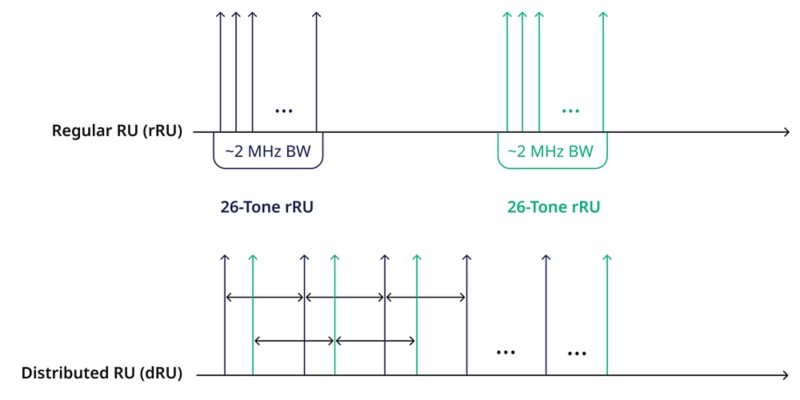
Figure 1. Spectral Distribution of rRU and dRU2
A dRU is different in that it distributes tones across a wider bandwidth, thus increasing the available transmission power. This can significantly increase the available transmit power since the power is spread across a wider bandwidth instead of concentrated in contiguous subcarriers. Transmitting at higher power not only improves the coverage range but can also improve the signal-to-noise ratio (SNR) of the signal at the receiver.
By improving SNR, dRUs can reduce transmission errors and extend communication range, which is especially beneficial when two devices are far apart, such as in large industrial production facilities or warehouses.
Unlike traditional resource units, dRUs distribute subcarriers across a wider frequency span, allowing devices to take advantage of regulatory PSD limits while maintaining robust communication. dRUs are particularly beneficial for uplink transmissions, helping improve receiver sensitivity and extending coverage for distant stations operating under transmit PSD constraints.
Unequal Modulation (UEQM)
Another key feature that is new with Wi-Fi 8 is that of unequal modulation (UEQM). Unequal modulation enables different spatial streams within a multiple-input, multiple-output (MIMO) transmission to use different modulation orders based on the quality of each individual propagation path. UEQM takes the idea of spatial multiplexing and enhances it by allowing spatial streams to use different modulation schemes per spatial stream, based on the real-world conditions of a specific channel.
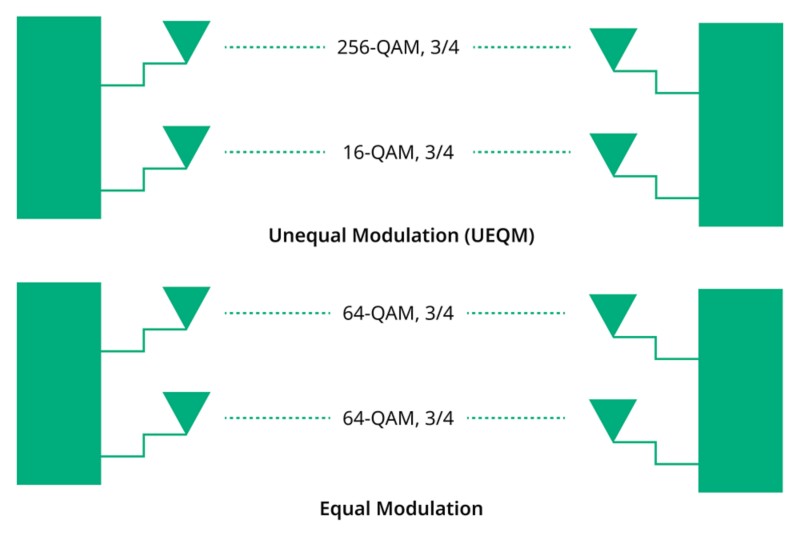
Figure 2. Differences Between Equal and Unequal Modulation
In past implementations of WLAN MIMO, there has always been the ability to send different data across different spatial streams. However, this ability does not account for the different physical paths that they travel, which can have varying levels of interference. This scenario is suboptimal, especially for the ill-conditioned channels that can lead to higher bit error rate (BER) and loss across channels.
In unequal modulation, different-order modulation (QAM) per spatial stream is applied, thus reducing inefficiencies when the characteristics of different spatial streams require it. By allowing different modulation orders to be assigned to different spatial streams, UEQM improves link efficiency when channel conditions vary significantly between streams. UEQM is available for many modulation types but is not supported for binary phase-shift keying (BPSK) and is intended for beamformed transmissions rather than multi-user MIMO (MU-MIMO) operation. While it will help with reliability, different spatial streams require coding rates to be matched, despite different orders of modulation. This requirement has led to creating new MCS indices with more coding rate options, which is the topic of the next new feature.
New Modulation and Coding Scheme (MCS)
Like previous Wi-Fi updates, Wi-Fi 8 introduces new MCS indices with various code rates and modulation schemes. Table 2 shows the four new options available.
These new MCS values address gaps in the existing MCS structure by adding intermediate coding-rate options that improve link adaptation flexibility. This feature allows devices to better balance throughput and reliability across varying channel conditions while also providing matched coding-rate options for unequal modulation.
In some channel conditions, the additional coding-rate options provided by MCS 17, 19, and 20 can improve achievable throughput by enabling more precise link adaptation. Conversely, MCS 23 provides a different code rate from MCS 8 that can be used as an alternative when higher reliability is desired. Although these new options are inserted among the existing MCS structure, previous MCS indices will not be renumbered.
Longer Low-Density Parity-Check (LDPC)
First introduced more than 10 years ago in Wi-Fi, low-density parity-check (LDPC) is not new to those who have worked with the standard for some time. It is a form of error correction code used to enhance reliability that works by transmitting a matrix of extra bits (called parity bits) as a redundancy to help identify and correct errors that have resulted from noise or other interferences.
Wi-Fi 8 adopts this concept and builds upon it for even more robust communication. Wi-Fi 8 introduces 2X LDPC codewords with a maximum block length of 3,888 bits, doubling the previous 1,944-bit limit.
Enhanced Long Range
Enhanced long range (ELR) introduces optimized transmission techniques designed to improve the range and reliability of uplink communications. In Wi-Fi networks, there can be a significant imbalance between uplink and downlink link budgets, with differences of up to 6 dB. Wi-Fi 8 introduces a dedicated ELR physical layer protocol data unit (PPDU) format optimized for coverage-limited deployments, improving communication reliability for distant stations while addressing uplink and downlink link-budget imbalances. ELR is designed for devices operating near the edge of network coverage, where improved receiver sensitivity and more robust packet structures can help maintain reliable communication.
Interference Mitigation
Another feature that plays its part in the enhanced reliability for Wi-Fi 8 is interference mitigation (IM). Random and unexpected interference can lead to reduced reliability. Additionally, interfering signals can be narrowband or wideband and can arise at any time.
Interference mitigation introduces a new transmission scheme, where interference mitigation (IM) pilots are inserted within the data field, enabling channel estimation and interference mitigation at the receiver side that results in improved performance and reduced latency.
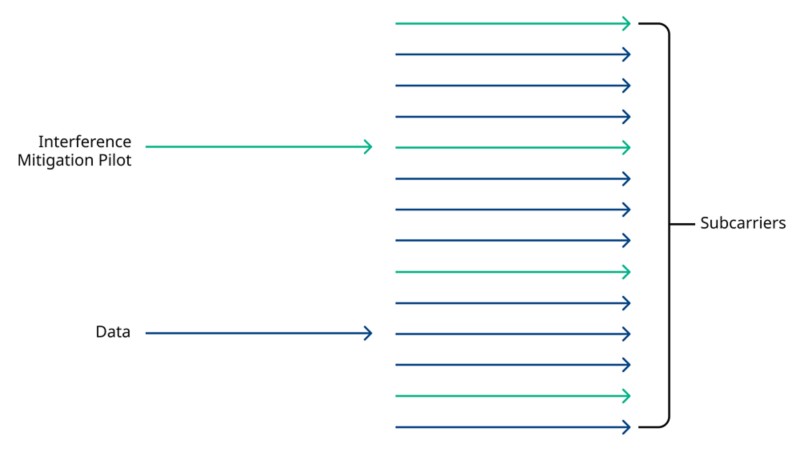
Figure 3. IM Pilots Included in Wi-Fi 8 Transmissions
It seems intuitive that inserting pilots, and thus reducing transmitted data, would reduce the total throughput possible when using IM pilots. However, the improved reliability and interference resilience provided by IM pilots can help maintain throughput under challenging channel conditions by reducing transmission errors and retransmissions.
Wi-Fi 8 Implications for Test and Validation
While these features are well-positioned to improve the reliability of the next generation of Wi-Fi enabled devices, a critical factor in their implementation is proper test and validation to ensure reliable operation. Engineers validating Wi-Fi 8 devices must evaluate both traditional radio frequency (RF) performance metrics and the behavior of new protocol features introduced by the standard. Validation of Wi-Fi 8 implementations requires verification of modulation quality, spectrum compliance, power measurements, and feature-specific operation across a wide range of deployment scenarios.
Effective validation begins with enabling performance characterization of new features through software. NI RFmx software enables many of these new features already, through various configuration options in the RFmx Waveform Creator and associated measurements in the RFmx Soft Front Panels.
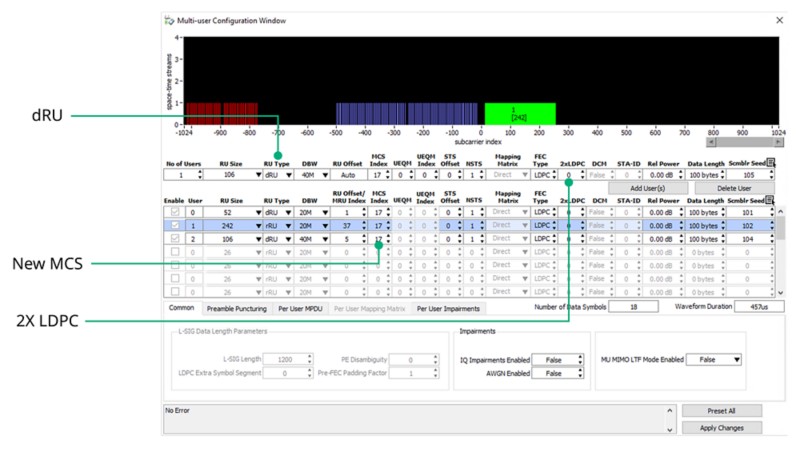
Figure 4. RFmx Waveform Creator Support for Wi-Fi 8 Features
RFmx WLAN supports analysis and generation workflows for several emerging Wi-Fi 8 features including dRUs, UEQM, ELR PPDUs, new MCS values, 2X LDPC, and interference mitigation pilots. Validation workflows can leverage measurements such as error vector magnitude (EVM), modulation accuracy (ModAcc), spectrum emission mask (SEM), and transmit power (TxP).
In addition to requiring software support for new protocol features, Wi-Fi 8 validation also requires high-performance RF instrumentation capable of generating and analyzing increasingly complex wireless signals.

Figure 5. NI PXIe-5842 Vector Signal Transceiver
The NI PXIe-5842 vector signal transceiver (VST) is well-suited to these challenges, with up to 4 GHz of instantaneous bandwidth in certain variants, providing significant headroom for current and future wireless validation needs. A vector signal transceiver combines a vector signal analyzer, vector signal generator, and onboard field-programmable gate array (FPGA) into a single instrument, allowing you to both generate and acquire RF signals through a Wi-Fi front end or power amplifier. When paired with RFmx software, the PXIe-5842 VST offers a fast and high-performance solution for Wi-Fi automated test and validation.
Conclusion
Wi-Fi 8 is packed with new features to enhance the reliability of Wi-Fi-enabled devices. While this is just the latest set of changes in an ever-evolving standard, staying informed and prepared with the right tools is the first step in making the transition as seamless as possible.
Next Steps
References
- [1] Andrey Popov, “Wi-Fi Drives Smartphone Data Consumption in the US, but Trends Vary Across Operators.” Opensignal.com, 2024. https://www.opensignal.com/2024/10/31/Wi-Fi-drives-smartphone-data-consumption-in-the-us-but-trends-vary-across-operators
- [2] MediaTek Inc., “Wi-Fi 8: Pioneering The Future of Connectivity.” Mediatek.com, 2024. https://www.mediatek.com/tek-talk-blogs/Wi-Fi-8-pioneering-the-future-of-connectivity
| RU Size | rRU Tx Power (dBm) | dRU Tx Power (dBm) | ||
|---|---|---|---|---|
| dRU 20 MHz BW | dRU 40 MHz BW | dRU 80 MHz BW | ||
| RU26 | 2.08 | 10.21 | 13.22 | 13.22 |
| RU52 | 5.09 | 11.46 | 13.22 | 16.23 |
| RU106 | 8.18 | 11.74 | 14.55 | 16.31 |
| RU242 | 11.77 | 14.46 | 16.89 | |
| RU484 | 14.78 | 17.47 | ||
Table 1. Transmit Power of Various rRU versus dRU Configurations
| UHR-MCS Index | Code Rate | Modulation |
|---|---|---|
| 17 | 2/3 | QPSK |
| 19 | 2/3 | 16-QAM |
| 20 | 5/6 | 16-QAM |
| 23 | 2/3 | 256-QAM |
Table 2. New MCS Indices in 802.11bn[2]