How Stäubli Modernized Test Operations with NI SystemLink
Rob Albright, Test Lab Manager, Stäubli Electrical Connectors North America
Benjamin Hagen, Global Head of Testing, Stäubli Electrical Connectors

Case Study Highlights
- Modernized test operations across Stäubli’s North American laboratory
- Reduced engineering effort through automated analysis and reporting workflows
- Connected systems, software, calibration, and test data in a single operational workflow
- Created a scalable foundation for future expansion across global laboratories

“SystemLink connects everything behind our testing, from managing systems and software to collecting data and automating analysis, so our engineers can spend less time managing the process and more time understanding the results.”
—Rob Albright, Test Lab Manager, Stäubli Electrical Connectors North America
The Challenge:
Stäubli performs certification, validation, and long-duration reliability testing across laboratories in North America, Europe, and Asia. While test execution was automated, managing systems, software, calibration, data, and analysis remained fragmented across local tools and spreadsheets. The team wanted a more connected approach that could modernize operations in its North American lab while creating a foundation for future standardization across the organization.
The Solution:
Stäubli implemented NI SystemLink in its North American laboratory as the operational foundation for managing test systems, software deployment, calibration assets, and test data. Combined with NI LabVIEW, NI TestStand, NI DIAdem, and Python-based analysis workflows, the solution automates routine tasks, accelerates analysis, and provides a scalable framework for future expansion to additional laboratories.
Managing More than Test Data
At Stäubli Electrical Connectors, every product we develop must meet demanding electrical and environmental performance requirements before it reaches our customers. Our laboratories perform certification, validation, and long-duration reliability testing on electrical connectors used in applications where reliability is critical. Depending on the product and application, that can include high-voltage testing, breakdown testing, impulse testing, contact resistance testing, temperature-rise measurements, voltage-drop testing, environmental testing, and endurance testing. Some tests are completed within a day, while others can run for more than 3,000 hours, generating large volumes of measurement data.
For a long time, we thought our biggest challenge was collecting more data. As our testing capabilities expanded, we realized that was no longer the problem. We already had the data. What we needed was a better way to manage everything around it.
We had already automated much of our test execution using NI technologies such as LabVIEW, TestStand, CompactDAQ, and CompactRIO, but a passing measurement was not enough on its own. We also needed confidence that the test ran on the correct system, using the right software, with calibrated equipment, and that the results were analyzed using validated methods.
As our Global Head of Testing, Benjamin Hagen, described it, “the automation stopped at Excel.” Test systems were collecting measurements, but much of the operational work after the test still depended on disconnected tools, spreadsheets, local files, and manual reporting. When engineers needed to reproduce results or understand what changed between test runs, they often had to piece together information from several places.
That realization changed how we thought about test automation. Success was no longer defined only by how efficiently we collected data. It was defined by how effectively we could connect systems, software, calibration, test data, and analysis into a workflow that supported trusted engineering decisions.
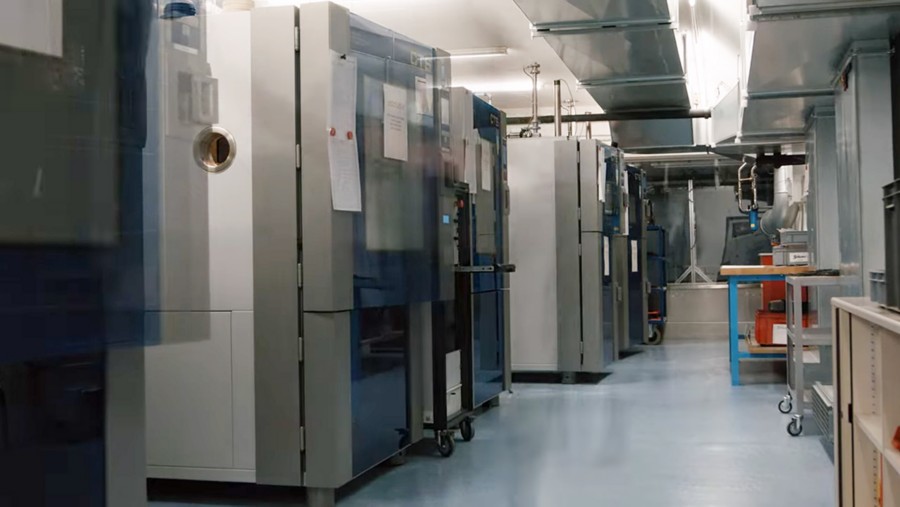
Figure 1. North American test laboratory showing automated test systems.
Connecting Systems, Software, and Data with SystemLink
We implemented NI SystemLinkTM software as the operational foundation for our North American laboratory. Instead of managing software deployment, calibration, system health, test data, and analysis workflows through separate tools, SystemLink helps us connect those activities into a more consistent environment.
Today, we manage 12 test systems through SystemLink, and we continue to bring additional systems into the platform. Engineers can monitor system health, manage software deployment, track calibration assets, collect test data, and support analysis workflows using a common process. Having that operational information connected to our test results gives us better context. We can understand not only what happened during a test, but also what system was used, what software was running, and whether the required assets were in the right state.
One of the reasons we chose SystemLink was that we wanted our engineers to focus on developing and validating electrical connector technology, not building and maintaining the infrastructure around testing. By using a platform designed for test operations, we can spend less time maintaining disconnected processes and more time solving engineering problems.
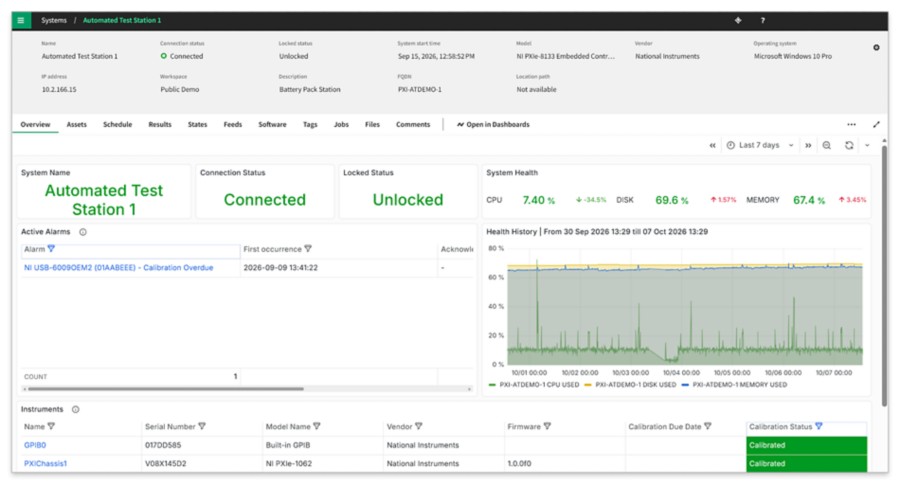
Figure 2. Stock image of SystemLink dashboard showing system health
Automating Analysis with DIAdem and Python
For many of our tests, the procedure is well understood before the test begins. The equipment is configured, the method is defined, and the calculations required by the standard or internal process are known. The biggest variable is often what happens after the data is collected.
Depending on the complexity of the test, who is performing the analysis, and what else they are working on, the time required to turn raw measurements into usable results can vary significantly. Reducing that variability became a key objective. We wanted analysis to become part of the testing workflow, not a separate manual project that starts after the test is complete.
We use DIAdem to develop analysis procedures for common test methods. Raw measurements can be processed into the results required by the test, including calculations, statistics, pass/fail evaluations, and report outputs. After those procedures are validated, they can be reused, helping ensure that similar tests are analyzed the same way every time.
SystemLink provides the environment where test data is stored and made available for those analysis workflows. Data from LabVIEW, TestStand, CompactDAQ, and CompactRIO-based systems can be collected and organized through SystemLink, so engineers do not have to begin each analysis by searching through local folders, network drives, or spreadsheets.
We have also integrated Python-based workflows and Jupyter Notebooks into our process to automate routine data processing and extend our analysis capabilities. Today, approximately 80 percent of our routine analysis workflows are automated, pending final validation, allowing engineers to spend less time preparing data and more time reviewing results and investigating exceptions.
This is especially valuable for long-duration reliability testing, where systems can generate data over weeks or months. Rather than waiting until the end of a test to assemble information, we can build analysis into the workflow and make results available through a more repeatable process.
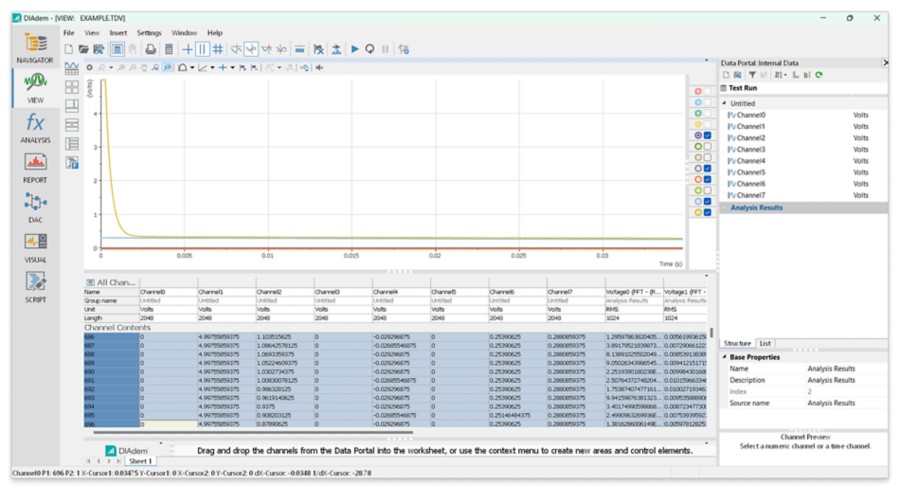
Figure 3. DIAdem stock image showing voltage discharge
Reducing Time to Insight
One of the most important measures of success for our team is time to insight. The value of a test is not realized when the data is collected. It is realized when engineers understand the result and can make a decision based on it.
By connecting system information, test data, and analysis workflows, we can reduce the time between measurement and decision. Stakeholders gain visibility into the testing process instead of waiting for manually prepared reports. Engineers can respond more quickly when issues are identified, and decision makers receive trusted information sooner.
Instead of asking where the data is, which software version generated it, or whether the correct analysis routine was used, we can focus on the questions that matter most: What changed? Why did it happen? What should we do next?
Building a Global Testing Framework
Although our current implementation is focused on our North American laboratory, we designed it with a broader vision. Across Stäubli, laboratories perform different types of testing, but they share many of the same operational challenges: maintaining systems, deploying software, managing calibration, collecting reliable data, analyzing results, and sharing information with stakeholders.
Our North American implementation now serves as a model that can be adopted by additional laboratories over time. Today, we manage 12 systems in SystemLink. Across the broader global testing organization, the long-term opportunity could include approximately 100 test systems. As additional labs adopt the same operational model, they can build on validated workflows, proven analysis methods, and shared best practices instead of creating independent solutions from scratch.
As Benjamin Hagen described it, the goal is to help teams work from “the same sheet of music.” That matters because standardization is not only about efficiency. It is also about confidence. When teams follow the same process, use the same validated methods, and manage data with the same context, it becomes easier to compare results, share knowledge, and support engineering decisions across locations.
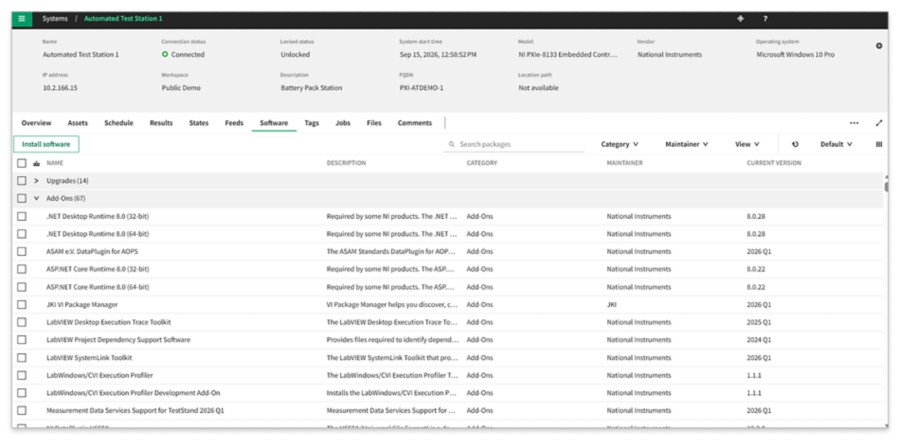
Figure 4. SystemLink software deployment example screen
Looking Ahead
As products become more sophisticated and validation requirements continue to increase, test organizations must manage far more than test execution alone. We need to coordinate systems, software, calibration, data, analysis, and reporting while delivering trusted results faster than before.
For us, connecting the testing workflow has helped reduce manual effort and create a more repeatable process. Engineers spend less time maintaining spreadsheets, searching for data, or recreating analysis—and more time understanding results and solving product challenges.
Looking ahead, our goal is not simply to automate more tests. It is to create a testing environment where engineers have the information they need to make faster, more confident decisions, regardless of where testing is performed.
Excel is a trademark of the Microsoft group of companies.