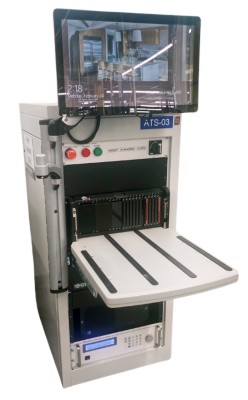
Modernizing Appliance Software Testing with Hardware in the Loop (HIL) at Sub-Zero
Case Study Highlights
- Savings of 1 FTE by replacing custom Python data acquisition software with NI VeriStand™
- 30 percent faster test development with reduced complexity and an intuitive interface
- 40 percent reduction in false failures with improved reliability and accuracy
- Onboarding has been shortened from three months to two weeks—with broader team engagement
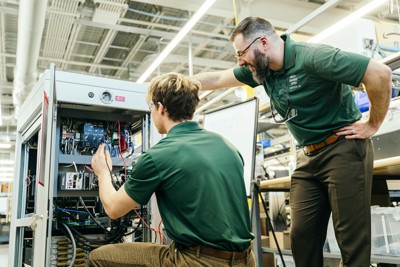
"Of course NI has high-quality hardware and software, but it’s more than that. You know, at Sub-Zero we don’t like to focus on features—we focus on experiences. Whether it’s amazing account managers, customer education, or expert technical support—NI has helped guide us to the right solutions. That’s why we don’t see NI as just a vendor, we see them as a partner."
Chase Fearing, Sr. Lead Engineer at Sub-Zero
The Challenge:
Legacy testing methods were difficult to maintain and couldn’t validate increasingly software-defined appliances with the required reliability.
The Solution:
An automated, scalable HIL testing framework using best practices and off-the-shelf components.
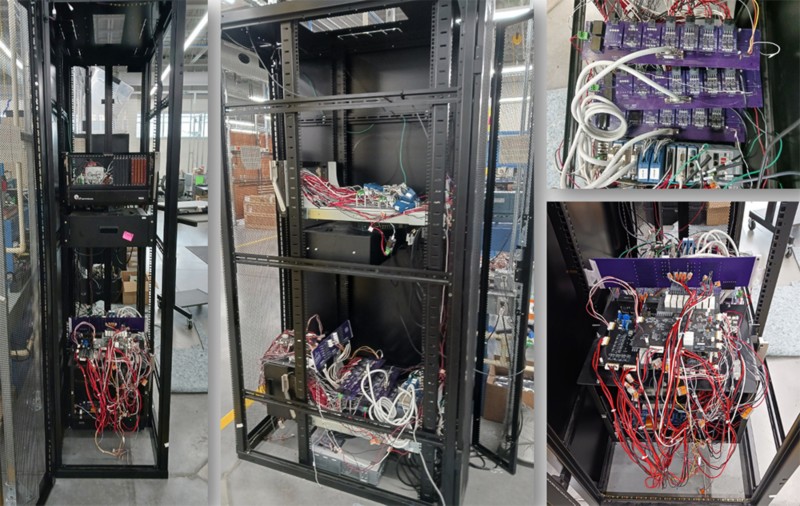
Sub-Zero has built its legacy on engineering luxury appliances that last for decades. Because its appliances are becoming increasingly software defined and software has a direct impact on customer experience, that means maintaining quality goes beyond mechanical validation. Sub-Zero’s previous test system proved difficult to maintain and didn’t deliver the desired performance. Some of the issues included:
- Custom PCBs for signal conditioning
- DIY rack design with maintainability issues
- Custom data acquisition software architecture built on Python
- Lack of determinism and real-time capabilities
The solution was overly complex and lacked adherence to best practices. Maintaining and supporting the test rack often consumed as much, or more, time than developing new tests. After years of effort, the team recognized the need for a new approach to keep pace with development and uphold their reputation for quality.
Deploying NI LabVIEW, NI VeriStand, and NI TestStand for HIL-Based Software Validation
After attending the “Hardware in the Loop is for Everyone” session during NI Connect, the Sub-Zero team realized that HIL wasn’t just for aerospace or automotive; it could be a powerful enabler for appliance testing. They adopted a modular system centered on the NI LabVIEW+ Suite for HIL, enabling them to simulate appliance behavior, inject faults, and validate controller logic without relying on physical prototypes.
Transitioning from Manual to Modular HIL Testing
Replacing the previous test system with NI solutions was a turning point:
- Total cabinet redesign—Using best practices and off-the-shelf hardware and cabling
- Eliminated custom breakout boards (BOBs)—Modified C Series modules to better support DUT specifications
- Replaced custom Python software for IO—VeriStand delivers better performance and capabilities without the complexity and maintenance challenges of roll-your-own
- Automated tests—Partnered with NI Partner Genuen and joined the early access program for the native VeriStand-TestStand integration
- Simulation testing—LabVIEW enables behavioral models that run in real time to replicate appliance functionality and support controller validation
System Architecture: How It Works
This diagram illustrates how Sub-Zero’s HIL test system integrates hardware and software components to simulate, control, and validate appliance behavior.
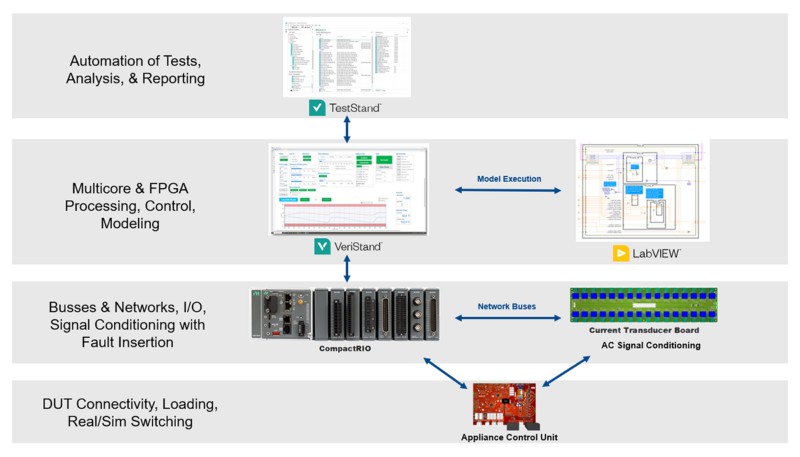
- Appliance Electronics Control Unit (ECU)—The appliance control unit under test is connected to a simulation system via a modular connector interface, which allows the ECU under test to be swapped using the same rack.
- NI CompactRIO—Acts as the heart of the simulation system. It runs real-time simulations, communicates with the ECU, and connects to signal conditioning for voltage/current monitoring.
- LabVIEW—Engineers create behavioral models that simulate the appliance components and processes. These models are compiled to run on a CompactRIO Controller.
- VeriStand—Deploys and executes LabVIEW models in real time on a CompactRIO Controller. It manages signal routing, real-time fault injection, and test monitoring.
- TestStand—Orchestrates automated test sequences using steps from VeriStand. It executes regression and fault tests, logs results, and ensures repeatability.
Use Case: Ice Maker HIL
One of the first applications of the new HIL system was testing ice maker software. Sub-Zero simulated the entire process, from water fill to freezing and harvesting ice, without physical hardware. Faults like water supply interruption and improper cycles were introduced using TestStand. The results included:
- Weeks-long test cycles reduced to overnight runs
- Ability to verify fault handling without compromising hardware
- Early bug detection before production releases
Similar workflows have been extended to other appliances, including ovens and refrigeration systems.
What’s Next
The current CompactRIO HIL system has delivered significant results at an affordable price point and has been a valuable stepping stone for understanding the benefits of HIL. The results seen with HIL have led to increased organizational buy-in and investment in HIL, and Sub-Zero has since partnered with Aliaro to establish the PXI-based xMove system as their new platform for HIL moving forward. The move to PXI and Aliaro’s xMove system built on the NI platform for Switch Load and Signal Conditioning (SLSC) is expected to simplify integration and improve scalability by supporting more advanced fault testing, a configurable load box, and software-defined wiring
Sub-Zero’s journey with NI solutions has redefined how the company approaches test and validation. What began as a software reliability challenge has turned into a strategic advantage. By adopting HIL and automating appliance validation, Sub-Zero is future-proofing its quality assurance processes for a new era of software-driven innovation.
NI Products in This Solution