Online shopping is currently unavailable.
Please contact us for help or try again later.
Multi-Instrument Session with NI PXI Hardware
Overview
Modern test systems must manage growing channel counts, where precise timing and synchronization across those channels are essential to ensure signal integrity and test reliability. At the same time, teams face increasing pressure to deliver results faster and shorten time to market.
This white paper introduces Multi-Instrument Session, a driver-level capability that allows multiple homogeneous PXI modules to operate as a single instrument. Built on NI PXI integrated timing and triggering architecture, NI-TClk, Multi-Instrument Session simplifies configuration, reduces code duplication, and ensures precise alignment without external cabling.
Combined with NI InstrumentStudio™ software and support across programming languages, Multi-Instrument Session enables scalable, maintainable, high-throughput test systems that adapt as requirements evolve, delivering faster setup, scalable performance, and a seamless path from measurement to automation.
Contents
- Background: The Increasing Complexity of Test
- Synchronized Multi-Instrument Sessions
- Importance of Precise Channel Alignment
- Conclusion
- Next Steps
- References
Background: The Increasing Complexity of Test
Modern automated test systems must validate increasingly complex devices, often with dozens or hundreds of channels and diverse signal types. To meet these demands, engineers need systems that meet the following requirements:
- Support high-channel-count configurations
- Have the ability to scale up without increasing complexity
- Maximize test coverage and minimize cycle time with fast execution
For applications requiring tight synchronization, distributing clocks and triggers across instruments is a major challenge. Latency, skew, and jitter can degrade measurement accuracy and system reliability.
Traditional test setups using box instruments face several limitations:
- Manual configuration of each instrument is time-consuming and error-prone.
- Physical cabling for synchronization introduces delays and uncertainty.
- Multiple APIs and drivers increase software complexity and maintenance burden.
With NI PXI hardware, synchronization and scalability are built into the platform. PCI eXtensions for Instrumentation (PXI) is a modular, industry-standard architecture that integrates multiple instruments within a single, compact chassis. The PXI backplane provides the following resources:
- Reference clock—Distributes a common timing source to all modules
- Trigger bus—Routes trigger signals for coordinated actions
- Star trigger bus—Delivers low-skew triggers for precise timing alignment
For advanced synchronization, NI patented NI-TClk technology enables sub-nanosecond alignment of sample clocks and triggers across PXI instruments, automatically compensating for skew and jitter and eliminating the need for external cabling or complex calibration.

Figure 1. Comparison of Heterogeneous Synchronization of Box Instruments and PXI Platform with NI-TClk
Synchronized Multi-Instrument Sessions
While NI-TClk provides powerful synchronization across heterogeneous instruments, the configuration process has been further simplified through enhancements in selected instrument drivers for homogeneous instruments synchronization for multiple instruments of the same type.
Multi-Instrument Sessions allow you to group multiple modules of the same model into a single software session. This abstraction helps you achieve the following goals:
- Configure and control multiple instruments as a single unit
- Reduce code complexity and eliminate redundant configuration steps
- Improve synchronization, accuracy, and test throughput faster
This feature is currently supported in select NI drivers, such as NI-SCOPE, NI-Digital Pattern, and some RF drivers. It is automatically integrated in InstrumentStudio and features easy code configuration in NI LabVIEW, NI TestStand, Python, C/C++, C#, and more.
From Concept to Application: Scaling Your Instrument Channels
Even when engineers use instruments of the same type and same provider, traditional synchronization methods remain cumbersome. Each device operates independently, with separate clocks, trigger lines, and driver sessions. Scaling channel count or extending measurement capabilities requires manual effort that grows exponentially with every additional instrument, while increasing footprint by adding extra box instruments.
Traditionally, engineers must do the following things to coordinate these instruments:
- Provide external reference clocks
- Establish physical connections to share clocks and triggers, often sacrificing one of the instrument’s channels for signal routing
- Manually align timing and trigger parameters for each device
- Write, test, and maintain multiple code blocks, since many software interfaces do not natively support multi-instrument synchronization for box instruments
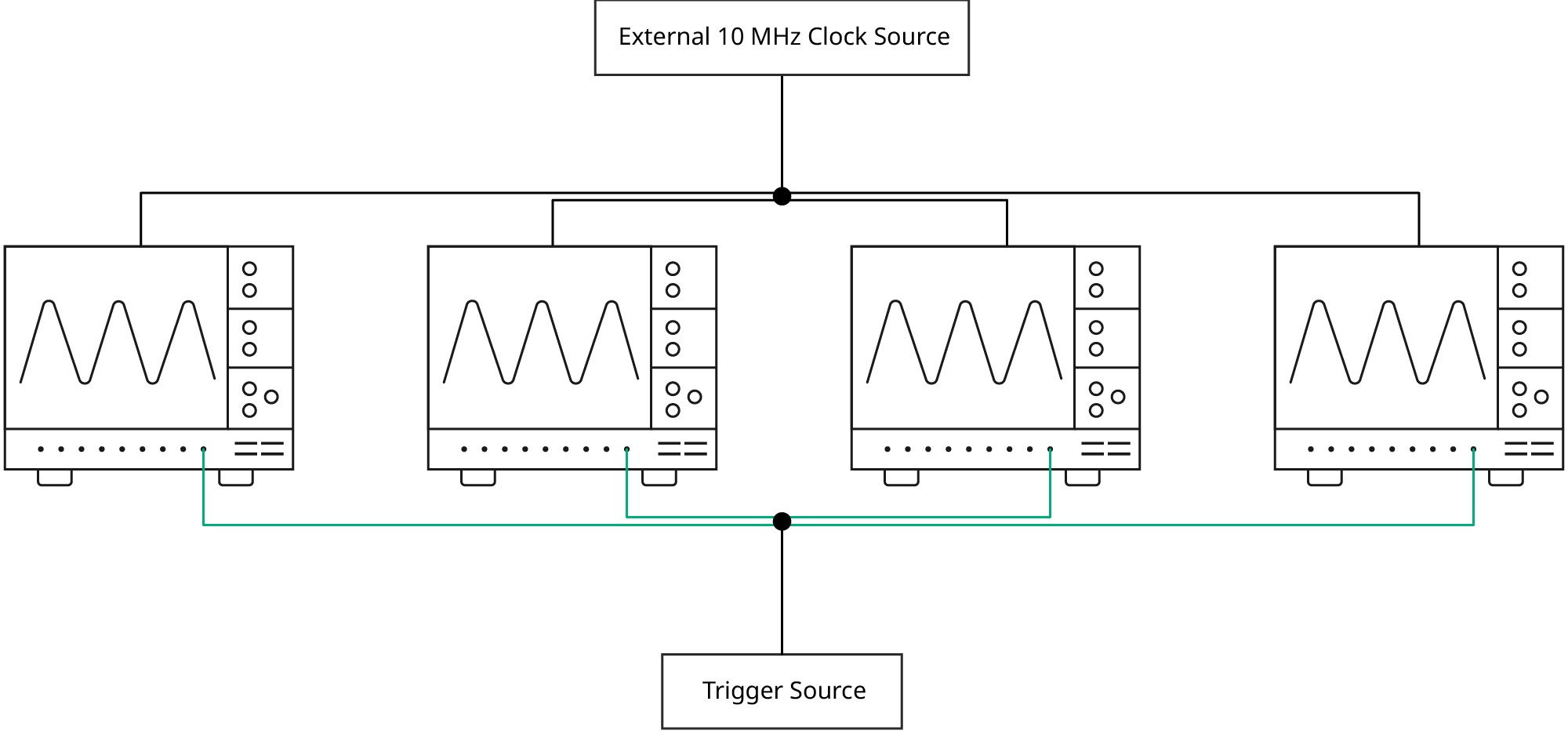
Figure 2. Homogeneous Synchronization Through Box Instruments Oscilloscopes to Create a 32-Channel Oscilloscope
Despite careful setup, small variations in cable lengths, clock distribution, or trigger latency can cause misalignment between instruments. These subtle errors introduce timing skew and measurement inconsistency, particularly in high-speed or phase-sensitive applications.
NI Multi-Instrument Session redefines how engineers scale and control multichannel test systems. By treating multiple instruments as a single unit, this capability combines the precision of hardware-level synchronization with the simplicity of unified software configuration and control. With modular, high-density PXI instruments, you can easily build high-channel-count systems in a compact footprint, making expansion and scalability straightforward.
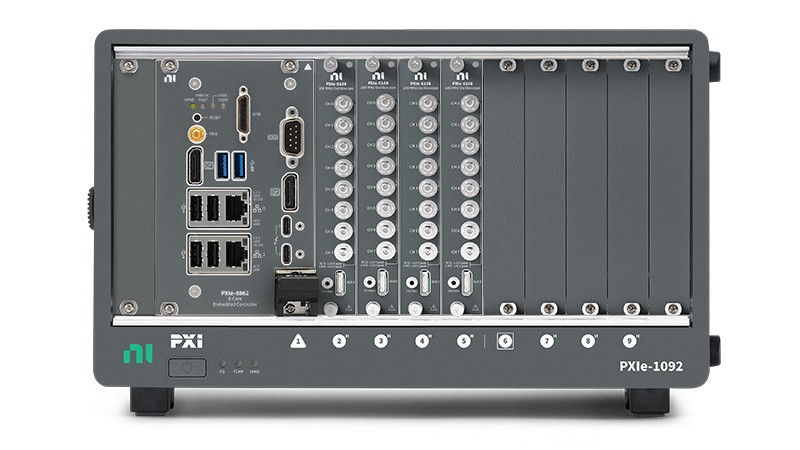
Figure 3. Homogeneous Synchronization of Four PXIe-5108 8-Channel Oscilloscope Modules as a Unified 32-Channel Oscilloscope
Interactive Configuration with InstrumentStudio
InstrumentStudio is interactive measurement software included within NI PXI systems. It provides a streamlined environment to configure and visualize all your instruments in a single workspace.
InstrumentStudio Key Features
- Automatic layout creation—Recognizes your instrument modules in the system and organizes them into a combined workspace.
- Customize layout management—Arrange panels side by side to perform multi-instrument measurements or group them into tabs to switch between measurement contexts.
- Project-based configuration—Save, reuse, and export preconfigured setups to LabVIEW or TestStand for automation.
- Real-time test system debugging—Maintain visibility into instrument configurations and measurements while automated workflows are running. Pause execution in TestStand, LabVIEW, Python, or other environments to adjust settings, then resume without restarting the process.
Beyond these features, when multiple homogeneous modules that support Multi-Instrument Session are detected, InstrumentStudio automatically groups them into a unified instrument. This feature enables live visualization across all channels in a single view, acting as a single instrument that is triggered from a single signal, remaining aligned in time and sample rate, and sharing the same clock reference. The result is precise timing and synchronization correlation without requiring any additional hardware or software configuration. If needed, users can still operate each module independently through custom layout options.
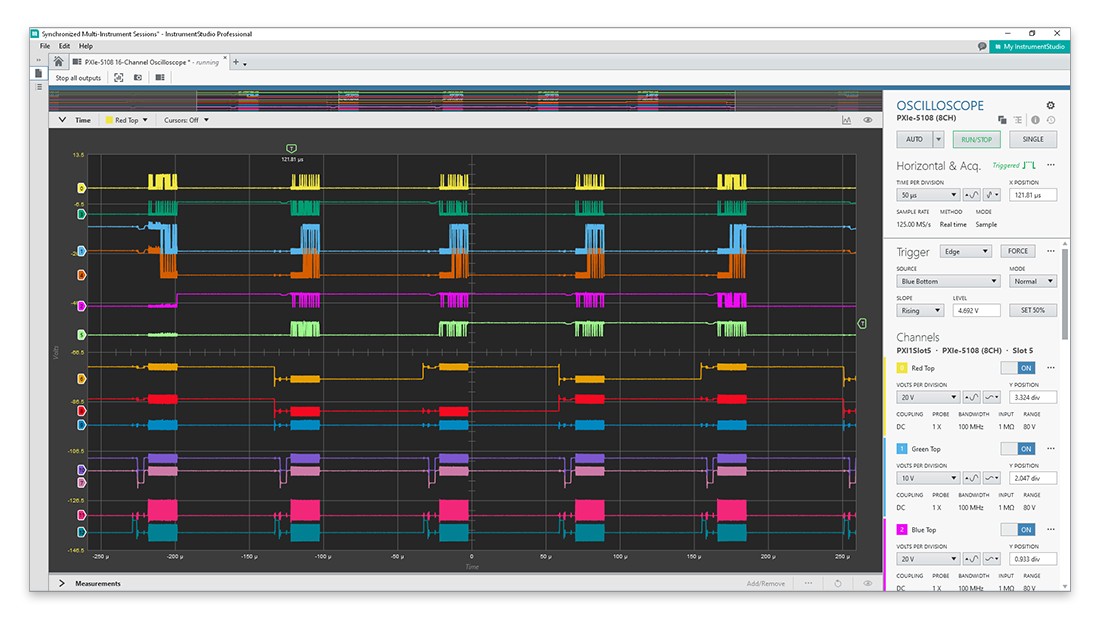
Figure 4. This screenshot of InstrumentStudio displays 13 synchronized oscilloscope channels of 16 available from two NI PXIe-5108 8-channel oscilloscopes with all signals automatically synchronized.
InstrumentStudio simplifies system bring-up and debugging, helping you go from hardware setup to your first measurement in seconds. As your requirements evolve or channels increase, you can add another module to your PXI chassis, and your existing configurations will continue to work for your setup.
From Interactive Measurements to Automation
After your system is configured, the next step is automation. Here’s where NI PXI modular instrumentation truly shines. Because NI PXI systems are software-driven, moving from manual measurements to automated workflows with NI LabVIEW+ is far more streamlined than with traditional box instruments and other software environments.
Programming box instruments through a general-purpose language often introduces significant friction. Engineers frequently face many of the following issues:
- Complex connectivity setups, such as USB or TCP/IP, that require manual configuration and troubleshooting
- Inconsistent behavior when fetching large data sets or executing commands
- Lockups caused by errors in handling or power sequencing quirks
- Extra steps like adding delays, binary transfers, or modifying registry settings just to maintain stability
These challenges make even basic communication with box instruments time-consuming and error-prone—even without considering synchronization. To coordinate multiple instruments, developers must align timing, triggers, and data acquisition across devices, which often requires custom logic and extensive testing. In traditional programming environments, achieving parallel execution typically involves manual threading and resource management, adding significant overhead and risk of errors. LabVIEW offers an advantage with built-in parallelism and intuitive dataflow programming, making concurrent operations easier to implement.
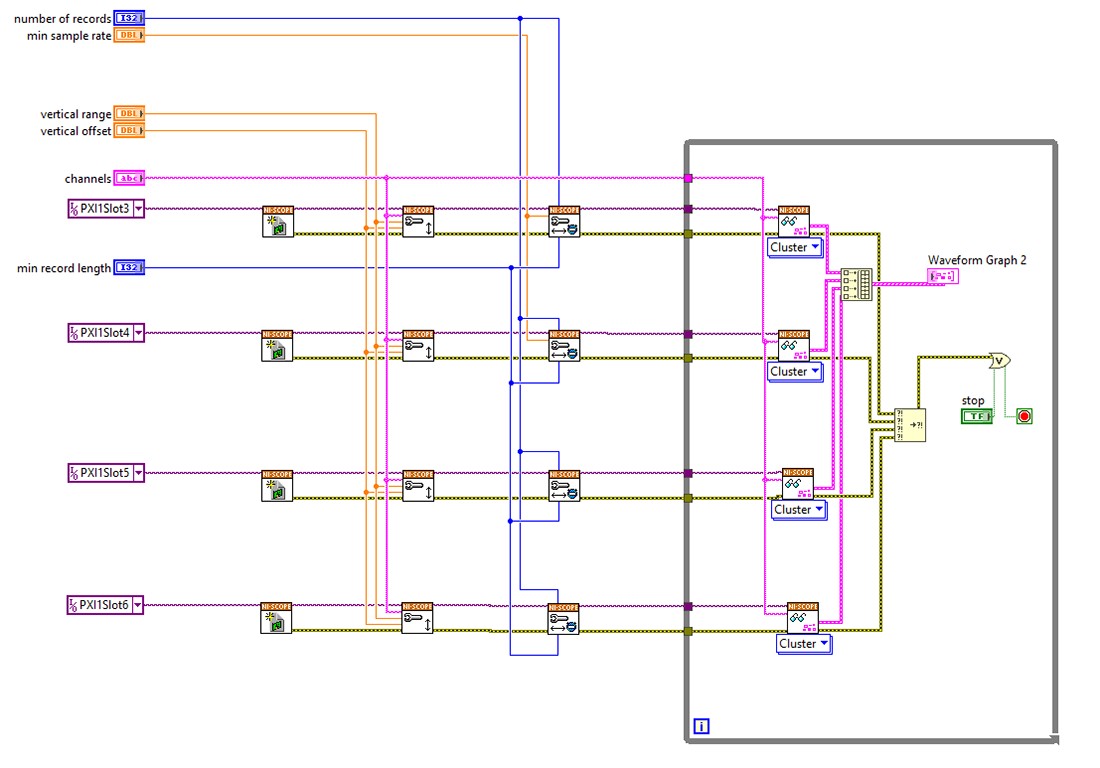
Figure 5. Traditional Multi-Instrument Programming in LabVIEW
This example shows the complexity of programming multiple oscilloscopes without Multi-Instrument Session. Each instrument requires its own configuration and acquisition block, resulting in repetitive code and manual synchronization. Even in environments like LabVIEW, where parallel execution is easier, developers still had to treat each instrument as an independent entity, writing repetitive code blocks for configuration and acquisition and manually managing synchronization.
With Multi-Instrument Session, this entire process is streamlined. Instead of managing multiple independent sessions, you define a single session that covers all the homogeneous instruments and channels. From there, configuration and acquisition become unified operations:
- Single session initialization—Identify all instruments and their channels upfront.
- Unified configuration—Apply timing, triggering, and acquisition settings across all devices in one call.
- Synchronized measurements—Retrieve data from all instruments simultaneously, ensuring perfect alignment.
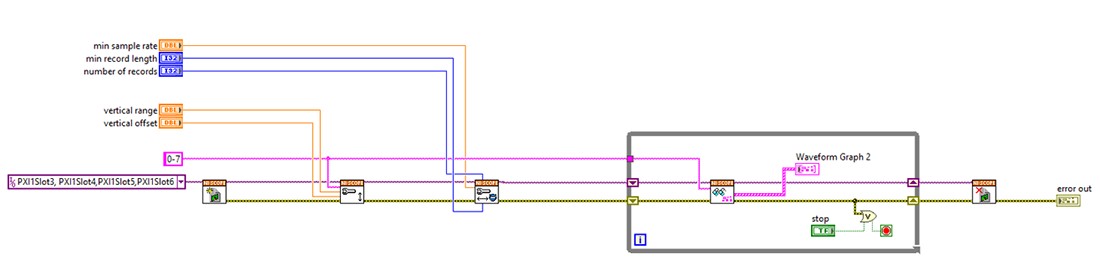
Figure 6. Multi-Instrument Sessions in LabVIEW
This example demonstrates how Multi-Instrument Session consolidates multiple homogeneous instruments into a single session, dramatically simplifying code and ensuring precise synchronization.
This capability is implemented at the driver level, meaning it works consistently across LabVIEW, Python, C/C++, C#, and others. Developers can leverage the same simplified API regardless of their preferred language, reducing development time and eliminating the need for custom synchronization logic.
Another advantage of NI software is the ability to export configurations created in InstrumentStudio directly to automation environments such as LabVIEW, TestStand, Python, C/C++, or C#. This feature accelerates the transition from interactive measurements to automated testing by eliminating the need to manually replicate settings in code. For step-by-step instructions, see how to export InstrumentStudio configurations.
This feature eliminates the need to manually replicate settings in code. Instead, the exported configuration is loaded by the instrument driver, ensuring consistency and reducing errors. By reusing validated setups, you accelerate development, minimize debugging, and guarantee that automated tests reflect the same conditions as your interactive measurements.
In the following demo video, you’ll see the difference between using traditional parallel execution and leveraging Multi-Instrument Session. Multi-Instrument Session reduces code complexity, improves readability, and ensures precise timing alignment—all while accelerating development.
Caveats of Synchronized Multi-Instrument Sessions
Multi-Instrument Session sessions offer a streamlined approach for coordinating measurements across multiple devices. However, this method has several constraints that test architects must consider:
- Uniformity requirement—Multi-Instrument Session is limited to specific PXI modules, and all instruments in the session must match in model and configuration. For example, combining 4-channel and 8-channel or devices of the same model with different memory is not supported.
- Single chassis limitation—Synchronization is restricted to devices installed in the same chassis. Expanding to multiple chassis requires NI-TClk.
For homogeneous setups, synchronized multi-instrument sessions are efficient and easy to implement. For heterogeneous system or multichassis configurations, NI-TClk is the recommended approach, offering the flexibility and precision required for modern automated test architectures.
Importance of Precise Channel Alignment
Achieving tight alignment across channels is essential in high-channel-count systems, particularly in applications that depend on precise timing correlation or phase coherency. Without Multi-Instrument Session, even well-configured instruments can exhibit small variations in sample timing, resulting in several nanoseconds of skew between devices.
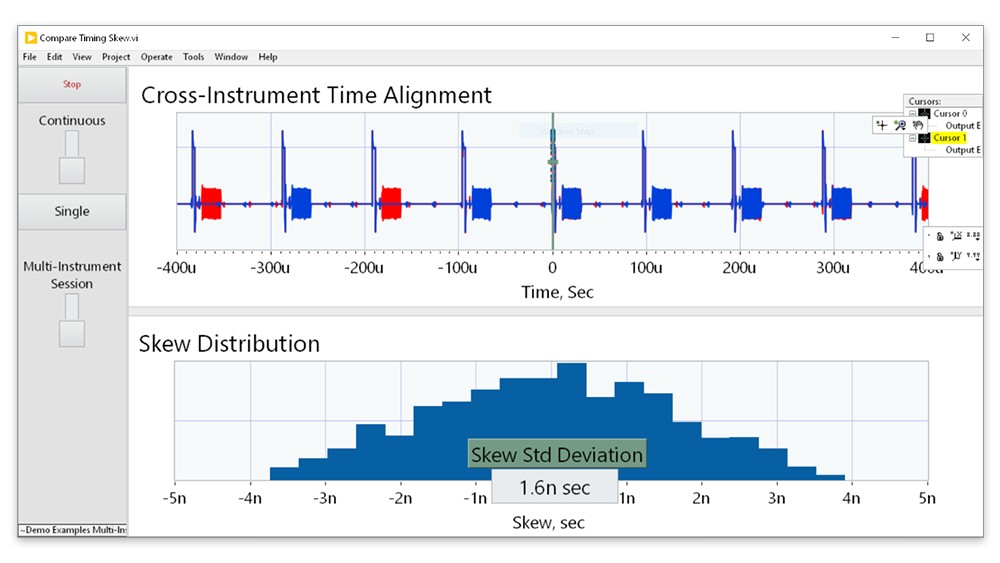
Figure 7. Timing Variation when Programming Multiple PXI Oscilloscopes without Multi-Instrument Session
Modern test systems demand more than just accurate measurements; they require speed, scalability, and simplicity. NI PXI modular instrumentation with the Multi-Instrument Session feature allows multiple modules to share the same clock and a common trigger, eliminating this variation. This capability produces a coherent, perfectly aligned data set ready for deeper analysis, transforming how engineers configure and automate multichannel systems.
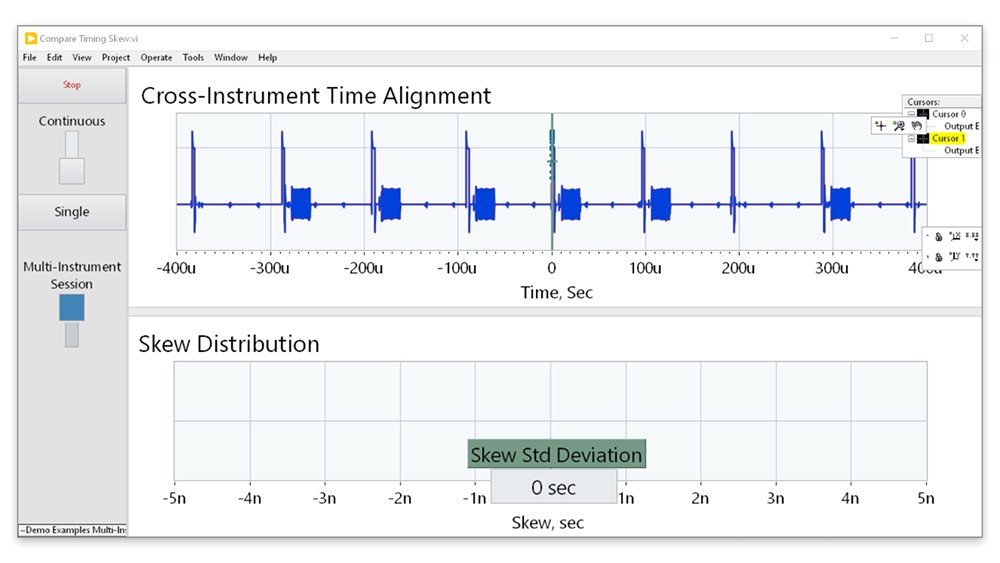
Figure 8. Precise channel alignment achieved using Multi-Instrument Session across multiple PXI oscilloscope modules
Conclusion
With Multi-Instrument Session, what once required dozens of repetitive calls and manual synchronization now happens in a single session, reducing code complexity and accelerating development across LabVIEW, Python, C/C++, and others. This unified approach ensures precise timing alignment without extra hardware or custom logic, enabling engineers to scale from a small number of channels to hundreds with minimal effort.
Beyond programming efficiency, the PXI architecture provides unmatched data throughput and synchronization at the hardware level. Whether you’re validating complex devices or running high-volume production tests, PXI ensures fast access to data, reliable performance, and the flexibility to expand as requirements evolve.
The true value of NI PXI lies in its ability to evolve with your test strategy. By combining modular hardware, intelligent software, and driver-level innovations like Multi-Instrument Session, NI PXI hardware empowers you to build automated test systems that are faster to deploy, easier to maintain, and ready for the challenges of tomorrow.
Next Steps
Microsoft and Windows are trademarks of the Microsoft group of companies.