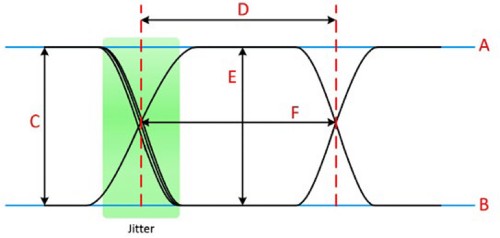
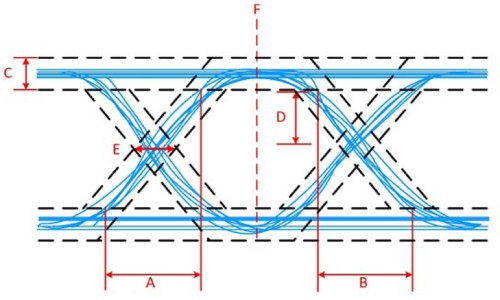
Understanding and Characterizing Timing Jitter

Publish Date: Apr 17, 2013 | 2 Ratings | 4.50 out of 5 |  PDF

Overview

Timing jitter is the unwelcome companion of all electrical systems that use voltage transitions to represent timing information. This paper focuses primarily on jitter in electrical systems.

Table of Contents

  1. Introduction
  2. The Consequences of Jitter
  3. What is Jitter?
  4. Jitter Measurement and Visualization
  5. Components of Jitter
  6. Putting It All Together
  7. Jitter vs. Bit Error Rate
  8. Summary
  9. Download a Jitter, Signal Integrity, and Connectivity Fundamentals Resource Kit

Download a Jitter, Signal Integrity, and Connectivity Fundamentals Resource Kit

Download the technical ekit to learn more about improving measurement accuracy with an understanding of signal integrity and probing concepts.


1. Introduction

Timing jitter is the unwelcome companion of all electrical systems that use voltage transitions to represent timing information. Historically, electrical systems have lessened the ill effects of timing jitter (or, simply “jitter”) by employing relatively low signaling rates. As a consequence, jitter-induced errors have been small when compared with the time intervals that they corrupt. The timing margins associated with today’s high-speed serial buses and data links reveal that a tighter control of jitter is needed throughout the system design.

As signaling rates climb above 2 GHz and voltage swings shrink to conserve power, the timing jitter in a system becomes a significant percentage of the signaling interval. Under these circumstances, jitter becomes a fundamental performance limit. Understanding what jitter is, and how to characterize it, is the first step to successfully deploying high-speed systems that dependably meet their performance requirements.

A more thorough definition will be introduced in the following section, but conceptually, jitter is the deviation of timing edges from their “correct” locations. In a timing-based system, timing jitter is the most obvious and direct form of non-idealness. As a form of noise, jitter must be treated as a random process and characterized in terms of its statistics.

If you have a way to measure jitter statistics, you can compare components and systems to each other and to chosen limits. However, this alone will not allow you to efficiently refine and debug a cutting-edge design. Only by thoroughly analyzing jitter is it possible for the root causes to be isolated, so that they can be reduced systematically rather than by trial and error. This analysis takes the form of jitter visualization and decomposition, discussed in later sections.

Although there are many similarities between the causes, behavior and characterization of electrical and optical jitter, the equipment used to measure jitter in optical systems differs from that used in electrical systems. This paper focuses primarily on jitter in electrical systems.


Back to Top

2. The Consequences of Jitter

Why should you be concerned about jitter? What impact does jitter have on system performance? In this section, two cases are considered: a high-speed computer bus, and a serial data link. For each case, the specific effects of jitter are considered in some detail.

Computer Bus Design

Let’s say you are bringing up a new embedded processor design, and are seeing occasional data errors when reading flash memory. You suspect that the address decode that generates the flash memory’s chip enable (CE) is not meeting its setup time requirement with respect to the rising edge of the write enable (WE). You probe the CE and WE signals with your high-speed scope to observe the timing relationship. After ten single-shot acquisitions, you have measured durations of 87 to 92 nsec, all above the minimum setup time of 75 nsec by what seems like a comfortable margin. But what is an adequate margin? Are these times great enough to remove doubt that you are sometimes violating the setup-time requirement? What percent of the time is a violation likely to occur?

After evaluating several million waveforms in infinite persistence mode and seeing setup times as short as 82 nsec, you decide that the setup time might be a problem after all. But is the problem due to variations in the system clock period, in the address decoder, or somewhere else?                        

Serial Data Link

Your Gigabit Ethernet physical-layer transceiver chip is pushing up against deadline and you are a bit nervous about the compliance tests that will soon be run by an external test house. The spec in the standards document calls for a measurement of data jitter relative to the local data clock, and another measurement of the clock’s jitter relative to a jitter free reference, whatever that is. In any event, you’d like to make sure you have enough margin that the parts from the qualification run satisfy the compliance lab.

You start by using an oscilloscope in infinite-persistence mode to check the peak-to-peak jitter on the data clock. Since your scope allows you to define histogram boxes on-screen, you use this feature to create a histogram of the edge locations. You find a peak-to-peak value of 550 psec, and the spec says you must have less than 300 psec. Fortunately, the 300 psec spec is after the jitter has been filtered by a 5 kHz high-pass filter. Unfortunately, you have no way of knowing what part of the jitter in the histogram is due to lower frequencies and can safely be disregarded.

You take a look at the jitter on the data lines relative to the clock, and find that this, too, is dangerously close to the spec limit. However, you suspect that this jitter is not in your chip, but that it has been picked up because of the test board, which doesn’t adhere to good design practice on the layout of the differential data lines. You know that the switching supply on the test board may be to blame, but need to determine how much of the measured jitter is coming from this source. Both this case and the one above are examples of times when even a high-performance oscilloscope may not provide enough muscle to answer all your questions. To really feel confident about your design, you may need two additional tools: some means of advanced jitter analysis, and a good grasp of the basic causes and characteristics of timing jitter.


Back to Top

3. What is Jitter?

This simple and intuitive definition is provided by the SONET specification (Bell Communications Research, Inc (Bellcore), 1997)

“Jitter is defined as the short-term variations of a digital signal’s significant instants from their ideal positions in time.” This captures the essence of jitter, but some of the individual terms (short-term, significant instants, ideal positions) need to be more specific before this definition can be unambiguously used.

In all real applications, jitter has a random component, so it must be specified using statistical terms. Metrics such as mean value and standard deviation, and qualifiers such as confidence interval, must be used to establish meaningful, repeatable measurements. A review of the basic concepts from statistical mathematics that underlie the following material is beyond the scope of this paper, but the bibliography at the end provides some references for the reader who wishes to delve deeper.

Jitter vs. Wander

By convention, timing variations are split into two categories, called jitter and wander, based on a Fourier analysis of the variations vs. time. Timing variations that occur slowly are called wander. Jitter describes timing variations that occur more rapidly.

The threshold between wander and jitter is defined to be 10 Hz according to the ITU (ITU, 1996) but other definitions may be encountered. In many cases wander is of little or no consequence on serial communications links, where a clock recovery circuit effectively eliminates it.

Reference Level

The significant instants referred to by our definition are the transitions, or edges, between logic states in the digital signal. To be more specific, the significant instants are the exact moments when the transitioning signal crosses a chosen amplitude threshold, which may be referred to as the reference level or decision threshold. For two-level signal (by far the most common case), the mean signal voltage is frequently used as this reference level. If the signal-of interest is to be received by a Schmitt-trigger input, it may be desirable to use one reference level when analyzing the rising edges and a different reference level when analyzing the falling edges.

The phrase digital signal in our definition is perhaps optimistic, since for high-speed signals, the transitions are analog events that are subject to rise-time and slew-rate limitations. During the small but finite time when the signal is ramping through the reference level, any voltage noise that corrupts the waveform will be converted proportionately into timing jitter.

Clock Recovery

Before a digital signal’s deviations from ideal positions can be measured, those ideal positions must be identified. For a clock-like signal (alternating 1’s and 0’s), the ideal positions conceptually correspond to a jitter-free clock with the same mean frequency and phase as the measured one. More care must be used for a data signal, since no event (transition) occurs when the same bit repeats two or more times in a row. Clock Recovery is the name given to the process of establishing the timing of the reference clock.

One method of clock recovery is to use the constant frequency clock that best fits the measured events, in the least-squares sense. This means that a reference clock of the form:

Α • sin(ωct + φc )

is assumed, where ωc and φc are constants. The constants are chosen such that the sum of the squares of the time errors between the reference clock and the measured clock is minimized. This is an excellent approach when a finite-length block of contiguous data is to be analyzed. If the duration of the data is sufficiently long, the resulting jitter measurement may include wander as well as jitter. In this case, a high-pass filter may be used subsequently to remove the wander component.

Another effective method of clock recovery is through the use of a phase locked loop (PLL). A PLL constantly tracks slowly varying changes in the symbol rate of the measured data. Consequently, it acts as a high-pass filter with respect to the jitter that remains on the signal. Since most datacom links use PLLs in their receivers, this measurement approach has the advantage of modeling the behavior of the system in which the measured device will be used. For consistency and repeatability of measurement, many datacom specifications define a golden PLL. In this context, golden simply means that the PLL characteristics are precisely defined and tightly controlled. If a PLL conforming to these specs is used to measure jitter on multiple devices, the jitter may be objectively compared and logically related to the system in which the devices are to be used.

Period Jitter, Cycle-Cycle Jitter, and TIE

There are several ways in which jitter may be measured on a single waveform. These are period jitter, cycle-cycle jitter, and time interval error (TIE). It is important to understand how these measurements relate to each other and what they reveal.

Figure 1  shows a clock-like signal with timing jitter. The dotted lines show the ideal edge locations, corresponding to a jitter-free version of the clock. The period jitter, indicated by the measurements P1, P2 and P3, simply measures the period of each clock cycle in the waveform. This is the easiest and most direct measurement to make. Its peak-to-peak value may be estimated by adjusting an oscilloscope to display a little more than one complete clock cycle with the display set for infinite persistence. If the scope triggers on the first edge, the period jitter can be seen on the second edge. This is shown in Figure 2.

The cycle-cycle jitter, indicated by C2 and C3 in Figure 1, measures how much the clock period changes between any two adjacent cycles. As shown, the cycle-cycle jitter can be found by applying a first-order difference operation to the period jitter. This measurement can be of interest because it shows the instantaneous dynamics a clock-recovery PLL might be subjected to. Notice that no knowledge of the ideal edge locations of the reference clock was required in order to calculate either the period jitter or the cycle-cycle jitter.

The time interval error is shown in Figure 1 by the measurements TIE1 through TIE4. The TIE measures how far each active edge of the clock varies from its ideal position. For this measurement to be performed, the ideal edges must be known or estimated. For this reason, it is difficult to observe TIE directly with an oscilloscope, unless some means of clock recovery or post-processing is available.

The TIE may also be obtained by integrating the period jitter, after first subtracting the nominal (ideal) clock period from each measured period. TIE is important because it shows the cumulative effect that even a small amount of period jitter can have over time. Once the TIE reaches ±0.5 unit intervals, the eye is closed and a receiver circuit will experience bit errors.

Figure 3 gives an example of how these three jitter measurements compare to each other for a specific waveform. For this example, the waveform has a nominal period of 1 μsec, but the actual period follows a pattern of eight 990 nsec cycles followed by eight cycles of 1010 nsec.

 Figure 1.Different Measurements of Jitter


Figure 2. Period Jitter Measured with Cursors


Figure 3. Trend Views of Different Measurements


Back to Top

4. Jitter Measurement and Visualization

The paragraphs in this section discuss some of the tools and techniques that are useful for quantifying and/or analyzing jitter.

Jitter Statistics

Since all known signals contain jitter that has a random component, statistical measures are required to properly characterize the jitter. Some of the commonly used measures are:

Mean Value: The arithmetic mean, or average, value of a clock period is the nominal period. This is the reciprocal of the frequency that a frequency counter would measure. The mean value of the TIE is theoretically zero, although a small residual value may result depending on the measurement technique.

Standard Deviation: The standard deviation, represented by the greek character sigma (σ), is the average amount by which a measurement varies from its mean value. It is particularly useful in describing Gaussian processes, for which the distribution is completely specified by the mean and standard deviation.

Maximum, Minimum and Peak-Peak Values: The Max and Min values generally refer to values actually observed during a measurement interval, and the Peak-Peak value is simply the Max minus the Min. These measurements should be used judiciously. For a deterministic signal, these values may equal the true values even after a relatively short measurement interval. But for a random signal with a Gaussian distribution, there is theoretically no limit on the max and min values, so the observed peak-peak value will generally grow over time. For this reason, the peak-peak value should be used in conjunction with the population size and some knowledge of the type of distribution.

Population: The population is the number of individual observations included in a statistical data set. For a random process, a high population intuitively gives greater confidence that the measurement results are repeatable. If the characteristics of the distribution are known or can be estimated, it is possible to calculate the population needed to reduce the measurement uncertainty below a desired point.

Jitter Histogram

A histogram is a diagram that plots the measurement values in a data set against the frequency of occurrence of the measurements. If the number of measurements in the data set is large, the histogram provides a good estimate of the probability density function (pdf) of the set. For example, if you rolled a fair die 1000 times and recorded the results, they might be as depicted in Figure 4, where the HITS axis shows the number of times each value occurred.

Note that a histogram provides no information about the order in which the observations occurred.

An example of a jitter histogram for a TIE measurement is shown in Figure 5. In this case, the continuous variable is mapped into 500 bins and the total population of the data set is 3,200,000. Since this is a TIE measurement, the mean value is 0 nsec. For this plot, the distribution is approximately Gaussian with a standard deviation of 1.3 psec.

Consider a second example, in which the TIE of the signal in Figure 5 is modulated by the sine wave depicted in Figure 6. If this sine wave were sampled at an arbitrary instant, there is an equal likelihood that the sample value would lie anywhere between -15 nsec and 15 nsec. Hence, the TIE histogram of the modulated signal is spread over ±15 nsec with roughly equal likelihood, as shown in Figure 7. (The steep but sloping tails at the left and right edges of the histogram show that the jitter still has a Gaussian component.).

Figure 4. Measurement Histogram

Figure 5. Histogram of a Time Interval Error Measurement.

Figure 6. Intended Sinewave Modulation to Apply to a Data Signal.

Figure 7. Time Interval Error of a Modulated Signal plotted as a Histogram.


Jitter vs. Time (Time Trend)

Since the jitter histogram doesn’t show the order in which the measurement observations occur, it cannot reveal repeating patterns that might indicate a modulation or other periodic component. A plot of jitter value versus time can make such a pattern obvious. As an example, the TIE from the phase modulated signal of Figure 7 was plotted against time to produce Figure 8. Now, the pattern of jitter variation becomes apparent, and its correlation with one of several possible sources of coupled noise might become clear.

Figure 8.Time Interval Error of a Modulated Signal plotted as a Trend


Jitter vs. Frequency (Jitter Spectrum)

Since the jitter measurements can be plotted versus time, an obvious extension is to apply a Fourier transform to these measurements and display the results in the frequency domain. This results in a jitter spectrum, with the modulation frequency displayed on the horizontal axis and the amplitude of modulation shown on the vertical axis. One of the benefits of spectral analysis is that periodic components that otherwise might be hidden by wideband noise can often be clearly distinguished.

The prior example of a clock with sinusoidal modulation is used again here. Figure 9 shows the same TIE measurement as Figure 8, displayed as a TIE spectrum.

Figure 9.Time Interval Error of a Modulated Signal plotted as a Spectrum

Now, the sinusoidal modulation is seen to have a fundamental frequency of 15 kHz, as indicated by the largest spur. In theory, the Fourier series representation of a triangle wave only has odd harmonics. This is corroborated by the spectrum, where components can clearly be seen at 3 kHz, 5 kHz, 7 kHz, and so on. The random noise still appears, but in this view it is manifested as a broad flat noise floor, that becomes flat above 2 MHz.

It was mentioned earlier that timing variations with Fourier components below some limit, usually 10 Hz, are considered by convention to be wander rather than jitter. Of more practical interest, some other frequency limit (e.g. the loop bandwidth of your system’s clock-recovery loop) may determine which noise can be safely tolerated. A spectral view of jitter can reveal whether the noise in a system is of concern or not.

Eye Diagram

All of the methods discussed so far rely on edge locations only. These locations are extracted from a waveform by detecting when the waveform crosses one or more amplitude thresholds. The eye diagram is a more general tool, since it gives insight into the amplitude behavior of the waveform as well as the timing behavior.

An eye diagram is created when many short segments of a waveform are superimposed such that the nominal edge locations and voltage levels are aligned, as suggested in Figure 10. Usually, a horizontal span of two unit intervals is shown. The waveform segments may be adjacent ones, as shown in the figure, or may be taken from more widely spaced samples of the signal. If the waveform is repeatable, a sampling scope may be used to build an eye diagram from individual samples taken at random delays on many waveforms.

Color has been used in the stylized Figure 10 to show how the individual waveform segments are composed into an eye diagram. In practice, eye diagrams are usually either monochrome or use color to indicate the density of waveform samples at any given point of the display. Figure 11 shows such a color density display for a waveform that exhibits several types of noise.

In this diagram, white arrows are used to show the vertical and horizontal extent of the eye opening. As the noise on a signal increases, the eye becomes less open, either horizontally, vertically or both. The eye is said to be closed when no open area remains in the center of the diagram.

The easiest way to create an eye diagram is with an oscilloscope or digitizer in a long-persistence display mode. You should use caution in how you trigger the scope, if you use this approach. Simply triggering on a waveform edge will result in an eye diagram showing waveforms relative to that edge. This can be very different from an eye diagram relative to the underlying bit clock. To produce a diagram that is relative to the bit clock, you need some form of clock recovery, either in software or hardware. If your oscilloscope does not provide this feature, you may be able to use a trigger derived from an external clock-recovery circuit.

The relationship between the eye diagram and the TIE histogram can be seen by turning the density eye diagram of Figure 11 into a three dimensional figure and slicing it along the decision threshold, as illustrated in Figure 12. The area highlighted in pink is equivalent to a histogram of the first of the two zero-crossings in the eye diagram.

Figure 10. Constructing a Real-Time Eye Diagram

Figure 11. A Waveform Database with Color Gradation

Figure 12. In a Waveform Database, Colors can Represent Population Jitter & BER


Back to Top

5. Components of Jitter

Jitter separation, or jitter decomposition, is an analysis technique that uses a parameterized model to describe and predict system behavior. This section explains why this technique is used, and provides details about the jitter model most commonly used today.

Motivations for Decomposing Jitter

To understand how real systems behave, it is often useful to use a mathematical model of the system. The behavior of such a model can be tuned by adjusting the parameters of its individual components. If the parameters of the model are chosen based on observations of the real system, then the model can be used to predict the behavior of the system in other situations. Thus, one of the motivations for jitter decomposition (also called jitter separation) is to extrapolate system performance to cases that would be difficult or time consuming to measure directly. Another motivation for modeling the system this way has to do with analysis. If each of the model components is associated with one or more underlying physical effects, an understanding of the model can provide insight into the precise cause or causes of excessive jitter.

All models of complex systems make assumptions and simplifications, so the fit between the model and the true system behavior will never be exact. And in fact, there is usually some latitude in parameter choice when fitting the model’s behavior to the observed measurements. For this reason, jitter separation has some elements of art as well as science, and "four nines" repeatability of measurements is not to be expected.

The Jitter Model

The jitter model most commonly used is based on the hierarchy shown in Figure 13. In this hierarchy, the total jitter (TJ) is first separated into two categories, random jitter (RJ) and deterministic jitter (DJ). It will be seen later that correctly distinguishing between these two jitter types has a dramatic impact on model correctness – more so than any other modeling decision.

The deterministic jitter is further subdivided into several categories: periodic jitter (PJ, also sometimes called sinusoidal jitter or SJ), duty-cycle dependent jitter (DCD), and data dependent jitter (DDJ, also known as inter-symbol interference, ISI). An additional category (bounded, uncorrelated jitter, or BUJ) is sometimes used.

For each of these jitter types, the characteristics and root causes are discussed below.

Figure 13. Jitter is Composed of Random and Deterministic Parts


Random Jitter

Random jitter is timing noise that cannot be predicted, because it has no discernible pattern. A classic example of random noise is the sound that is heard when a radio receiver is tuned to an inactive carrier frequency. While a random process can, in theory, have any probability distribution, random jitter is assumed to have a Gaussian distribution for the purpose of the jitter model. One reason for this is that the primary source of random noise in many electrical circuits is thermal noise (also called Johnson noise or shot noise), which is known to have a Gaussian distribution. Another, more fundamental reason is that the composite effect of many uncorrelated noise sources, no matter what the distributions of the individual sources, approaches a Gaussian distribution according, to the central limit theorem.

The Gaussian distribution, also known as the normal distribution, has a PDF that is described by the familiar bell curve. An example of the distribution, with a mean value of zero and a standard deviation of 1.0, is shown in Figure 14. This distribution is covered thoroughly in one of the references in the bibliography (Davenport and Root, 1987), but its single most important characteristic is this: For a Gaussian variable, the peak value that it might attain is infinite. That is, although most samples of this random variable will be clustered around its mean value, any particular sample could, in theory, differ from that mean by an arbitrarily large amount. So, there is no bounded peak-to-peak value for the underlying distribution. The more samples one takes of such a distribution, the larger the measured peak-to-peak value will be. Frequently, efforts are made to characterize such a distribution by sampling it some large number of times and recording the peak-to-peak value that results. One should use caution with this approach. The peak-to-peak value of a set of N observations of a random variable is itself a random variable, albeit one with a lower standard deviation. Using such a random variable as a pass-fail criterion for quality screening, for example, requires that the pass threshold be raised to account for the uncertainty in the measurement, resulting in some acceptable units being failed.

A better approach is to fit the N observations to the assumed distribution (in this case Gaussian). Then, the mathematical description of the distribution can be used to predict longer-term behavior to a particular confidence level. An eye diagram for a signal with only Gaussian jitter, together with the associated TIE histogram, is shown in Figure 15.

Figure 14. Gaussian Distribution

Figure 15. An Eye Diagram and Histogram of Gaussian Jitter


Deterministic Jitter

Deterministic jitter is timing jitter that is repeatable and predictable. Because of this, the peak-to-peak value of this jitter is bounded, and the bounds can usually be observed or predicted with high confidence based on a reasonably low number of observations. This category of jitter is further subdivided in the paragraphs that follow, based both on the characteristics of the jitter and the root causes.

Periodic Jitter

Jitter that repeats in a cyclic fashion is called periodic jitter. An example was shown in Figure 3, where the TIE time trend shows a repeating triangle wave. Since any periodic waveform can be decomposed into a Fourier series of harmonically related sinusoids, this kind of jitter is sometimes called sinusoidal jitter. The probability distribution for a sine wave with peak amplitude of 1.0 is shown in Figure 16.

By convention, periodic jitter is uncorrelated with any periodically repeating patterns in a data stream. Jitter that is correlated with repeating data patterns is covered in the next paragraph.

Periodic jitter is typically caused by external deterministic noise sources coupling into a system, such as switching power supply noise or a strong local RF carrier. It may also be caused by an unstable clock-recovery PLL.

An eye diagram for a signal with 0.2 unit intervals of periodic jitter, together with the associated TIE histogram, is shown in Figure 17.

Figure 16. A non-Gaussian Distribution


Figure 17. An Eye Diagram and Histogram of non-Gaussian Jitter

Data Dependent Jitter

Any jitter that is correlated with the bit sequence in a data stream is termed Data-Dependent Jitter, or DDJ. DDJ is often caused by the frequency response of a cable or device. Consider the waveform in Figure 18, in which a data sequence is strongly low-pass filtered. Because of the filtering, the waveform doesn’t reach a full HIGH or LOW state unless there are several bits in a row of the same polarity.

Figure 19 shows this waveform superimposed on an offset version of itself. You can see that an earlier threshold crossing occurs when a falling transition follows a 1,0,1,0,1,0,1 sequence than when following a 1,0,1,0,1,1,1 sequence.

Since this timing shift is predictable and is related to the particular data preceding the transition, it is an example of DDJ. Another common name is Inter-Symbol Interference, or ISI.

An eye diagram for a signal with 0.2 unit intervals of DDJ, together with the associated TIE histogram, is shown in Figure 20. The histogram for ISI jitter always consists solely of impulses.

Figure 18. Data Signal with Data Dependent Jitter

Figure 19. Limited Bandpass One Source of Data Dependent Jitter

Figure 20. An Eye Diagram and Histogram of Data Dependent Jitter

Duty-cycle dependent jitter

Jitter that may be predicted based on whether the associated edge is rising or falling is called Duty-Cycle Jitter (DCD). There are two common causes of DCD:

1. The slew rate for the rising edges differs from that of the falling edges.

2. The decision threshold for a waveform is higher or lower than it should be.

Figure 21 is an eye diagram demonstrating the first case. Here, the decision threshold is at the 50% amplitude point but the slow rise time of the waveform causes the rising edges to cross the threshold later than the falling edges. As a result, the histogram of an edge crossing (gray) shows two distinct groupings. (In contrast to the prior eye diagrams, the waveform in this example has some Gaussian noise in addition to the duty-cycle jitter.)

Figure 22 is an eye diagram showing the second case, in which the waveform has balanced rise and fall times but the decision threshold is not set at the 50% amplitude point. The edge-crossing histogram would look very much like that from Figure 21.

Figure 21. Duty Cycle Distortion Caused by Non-symmetrical Rise/Fall Times

Figure 22. Duty Cycle Distortion Caused by Incorrect Detection Threshold


Back to Top

6. Putting It All Together

The paragraphs above included eye diagrams and TIE histograms for each of the jitter types individually. But what happens to the histogram when more than one jitter type is present at the same time? A useful and applicable result from statistical theory can be paraphrased as follows: If two or more random processes are independent, the distribution that results from the sum of their effects is equal to the convolution of the individual distributions.

A visual example of this concept is much more compelling than the verbal description. Figure 23 depicts what happens when duty-cycle jitter (with a histogram consisting of two impulses) is combined with random jitter (with its Gaussian distribution). Another example was shown earlier in Figure 7, where the uniform distribution of a triangle wave (a form of periodic jitter) was combined with random jitter.

A knowledgeable person could look at the final histogram from Figure 23 and infer what two types of jitter had contributed to it. However, real examples may involve all the jitter types in various amounts, resulting in a composite histogram that is much less intuitive. One of the objectives of a thorough jitter analysis is to identify all the individual jitter components that contributed to the final result.

The real power of jitter separation comes when the accurately identified jitter components are inserted back into the jitter model outlined in Figure 13 and the model is used to predict how a system will behave in new circumstances. This is the basis for Bit Error Rate estimation, which is covered in the next section.

To understand why accurate analysis tools are important, we compare two systems with different jitter characteristics. The first system, identified as System I, has only random jitter with a standard deviation of 0.053 unit intervals (UI). A TIE histogram for this system, which has a data rate of 1062.5 Mbps, is shown in Figure 24.

The second system, identified as System II, has random jitter with a standard deviation of 0.028 UI, about half that of the first system. However, it also has two uncorrelated components of periodic jitter, each with a peak-to-peak amplitude of 0.14 UI. Figure 25 shows the TIE histogram for System II.

The two histograms, which contain identical populations of about 42,000 edges, don’t look remarkably different. In fact, for these two sample sets the peak-to-peak value of the time interval error is exactly the same: 430 ps (0.457 UI). If visual comparison were the only tool available, distinguishing between these two cases would be difficult. Accurately predicting how the systems might behave over a longer observation interval would be impossible.

One might ask whether it is important to distinguish between these cases, since they look so similar. We shall return for a second look at this example after a review of Bit Error Rates and Bathtub curves.

Figure 23. Random Jitter is Convolved with Deterministic Jitter to Find Total Jitter


Figure 24. A Histogram of a Jitter Distribution with Dominant Random Jitter

Figure 25. A Histogram of a Jitter Distribution with Dominant Deterministic Jitter


Back to Top

7. Jitter vs. Bit Error Rate

The Jitter Budget

A real communications system consists of transmitter, channel and receiver, as modeled in Figure 26. The channel may include cabling, interconnects, and active devices that don’t perform clock regeneration. The channel may introduce filtering, non-linearity, DC offset, impedance mismatches and additional random jitter. Various circuit test points and system connectors will provide access points where the signal quality may be monitored. As one progresses from the transmitter to the receiver and monitors the signal quality at each access point (perhaps using an eye diagram), the signal jitter generally gets worse.

Simplistically, one might assume that success has been achieved if the eye is still open, even just a little, when the signal reaches the input to the receiver’s clock-data recovery circuit (access point D). However, the receiver circuit isn’t perfect. The received signal’s eye must be sufficiently open horizontally to account for timing uncertainty in the receiver’s decision circuit, and open enough vertically to accommodate noise influencing the decision threshold.

Thus, a thorough system design specification will allocate a jitter budget so that each well-defined access point has known jitter limits, and that adequate margin remains when the signal enters the receiver to be resynchronized.

Figure 26. Common Measurement Points for Setting System Jitter Budgets

The Bathtub Curve

The concepts of eye diagrams and eye openings and Gaussian probability distribution, with its theoretically unbounded peak-to-peak value were discussed in earlier. Considering these two topics together leads to an interesting conclusion: For any signal that contains some Gaussian jitter, the eye diagram should close completely if you accumulate samples for a long enough time. This would render the concept of eye opening useless as a basis for comparison. Fortunately, the usefulness of the eye diagram is restored if a confidence level is applied to the eye opening.

Consider Figure 27, in which a green ruler 0.5 unit intervals long has been placed horizontally in the center of the eye. Suppose that it is regarded a failure if any waveforms cross this ruler, either rising or falling. In the figure, it appears that this ruler has not been crossed by any waveforms yet, but such a crossing is inevitable if waveform samples continue to accumulate and the signal contains some Gaussian jitter. Now suppose instead that the test was considered successful if no more than one waveform out of every 1000 waveforms crossed over the ruler. It would no longer matter how long the test ran. If 50,000 waveforms were allowed to accumulate and 50 or less crossed over the ruler, the test would have passed.

One could say that, aside from one waveform in 103, the eye was 50% open. Since each crossing is assumed to represent a bit error, this would be a bit error rate (BER) of 10-3.

If the same signal were tested with a shorter ruler, say, 0.25 unit intervals long, then the ruler would certainly be crossed less frequently. Perhaps only one waveform out of every 100,000 waveforms, on average, would cross this shorter ruler. One could say that, aside from one waveform in 105, the eye was 25% open.

Continuing along these lines and using a series of rulers, one could fully characterize the eye opening versus the bit error rate. (Note that each ruler should be allowed to slide left or right to obtain the best possible fit.) If the rulers are all plotted against their corresponding bit error rates on a single chart, with the ends of the rulers connected, a plot something like Figure 28 results.

A plot of this description is called a Bathtub Plot, since the pink lines can be imagined to look like a bathtub. Using such a figure, one can tell what horizontal portion of the eye will remain completely free of signal transitions, for a given confidence level.

Finally, note that it can take a long time to accumulate enough data to directly measure the eye openings near the bottom of the chart. For this reason, the mathematical model covered in earlier can be used to predict performance on the basis of a much smaller sample set.

Figure 27. Eye Width is used to Determine Performance


Figure 28. Measuring Eye Width Over Time to Determine Bit Error Ratio


A BER Example

The Putting It All Together section discussed an example in which two systems with different jitter characteristics had similar TIE histograms and identical peak-to-peak jitter for a sample size of about 42,000 edges. (See Figure 24 and Figure 25.) We now return to that example, and show the associated bathtub curves. Figure 29 shows the bathtub curve for System I, and Figure 30 shows the plot for System II.

Since both of these plots represent data sets of 42,000 observed edges, a red cursor has been placed on each plot corresponding to a BER of one part in 42,000, or 10-4.63. At these levels, both of the systems show an eye opening of about 58%, and the eye opening for System I is actually greater than that for System II. However, at a BER of 1e-12 (which is a frequent specification point for serial communication links) the eye for System I is only open 26%. The eye for System II is open 37%, or about half-again as much as System I. This is a significant difference, and could easily determine whether a system meets its requirements or not.

Figure 29. BER Plot of System with Dominant Random Jitter


Figure 30. BER Plot of System with Dominant Deterministic Jitter


Back to Top

8. Summary

Timing jitter has always degraded electrical systems, but the drive to higher data rates and lower logic levels has focused increasing interest and concern on its characterization.

Characterization is needed to identify sources of jitter for reduction by redesign. It also serves to define, identify or measure jitter for compliance standards and design specifications. All jitter has random and deterministic components. Because of its random nature, care must be used in specifying acceptable limits for jitter. This is especially true when jitter performance at very high confidence levels is to be estimated based on modest amounts of data. To enable working with random components of jitter, a method that has found favor in jitter analysis and prediction is to use a mathematical model, the parameters of which are adjusted based on observed measurements. The model can then be used to predict performance in other situations. The model can also give insight into the specific causes of the jitter, and therefore aid in understanding how to reduce it.

An oscilloscope or digitizer has been a traditional tool for observing jitter, using such techniques as histograms and eye diagrams. When augmented by back-end processing that provides additional features like cycle to cycle measurements, trend and spectrum plots, data logging and worst case capture, the scope continues to be the tool of choice for characterizing timing jitter. When further augmented with sophisticated clock recovery, jitter separation algorithms and bit error ratio estimation, the oscilloscope or digitizer becomes the only solution for characterizing and reducing timing jitter.


Back to Top

9. Download a Jitter, Signal Integrity, and Connectivity Fundamentals Resource Kit

Download the technical ekit to learn more about improving measurement accuracy with an understanding of signal integrity and probing concepts.


References

http://www.tek.com/primer/understanding-and-characterizing-timing-jitter-primer

Glossary of Acronyms

BER     Bit Error Rate

CDF      Cumulative Distribution Function

DCD     Duty-Cycle Jitter

DDJ      Data-Dependent Jitter

DJ        Deterministic Jitter

FFT      Fast Fourier Transform

ISI        Inter-Symbol Interference

PDF      Probability Density Function

PJ        Periodic Jitter

PLL      Phase-Locked Loop

PSD     Power Spectral Density

RJ        Random Jitter

SJ        Sinusoidal Jitter

TIE       Time Interval Error

TJ        Total Jitter

UI         Unit Interval

Back to Top

Bookmark & Share

Ratings

Rate this document

Answered Your Question?
Yes No

Submit